
Turbo Air prep table not cooling at a Santa Monica restaurant: a ring crack burned out the relay joint
The owner was sure it was the compressor. The readings at the control board pointed to an open neutral, and the back of the board showed why.
In this guide
A prep table at 78°F
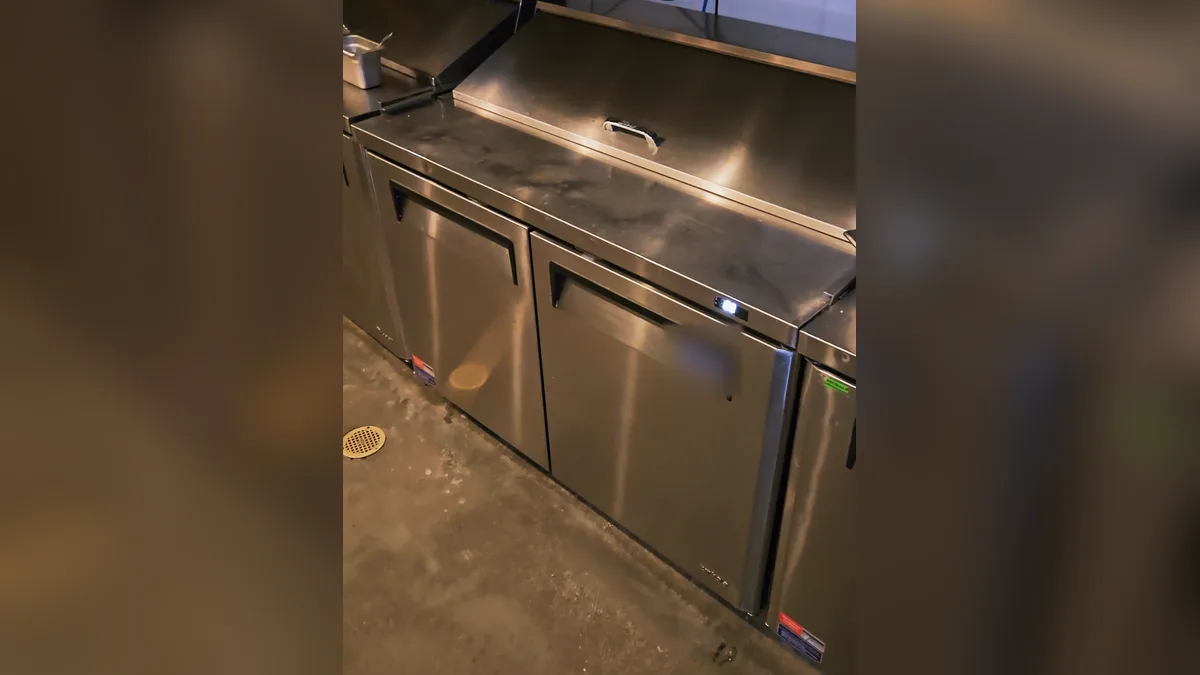
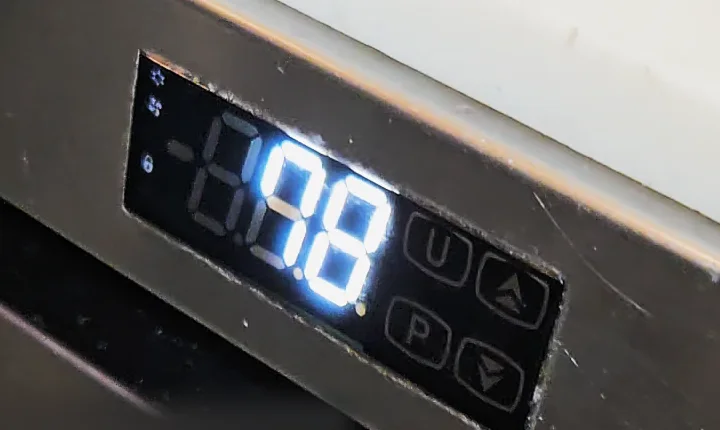
A restaurant in Santa Monica called us with an emergency: their refrigerated prep table, a Turbo Air MST-48-N, had quit cooling. The display read 78°F inside.
What ran and what didn’t
The evaporator fan inside was running, and the little brush that cleans the coil worked too. But the compressor got no power. Same with the condenser fan, because the two are wired together. Everything else worked.
To the owner, it had to be the compressor. But a compressor with no power at it hasn’t told you anything yet, so you diagnose first.
Two boards and one big relay
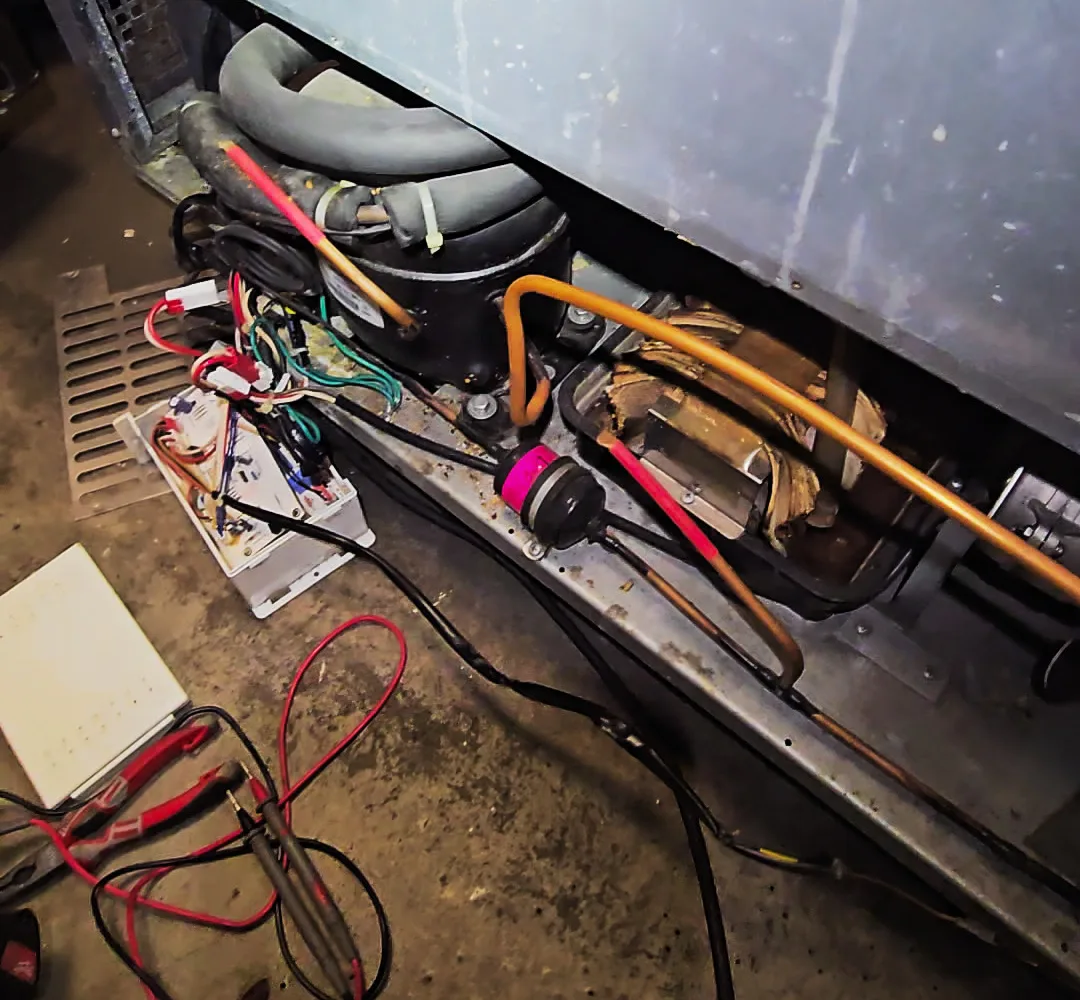
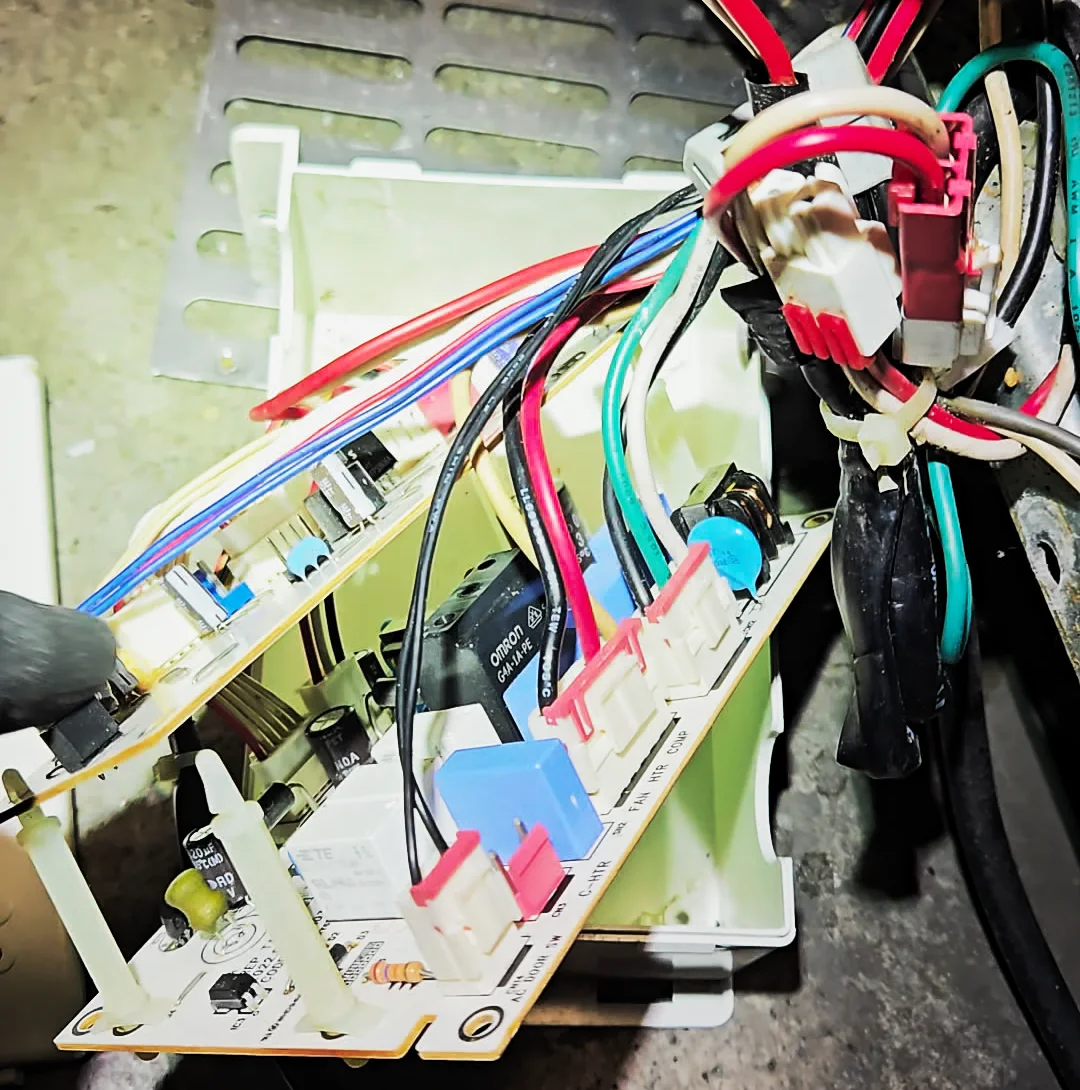
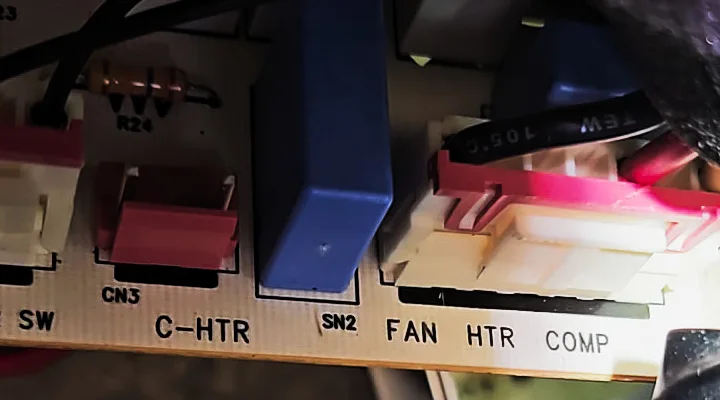
The control board sits at the back. Pull it out, and there are two boards inside: a low-voltage one and a high-voltage one. The connector that feeds the compressor is labeled right on the board, and this big relay is what switches the compressor on.
0 volts across, 120 volts to ground
We put the meter on that connector: 0 volts across the two pins, 120 volts from each pin to ground.
That pattern tells you the neutral’s open somewhere. Full voltage on each pin to ground means the hot side is getting there, and zero across the pins means the circuit has no way back. So the neutral wasn’t reaching the compressor or the condenser fan, and neither one could run.
The burnt joint on the back of the board
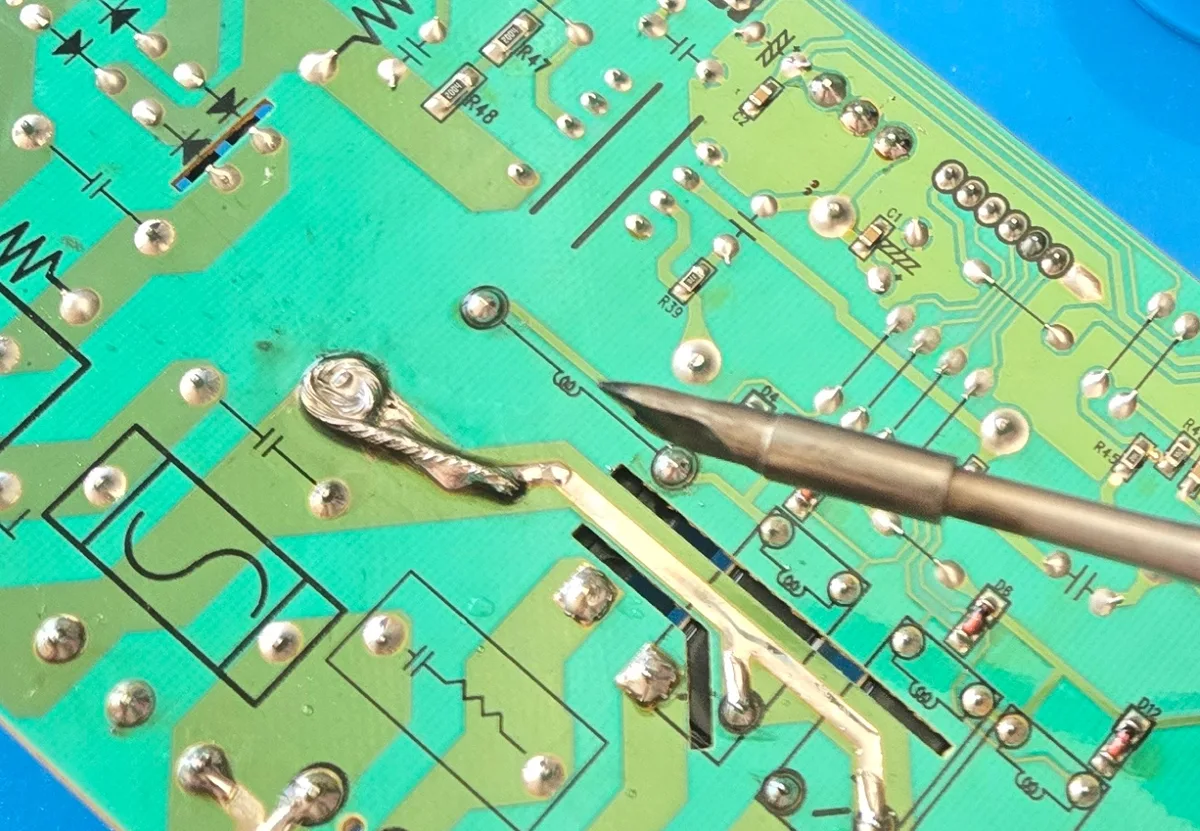
We pulled the high-voltage board and flipped it. There it was: the joint on that big compressor relay, burned black. That’s where the neutral stopped short of the compressor and the fan.
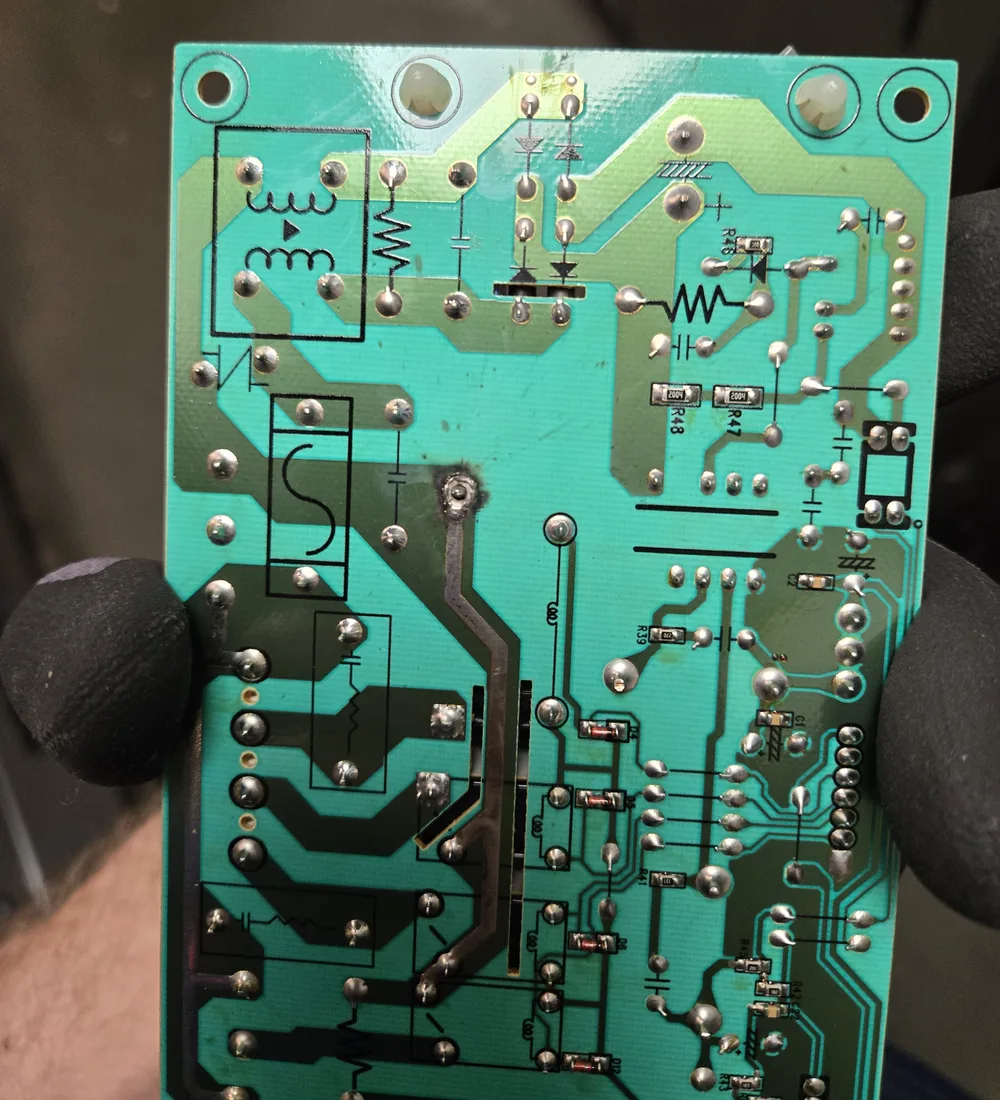
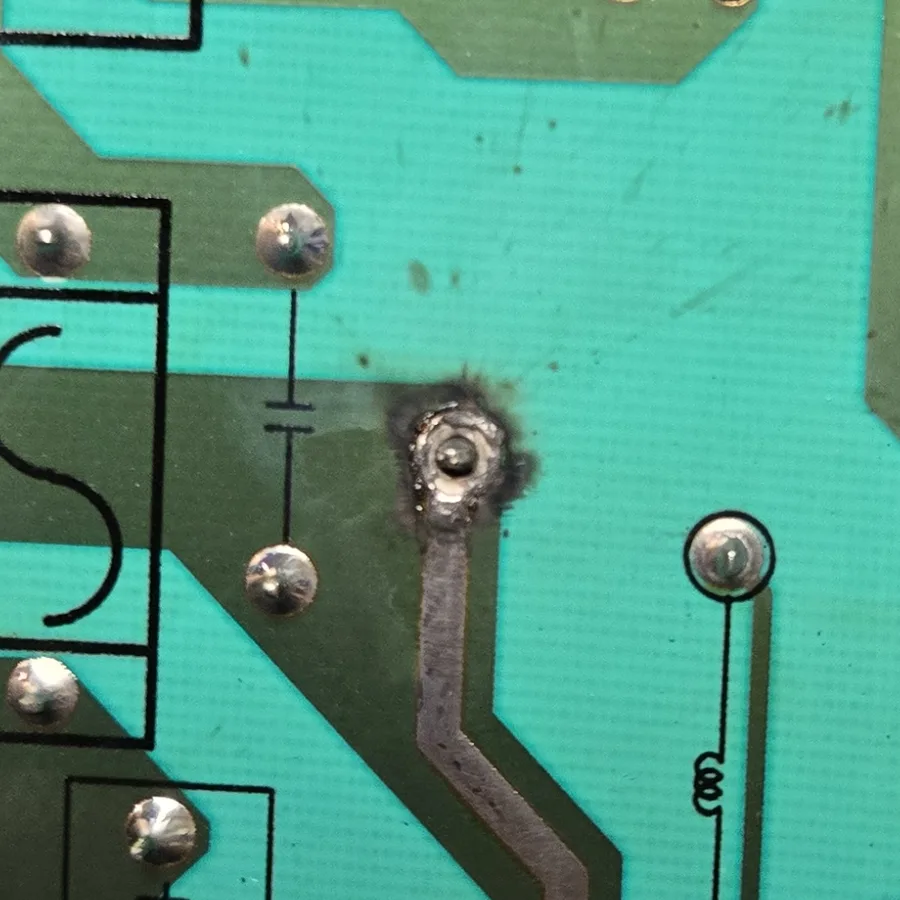
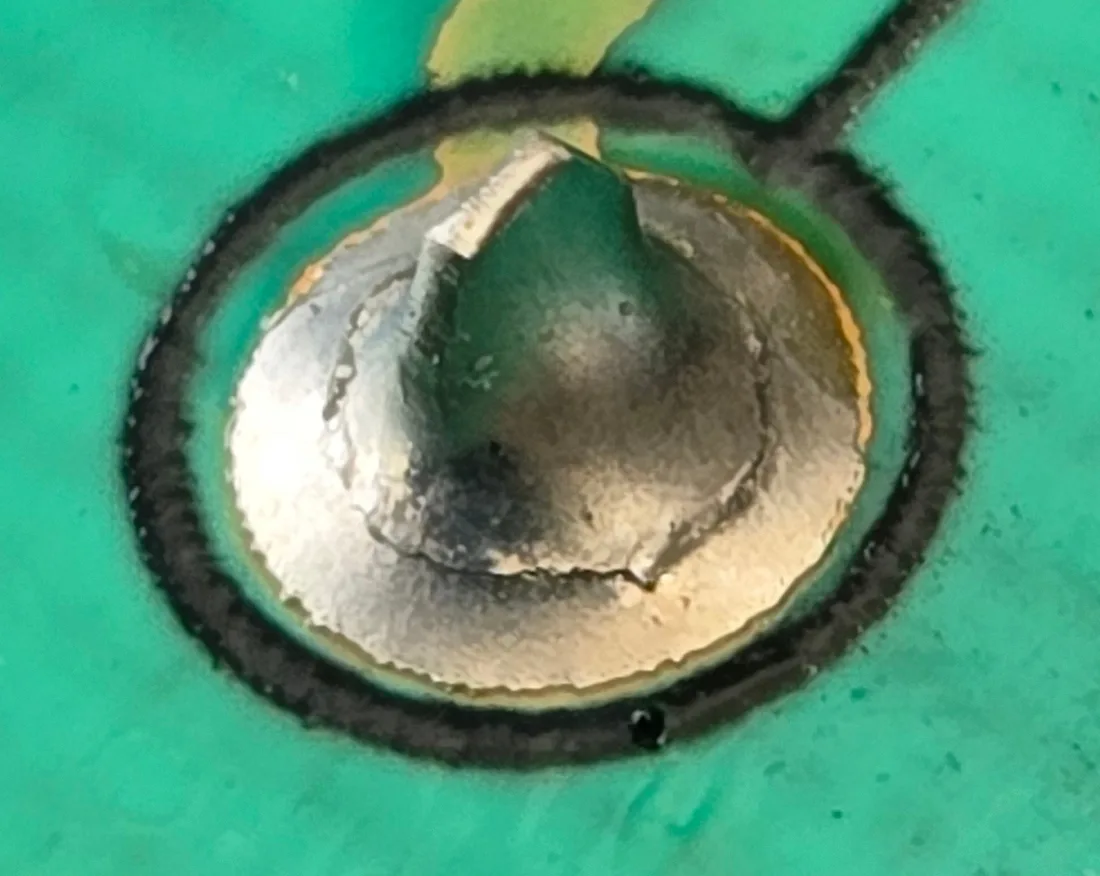
It starts with a crack in the solder, all the way around the pin. That’s a ring crack. Resistance climbs and the joint heats up. Under load it starts arcing, the solder burns away and everything around it chars.
A crack like this can also make a unit work, then quit, especially once it warms up or takes a load. Another pin on the same relay had a ring crack too. In this photo, look for the thin dark line circling the pin.
Why we repaired the board
This board is hard to order, let alone find in stock. So we repaired it: we replaced the relay, restored the burnt contacts and resoldered all the other joints. On a rooftop unit with ring cracks, reflowing the joints was enough.
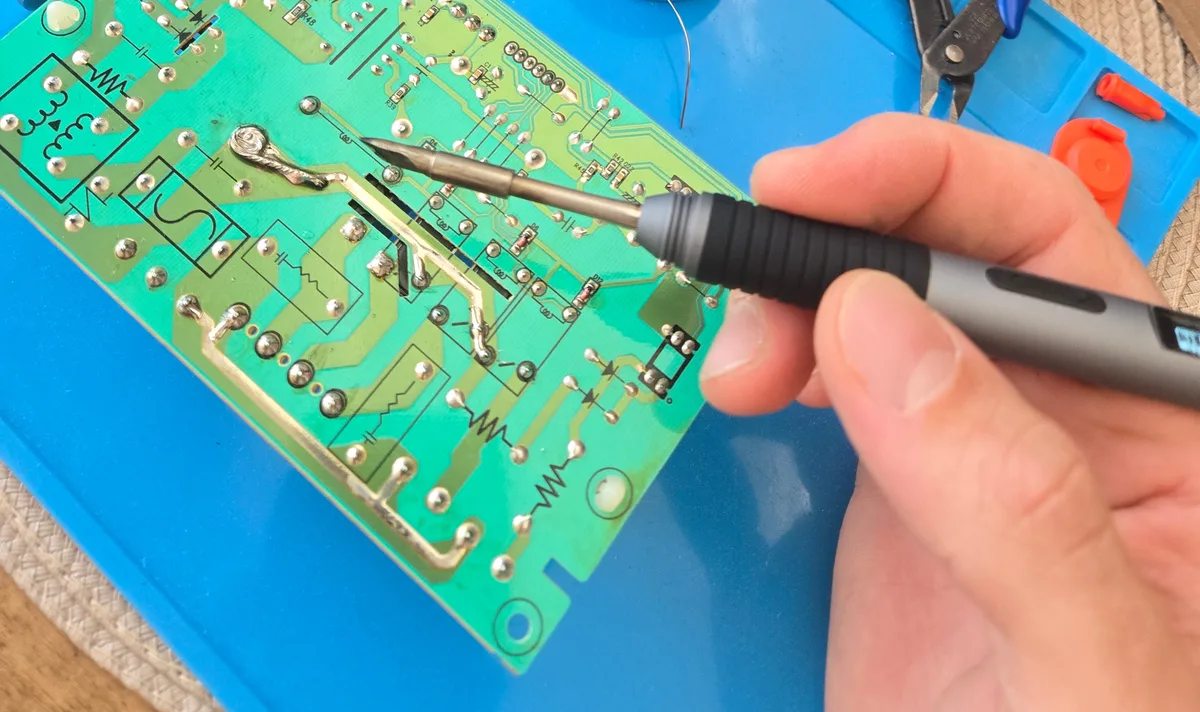
Test run and the start delay
With the board back in, we fired it up. The compressor ran and the condenser fan spun. There’s a built-in start delay, so it waits a moment before it kicks on. Give it that moment before you decide something else is wrong.
Then everything went back together, and the temperature started coming down, nice and slow: 69°F, then 68°F on the display.
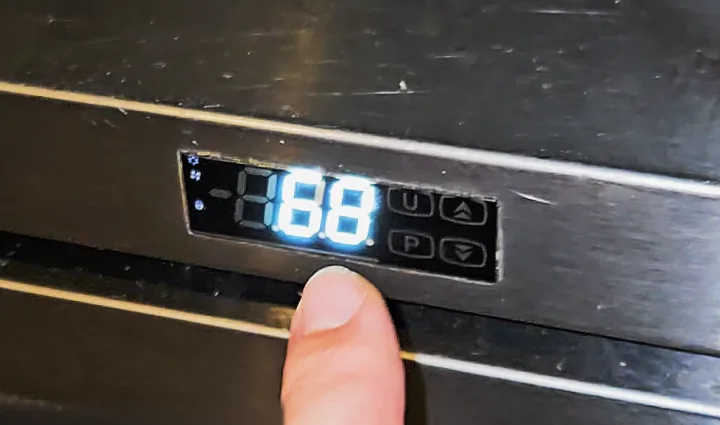
One cracked joint did all that.
Before you call
Look at what still runs and tell us on the phone. A running evaporator fan with a silent compressor and condenser fan points us at the power feed before anyone orders a compressor. If the unit has been cutting out and coming back, especially once it warms up, mention that too. The voltage checks above are done live at 120 volts, so leave those to a technician.
Sometimes it really is the compressor, as on this LG refrigerator, also in Santa Monica. For more commercial refrigeration jobs, see the glass-door cooler whose relay stuck closed and the commercial freezer in Studio City with a failed condenser fan motor.
Commercial refrigeration repair in Santa Monica
We repair prep tables and other commercial refrigeration in Santa Monica and across Los Angeles. Read more about our commercial refrigerator and freezer repair and commercial appliance repair services, or see the Santa Monica service area. CA BEAR registered (#A 50636), EPA Section 608 Universal certified. Call or text (213) 205-2055.
FAQ
Why is my prep table not cooling when the fan inside still runs?
On this prep table in Santa Monica, the evaporator fan ran, but the compressor and the condenser fan got no power because a burnt joint on the compressor relay left the neutral open. A prep table can stop cooling for other reasons too, so check what still runs and have a technician test the power at the compressor before anyone orders parts.
Does a compressor with no power mean the compressor is bad?
Not on its own. The owner of this prep table was sure the compressor had failed, but it wasn't getting power. Once the board was repaired, the compressor ran.
What does 0 volts across the pins and 120 volts to ground mean?
At this compressor connector, it pointed to an open neutral. Each pin showed full voltage to ground, but with the neutral open there's nothing across the two pins, so the compressor and the condenser fan can't run.
What is a ring crack in a solder joint?
It's a crack in the solder that runs all the way around the pin. Resistance climbs and the joint heats up. Under load it can start arcing and burn the solder away, which is what we found on this relay.
Can a cracked solder joint make a prep table cut in and out?
Yes. A crack like this can make a unit work, then quit, especially once it warms up or takes a load.
Can a burnt control board be repaired?
This one was. It's hard to order, let alone find in stock, so we replaced the relay, restored the burnt contacts and resoldered all the other joints. The compressor and the condenser fan ran again, and the temperature began coming down.
Why does the compressor wait before it starts?
This prep table has a built-in start delay, so it waits a moment before it kicks on. Give it that moment during a test run before you decide something else is wrong.
Do you repair prep tables in Santa Monica?
Yes, in Santa Monica and across Los Angeles. Call or text (213) 205-2055, and tell us what still runs and what doesn't.
Got an appliance that needs fixing? We cover LA and the Valley.
Call (213) 205-2055 or text a photo of your appliance.