
Brand-new system, no refrigerant: the Teflon tape mistake
The homeowners had just moved into a newly renovated house in Torrance. The HVAC system was brand new, and it wasn't cooling: the entire refrigerant charge had leaked out.
In this guide
The homeowners had just moved into this newly renovated house in Torrance, and the HVAC system was brand new. But the system was not cooling, because the entire refrigerant charge had leaked out.
Plumbing tape on refrigerant fittings
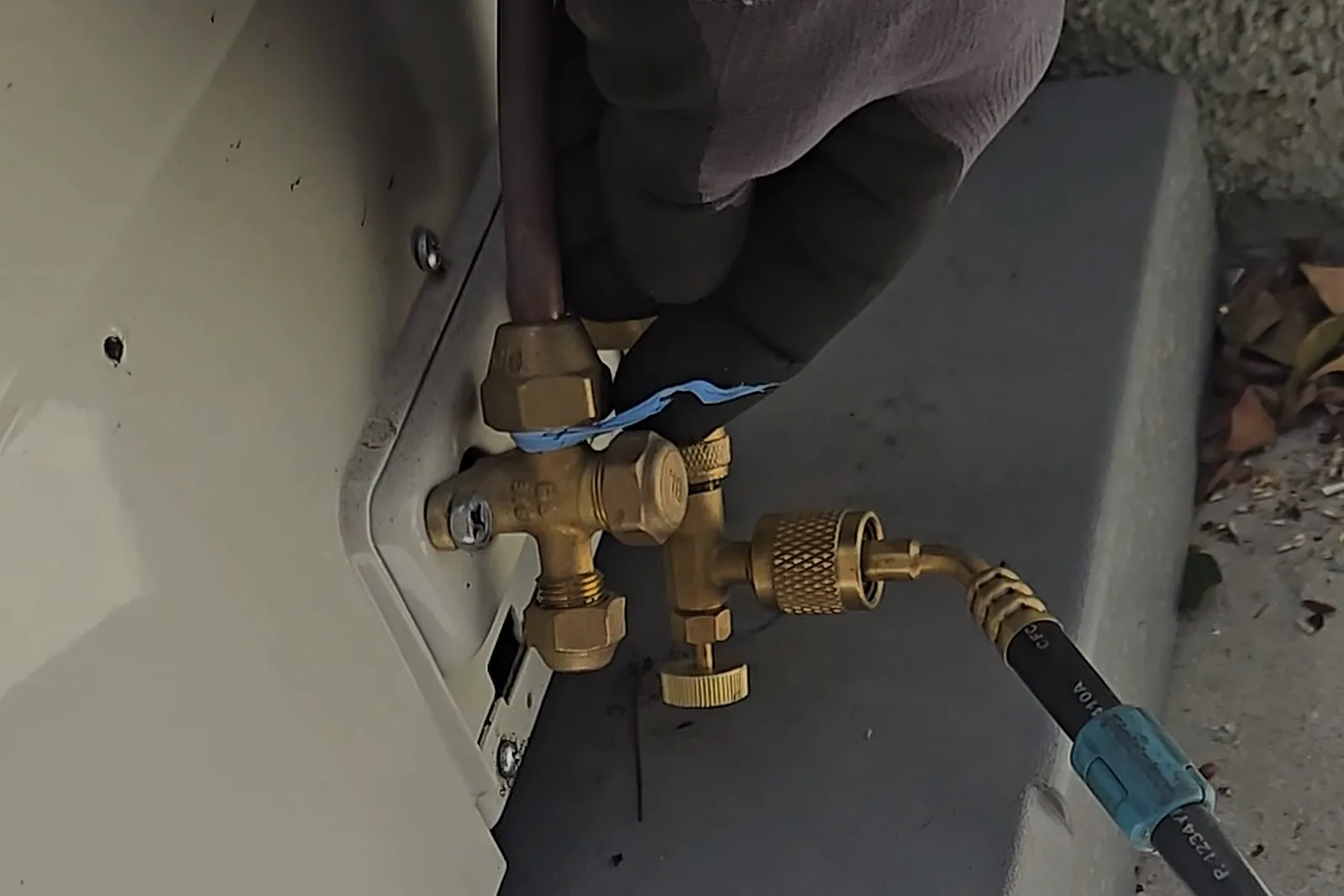
The installer had used plumbing PTFE Teflon tape on the refrigerant-line flare connections. Plumbing tape cannot seal this type of connection — a flare seals metal to metal — so the fittings were never properly sealed. The electronic leak detector was sounding right at the leaking connection. The equipment was new, and the complete charge still escaped through those fittings.
Sealing the fittings correctly
I removed the tape, installed FlareTite gaskets, and applied Nylog Blue to seal the fittings correctly. Both went on before the fittings were tightened, in place of the plumbing tape that had been there.
The bubble test
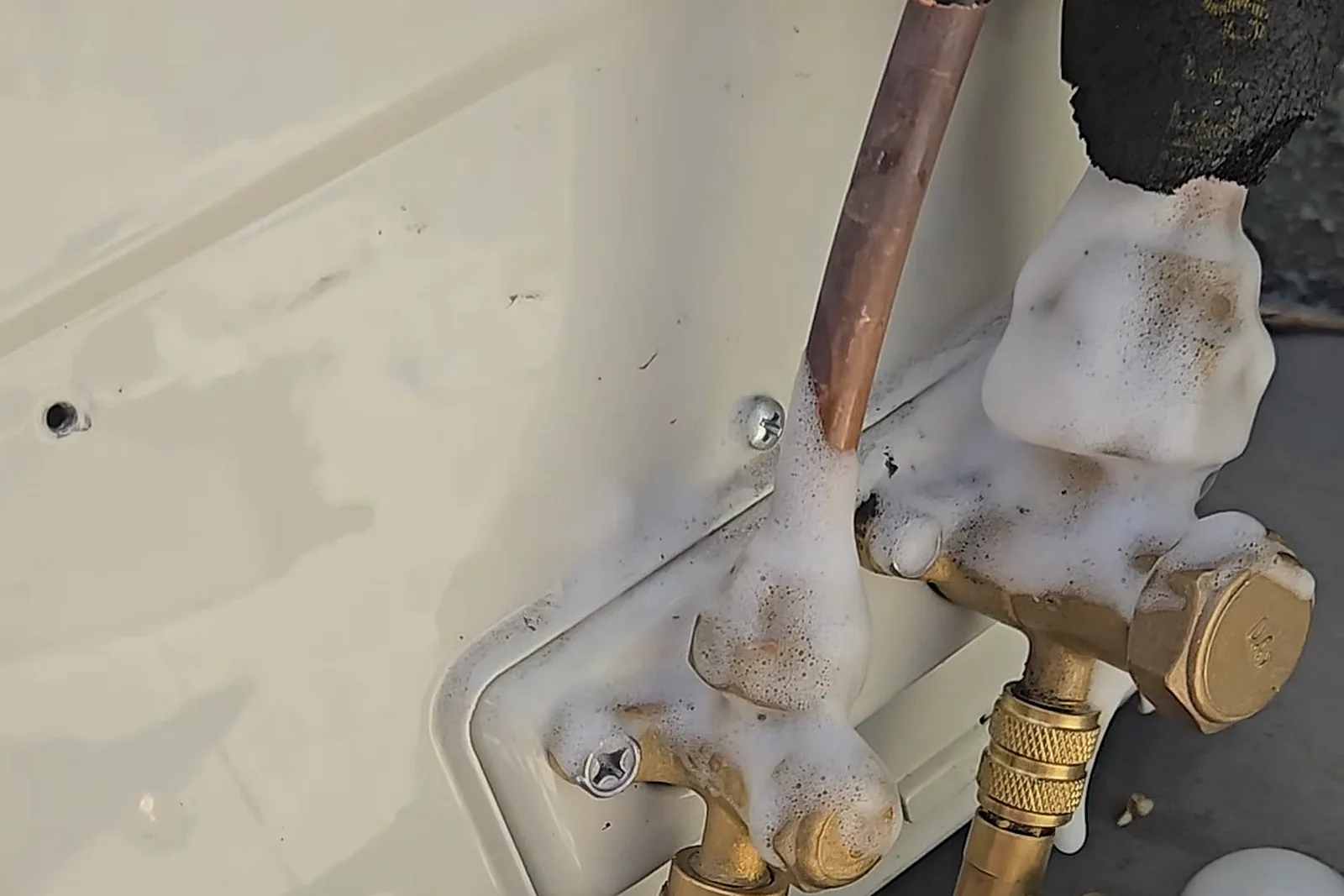
Before recharging the system, I checked every connection with a bubble test. For that test, I used a foaming dispenser with diluted dish soap or shampoo. It creates thick, stable foam, and small leaks around the fittings become much easier to see.
A deep vacuum: 210 microns
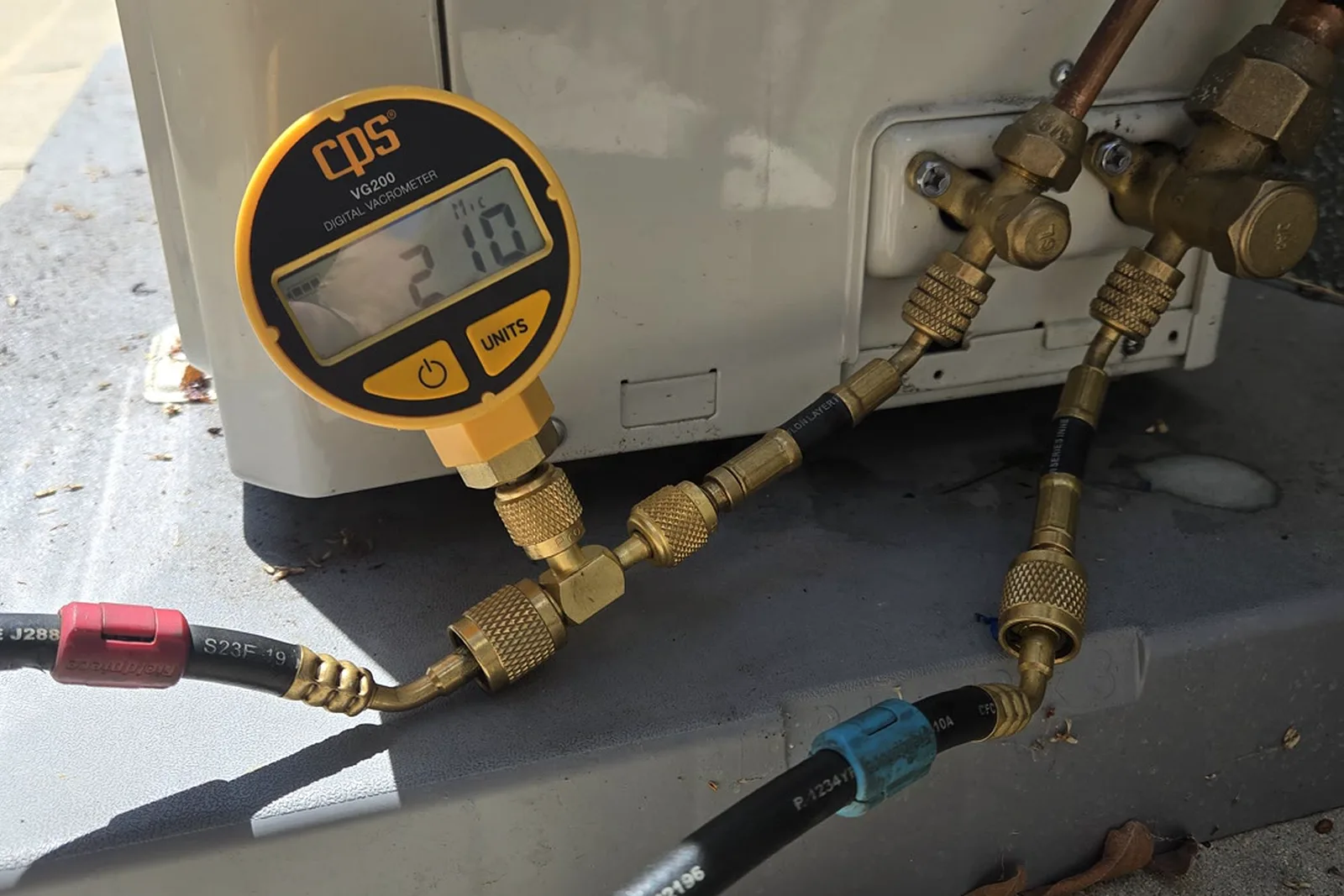
After the bubble test, I pulled the system down into a deep vacuum. It reached 210 microns and held, which showed the repaired connections were no longer leaking.
Recharge and operating pressures
I recharged the system with nine pounds of refrigerant and checked the operating pressures. The pressures were normal, the unit was cooling, and everything was working properly.
New equipment still needs sealed connections
The system was new. The leak came from the way the connections had been sealed. On this job, the leak was at the refrigerant-line flare connections.
We repair HVAC systems and appliances across the Westside, Hollywood and the San Fernando Valley. Flat rate upfront, and the $85 service call is credited toward the repair. Call or text (213) 205-2055.
FAQ
Can you use Teflon tape on AC refrigerant lines?
No. A flare connection seals metal to metal, and plumbing PTFE tape cannot seal that joint. On this brand-new system in Torrance the taped flare fittings let the entire refrigerant charge escape. Plumbing tape cannot seal a refrigerant flare connection.
Why would a brand-new HVAC system leak refrigerant?
New equipment doesn't protect against an installation mistake. Here the installer used plumbing tape on the flare connections, so the fittings were not properly sealed, and although the equipment was new, the complete charge escaped through them.
How do you find a refrigerant leak?
On this job the electronic leak detector was sounding right at the leaking connection. After the repair I also checked every fitting with a bubble test: a foaming dispenser with diluted dish soap or shampoo makes a thick, stable foam that makes small leaks around the fittings easier to see.
What are FlareTite gaskets and Nylog Blue?
They are what I used to seal these fittings correctly after removing the tape: I installed FlareTite gaskets and applied Nylog Blue. On this system they replaced the plumbing tape that should never have been there.
What does a 210-micron vacuum mean?
After the repair I pulled the system down into a deep vacuum, and it reached 210 microns and held. Holding a deep vacuum shows the repaired connections were no longer leaking, so the system was ready for its charge.
How much refrigerant does an AC system need?
It varies with the equipment. This system was recharged with nine pounds of refrigerant after losing its complete charge. We quote a flat rate upfront, and the $85 service call is credited toward the repair.
Do you repair HVAC in Los Angeles?
Yes. This job was in Torrance, and we work across the Westside, Hollywood and the San Fernando Valley alongside our appliance repair. CA BEAR registered (#A 50636), EPA 608 Universal certified and $1M insured. Call or text (213) 205-2055.
Got an appliance that needs fixing? We cover LA and the Valley.
Call (213) 205-2055 or text a photo of your appliance.