
Santa Monica heat pump out of refrigerant: the service valve wasn't bad, just cranked too tight
The system was empty. A nitrogen test found one leak, at the big service valve on the suction line, and I was ready to braze in a new valve. I didn't have to.
In this guide
A mixed-up system with nothing left in it
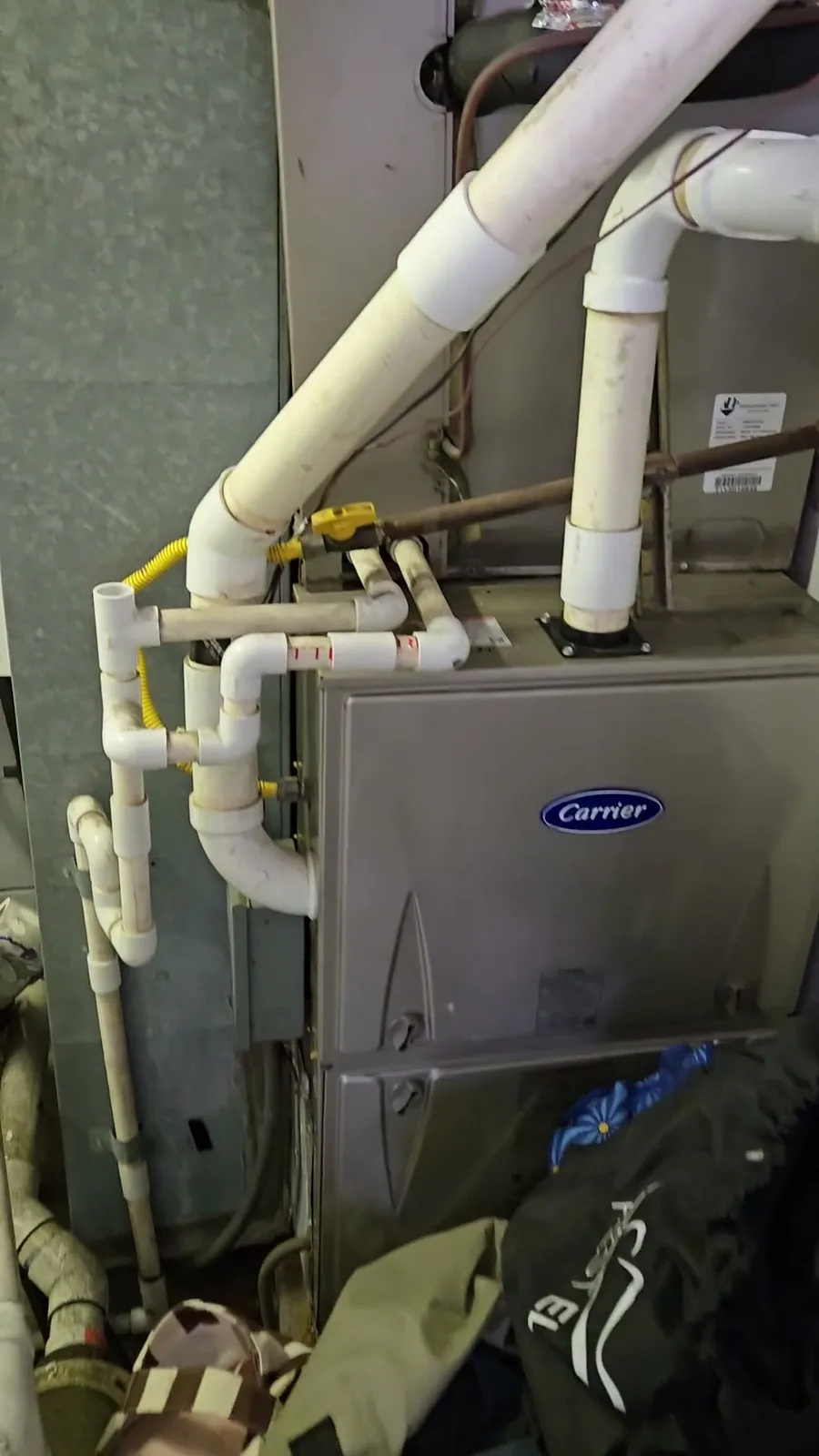
This call was a split system in Santa Monica running on R-410A. Outside sits a 2023 Innovair heat pump, and it’s an inverter unit: open it up and there’s the variable-speed board that drives the compressor. Inside the mechanical closet is a new Carrier gas furnace, also from 2023. Look up from the furnace and there’s the evaporator coil from 2013. Whoever installed the new equipment kept the old coil.
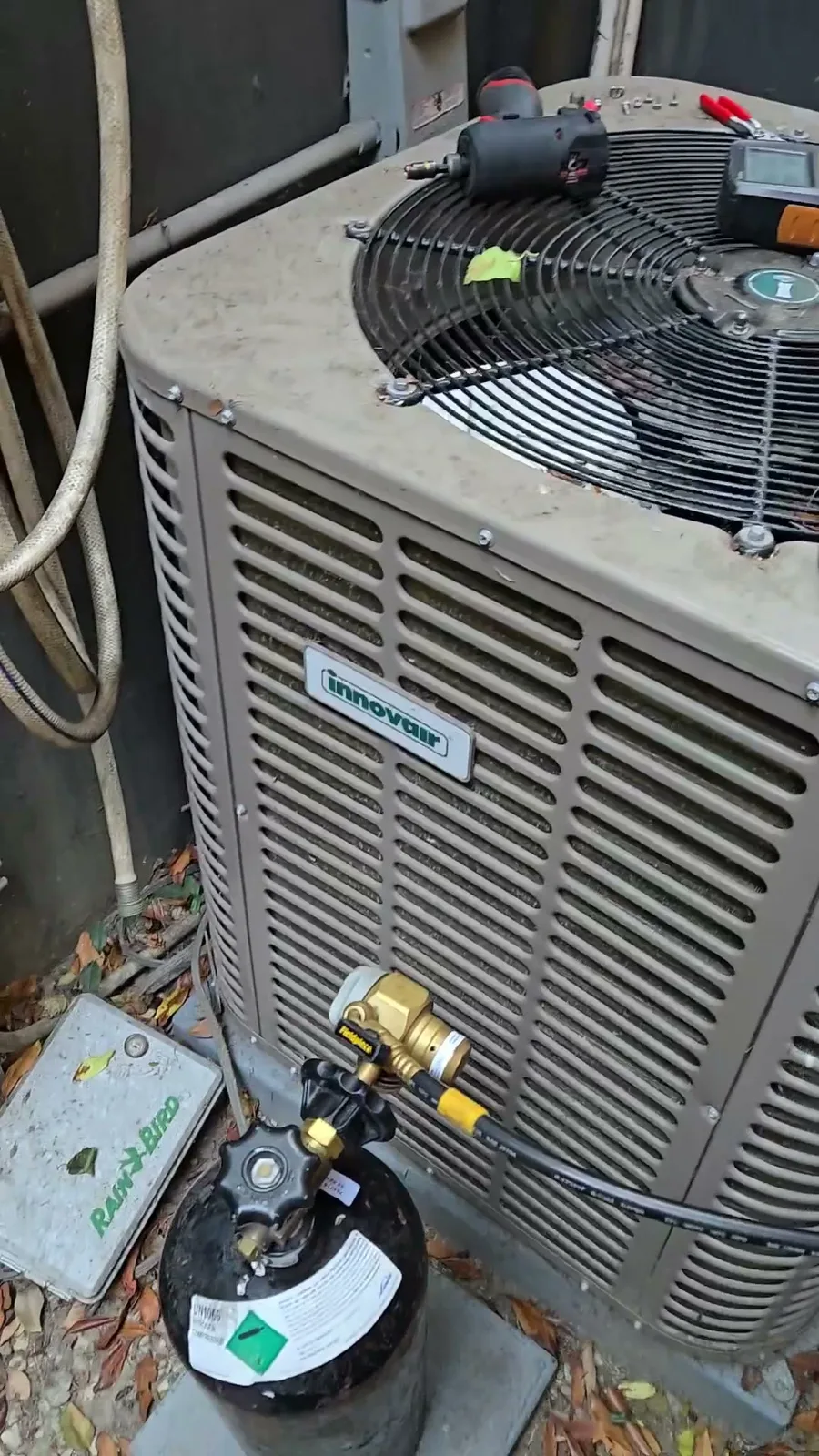
In the video I call it a Frankenstein, and that’s fair. The outdoor unit is one brand, the furnace is another, and the coil is ten years older than both. On paper it isn’t a matched system. It still runs normally, and the mix had nothing to do with why I was there.
I was there because the system was completely empty. It wasn’t cooling, and there wasn’t a drop of refrigerant left in it.
One leak, and you can hear it
If you put refrigerant into an empty system before finding the leak, it just leaks back out. So the first job was a pressure test. I filled the system with nitrogen to 400 PSI and went over it joint by joint.
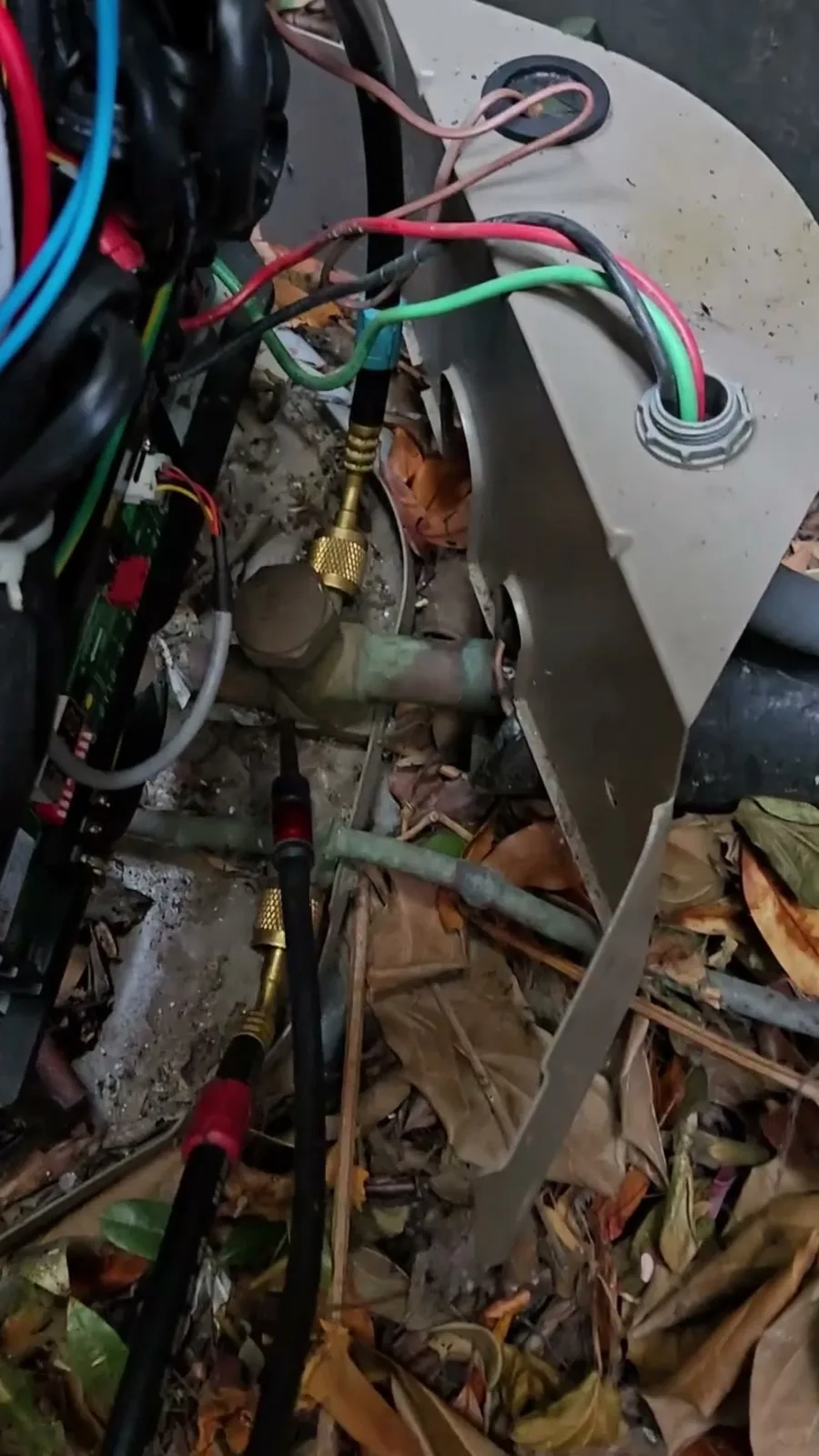
There was one leak, at the suction service valve on the outdoor unit. That’s the bigger of the two valves where the copper lines connect to the unit, and a lot of techs call it the king valve. With the cap on the valve stem snugged down, it held the 400 PSI. Loosen the cap a little and the nitrogen hisses out around the stem. You can hear it in the video.
A leak that stops when the cap is tight means gas is getting past the stem, and the cap is the only thing holding it back. It was the only leak on the system, so that’s where the refrigerant went.
How the service valves on an outdoor unit work
Split systems have two service valves at the outdoor unit: a small one on the liquid line and a bigger one on the suction line. A new outdoor unit ships with its refrigerant sealed inside, behind those two valves in the closed position. The installer connects the lines, pressure tests them, pulls a vacuum and then opens both valves, which lets the refrigerant into the rest of the system.
Opening a valve means taking the cap off and turning the stem counterclockwise with a hex key until it stops. Installation manuals say to stop right there and not force it. The cap then goes back on, snug, and on a lot of these valves the cap is part of the seal. It does more than keep dirt out.
The stem also has to seal where it stops. Crank it too hard against that stop and it may not seat the way it should. Then the cap is doing all the work, and you don’t find out until the system runs low.
My first call was wrong
I figured the valve was shot and had to go. My plan was to cut it out and braze in a new one. On an empty system that’s doable, but it’s a real job: cutting the old valve out of the copper, brazing the new one in while keeping heat off its body, then another pressure test before anything else.
Before doing any of that, I worked the stem. The valve wasn’t bad at all. Someone had opened it so hard that the stem was cranked into its back seat, and in that position it leaked. I turned the stem in a little, then backed it out to fully open again, snug, without forcing it. The leak stopped.
So the original valve stayed on the unit, and nothing got brazed.
Vacuum, then a full charge by weight
With the leak fixed, the nitrogen came out and the vacuum pump went on. A deep vacuum pulls air and moisture out before refrigerant goes back in, and it doubles as one more leak check. This system held it.
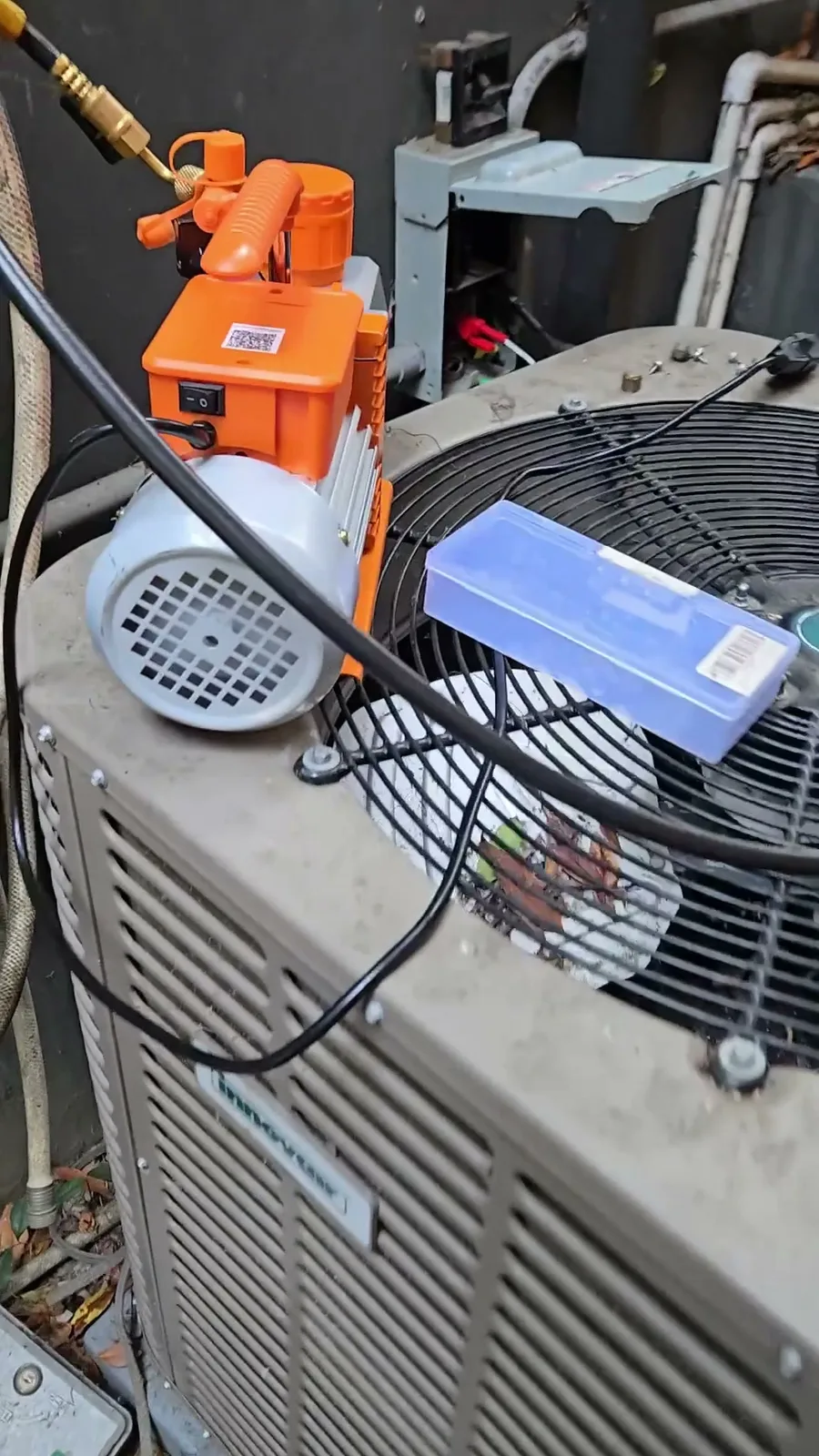
Then came the charge. You don’t top off an empty system by watching the gauges. The right way is to weigh in the full amount listed on the nameplate, and that’s how I charged this one. It also suits an inverter unit, where the compressor keeps changing speed and the pressures move with it.
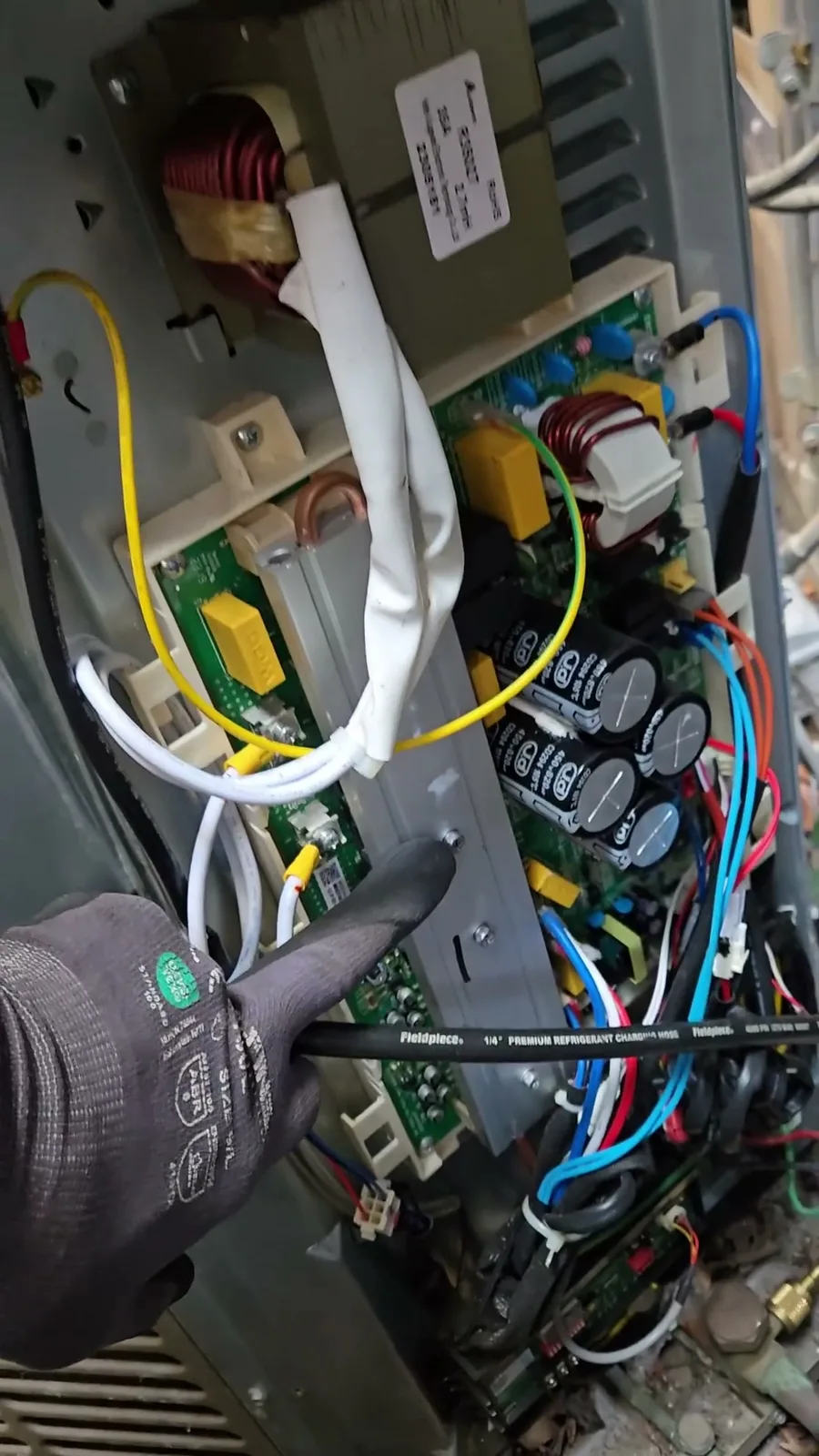
The system came back up and cooled the way it should.
The return is too small for 5 tons
I pointed out one more thing to the customers. This is a 5-ton system, and all of its return air comes through a single filter grille of about 14 by 30 inches.
The common rule of thumb is around 400 cubic feet of air per minute per ton, so a 5-ton system wants something like 2,000. Pulling that much through one 14 by 30 filter is a squeeze. The blower works harder, the grille gets noisy, and the coil gets less air than it needs. I recommended adding a second return or making this one bigger.
A return grille that whistles, or a filter that comes out bowed in, is worth an airflow check. We look at airflow as part of an AC tune-up.
Before anyone cuts out your service valve
If a tech tells you a service valve is leaking and needs replacing, ask where exactly it’s leaking. A crack in the valve body or a leak at a brazed joint is one thing. Gas escaping around the stem, and only when the cap is loose, can be a different story, and it’s worth a closer look before anyone lights a torch.
Don’t try this one yourself, though. That valve is holding back refrigerant under pressure, and working on refrigerant takes EPA Section 608 certification and the right equipment.
Installation mistakes can empty a newer system too. A brand-new system in Torrance lost its whole charge to Teflon tape on the flare fittings. And when a leak really does need the torch, it looks like this mini-split fitting we cut out and brazed.
Heat pump and AC repair in Santa Monica
Epic Star Repair works on central air conditioners, heat pumps and mini splits in Santa Monica and across the Westside, Hollywood and the San Fernando Valley. CA BEAR registered (#A 50636), EPA Section 608 Universal certified. We quote a flat rate upfront, and the $85 service call is credited toward the repair. If your AC has stopped cooling, call before anyone adds refrigerant without finding the leak.
FAQ
Can a leaking AC service valve be fixed without replacing it?
Sometimes. On this heat pump the valve wasn't bad. Someone had cranked it open so hard, right into its back seat, that it leaked in that position. Turning the stem in a little and bringing it back to fully open without forcing it stopped the leak, and the system held pressure and vacuum afterward. If the valve body has a crack or the stem itself is damaged, the valve does need replacing.
What is the king valve on an AC or heat pump?
It's a nickname a lot of techs use for the bigger service valve at the outdoor unit, the one on the suction line. The smaller one on the liquid line is the other service valve. On a new outdoor unit these two valves hold the factory refrigerant inside until the installer opens them, and they're where a technician connects gauges.
Why pressure test with nitrogen before adding refrigerant?
Because refrigerant added to a leaking system just leaks out again. We pressurized this system with nitrogen to 400 PSI and went over it until we found the one spot where it was escaping. The vacuum and the new charge came only after we fixed that leak.
Can you just add refrigerant to an AC that's completely empty?
You can, but it won't stay there. An empty system has a leak somewhere. The right order is to fix the leak, pull a vacuum and then weigh in the full charge from the nameplate, which is how this one was done.
Is it a problem if my outdoor unit and indoor coil don't match?
It can be. Efficiency ratings are based on matched equipment, and some warranties expect a match. This system had a 2023 Innovair heat pump, a 2023 Carrier furnace and a coil from 2013, and it cooled normally once we fixed the leak and gave it the right charge.
How big should the return be on a 5-ton system?
Big enough to move the air the system needs. The common rule of thumb is about 400 cubic feet per minute per ton, or around 2,000 for 5 tons. This one pulled all of its air through a single filter of about 14 by 30 inches, which is too small for that, so we recommended adding a second return or enlarging this one.
Do you repair heat pumps and central AC in Santa Monica?
Yes. We service central AC, heat pumps and mini splits in Santa Monica and across the Westside, Hollywood and the San Fernando Valley. The $85 service call is credited toward the repair.
Got an appliance that needs fixing? We cover LA and the Valley.
Call (213) 205-2055 or text a photo of your appliance.