
Something Killed This Compressor Before the Warranty Replaced It
A warranty replacement on a commercial rooftop, startup pressures at both extremes, and the stuck valve that cooked the original compressor.
In this guide
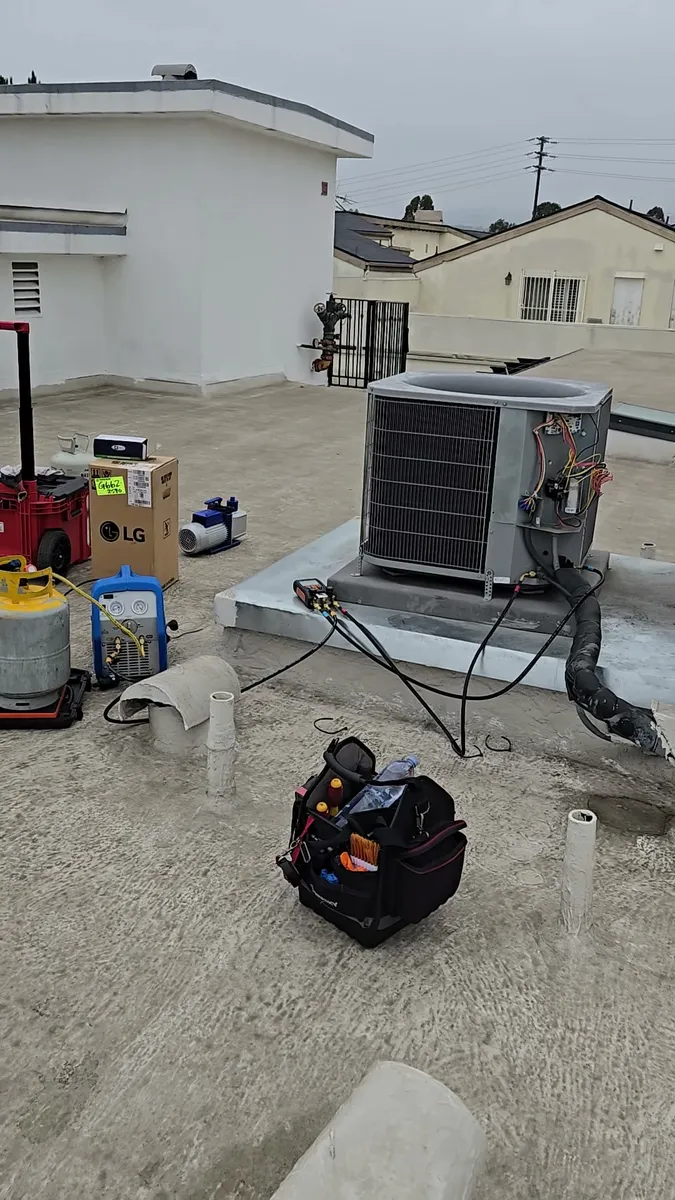
The building’s AC had quit, and the unit on the roof made it plain why. The compressor in the ICP Central condensing unit had burned out completely, far past the point where the system could still be tested. That’s the frustrating part of a burnout: with a dead compressor there’s nothing to measure, so whatever caused the failure stays hidden until a working one goes in.
Step one: replace what you can’t diagnose around
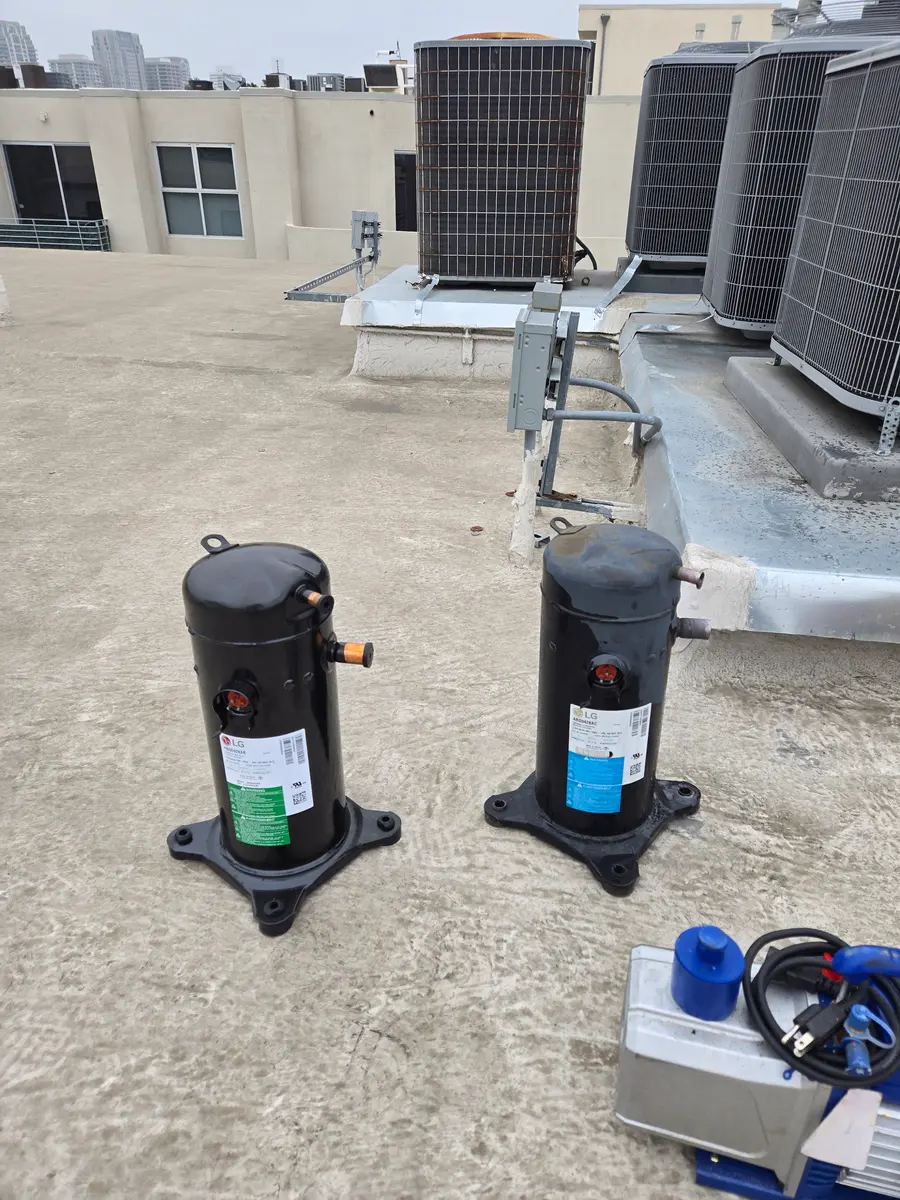
The compressor was covered under the manufacturer’s warranty, and the replacement — an LG unit — went in as part of the full burnout procedure. A burnout is a dirty death. When the motor windings cook inside a sealed system, they drive acid through every line of the circuit, and any new part inherits that chemistry unless the system is cleaned first.
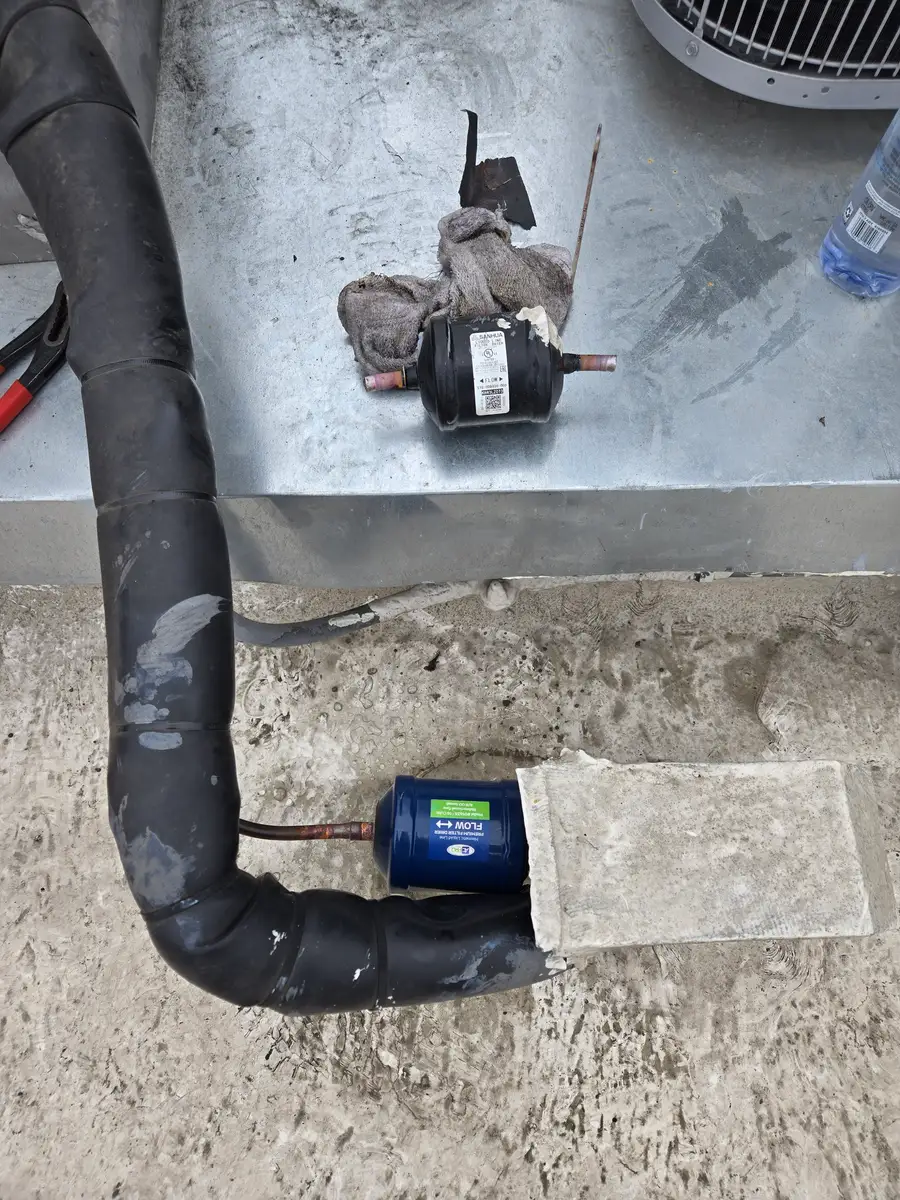
So the job ran by the book. Refrigerant recovered. The entire line set flushed clean of acid. The new compressor installed, and a new filter-dryer on the liquid line — mandatory after a burnout, because it traps whatever acid and debris the flush didn’t reach. Then a pressure test, a deep vacuum, and the recharge.
What the startup readings showed
With the new compressor running, we could finally take readings. Head pressure: extremely high. Suction: extremely low. That combination points one way — a refrigerant restriction. Somewhere in the circuit, the flow was being choked.
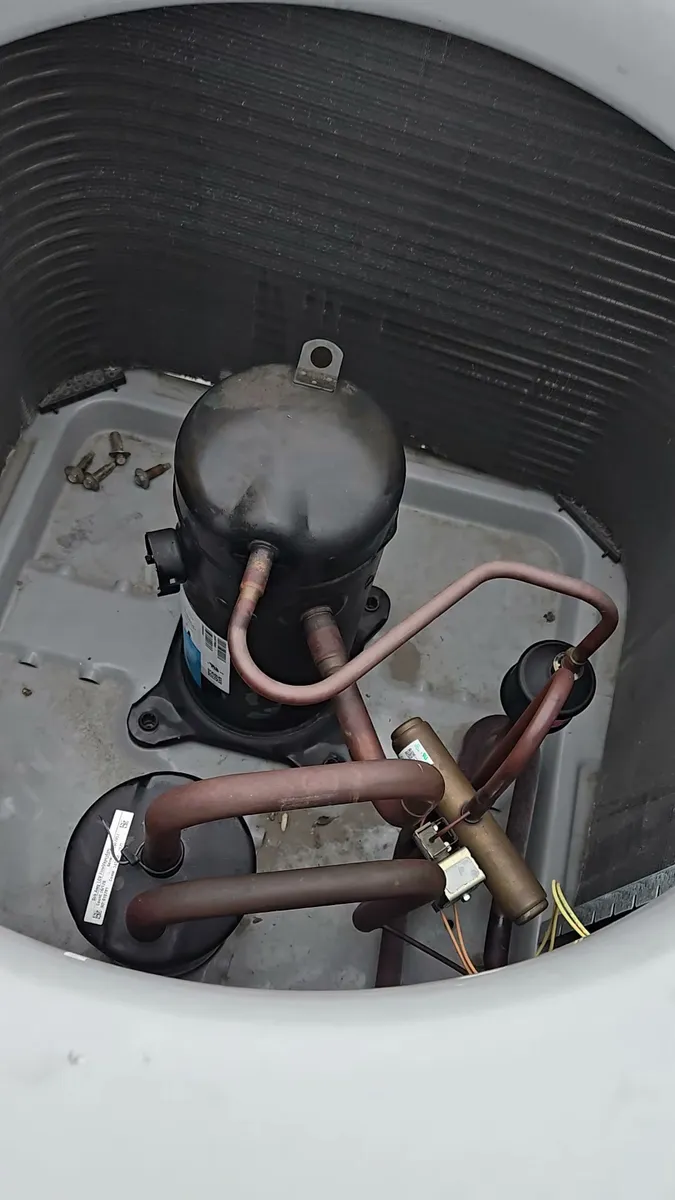
The choke point was the TXV, the thermostatic expansion valve that meters refrigerant into the evaporator. It was stuck closed. The old compressor had been pushing against that blockage, running with head pressure far outside what a compressor can survive. That’s what killed it. We replaced the valve as well, so the new compressor finally got the conditions it was built for.
Why compressors almost never die alone
A dead compressor is such an obvious finding that it’s tempting to treat it as the whole diagnosis. It almost never is. Something kills a compressor.
Sometimes it’s a failing capacitor: the compressor tries to start, can’t, and gets left to repeat that locked-rotor attempt until the windings cook. Sometimes it’s a stuck-closed TXV like this one — a restriction that sends head pressure through the roof while the motor grinds against a wall. Replace the compressor without finding which one did the killing, and the new compressor dies the same death, warranty paperwork and all.
That’s the discipline behind any sealed-system repair: the refrigerant circuit tells you the truth, but only if you measure it.
If your AC quit and someone says “compressor”
Ask one question: what killed it? A real answer involves gauge readings, a capacitor test, and a look at the metering device — not just a part number and a price. On this rooftop the answer was a stuck TXV, and the warranty replacement will last because the cause left with the old parts.
We handle commercial rooftop units and residential systems across Los Angeles, from commercial HVAC work to AC tune-ups. Ask about available appointments; timing depends on scheduling and parts. Our work carries 30-day labor and 90-day parts warranties. Call or text (213) 205-2055, or book online.
FAQ
Why do AC compressors burn out?
Almost never on their own. Something creates the conditions — commonly a failing capacitor that leaves the compressor locked at start until the windings cook, or a stuck-closed expansion valve (TXV) that chokes refrigerant flow and drives head pressure to extremes. Find that cause before installing a new compressor, or the replacement fails the same way.
What does high head pressure with very low suction pressure mean?
A refrigerant restriction. Flow is blocked somewhere between the high and low sides, so pressure piles up ahead of the blockage and starves everything after it. On this unit the restriction was a TXV stuck closed.
What is a TXV?
The thermostatic expansion valve — it meters refrigerant into the evaporator. Stuck closed, it starves the system: the compressor pushes against the blockage, head pressure climbs to extremes, and the motor eventually burns out.
Why does a burned-out compressor need an acid flush and a new filter-dryer?
A burnout cooks the motor windings inside the sealed circuit and drives acid through every line. The flush removes the bulk of it, and a new liquid-line filter-dryer traps the residue. Skip either step and the acid goes to work on the new compressor.
Does a manufacturer's warranty cover a burned-out compressor?
This one did — the compressor in the ICP Central unit was replaced under the manufacturer's warranty. Coverage depends on the unit's age and terms, so have the model and serial numbers ready when you call and we'll check before quoting anything.
Do you repair commercial rooftop HVAC units?
Yes — condensing units and package units on commercial roofs across Los Angeles, along with residential systems. Ask about available appointments; timing depends on scheduling and parts. Work includes a 30-day labor and 90-day parts warranty.
Got an appliance that needs fixing? We cover LA and the Valley.
Call (213) 205-2055 or text a photo of your appliance.