
GE refrigerator light on but not cooling: What we found on the control board
The light worked, the controls didn't, and the board had a visible clue.
In this guide
The first clue was at the door. The interior light came on, but the temperature display stayed dark. Pressing the controls didn’t bring a response. This older GE Profile had stopped cooling.
That combination matters. A light tells you something is receiving power, but it doesn’t tell you whether the refrigerator’s cooling controls are working. We needed to look beyond the illuminated interior.
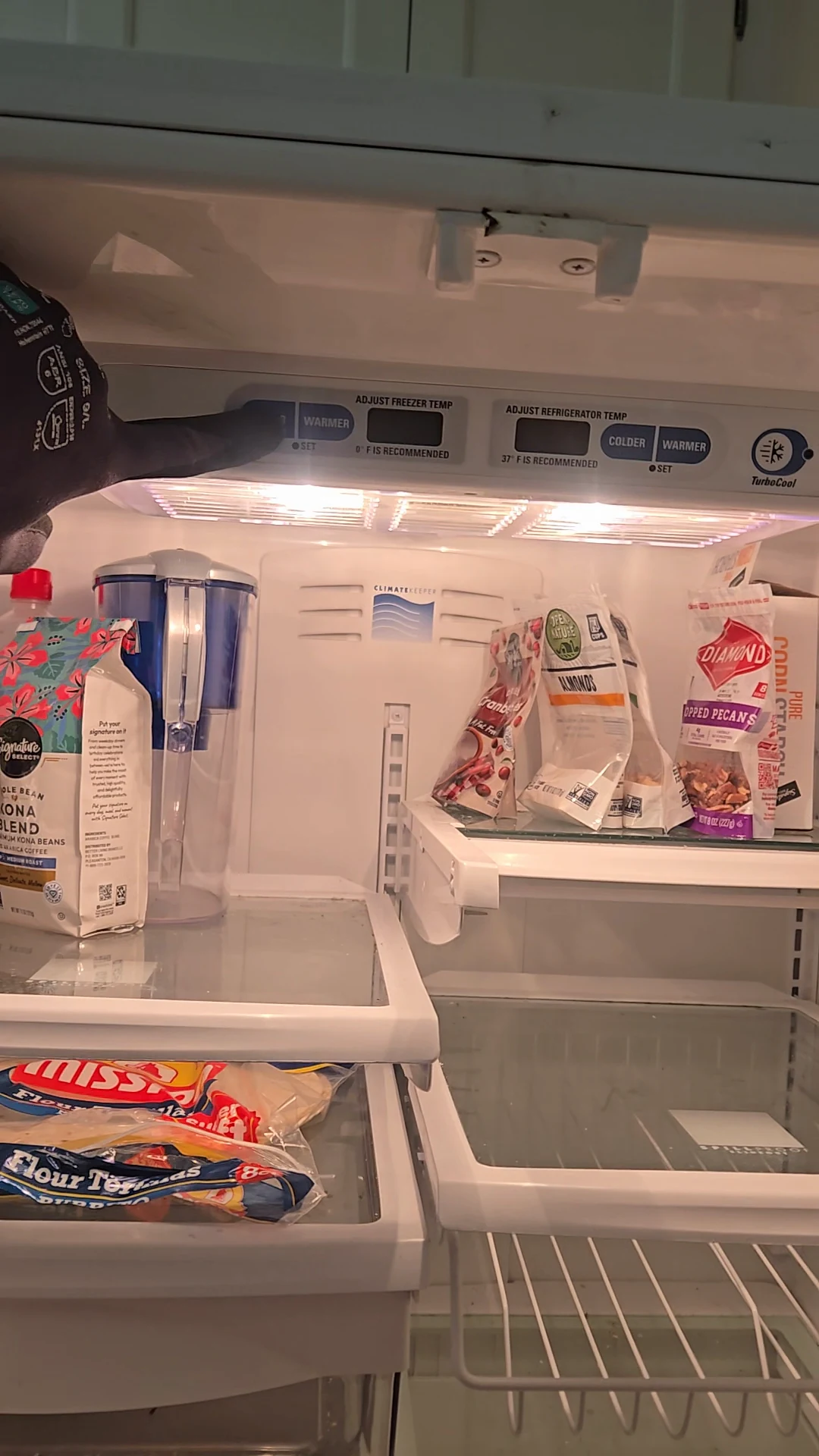 At the start of the repair, the light worked and the display was blank.
The capacitor tops had changed shape
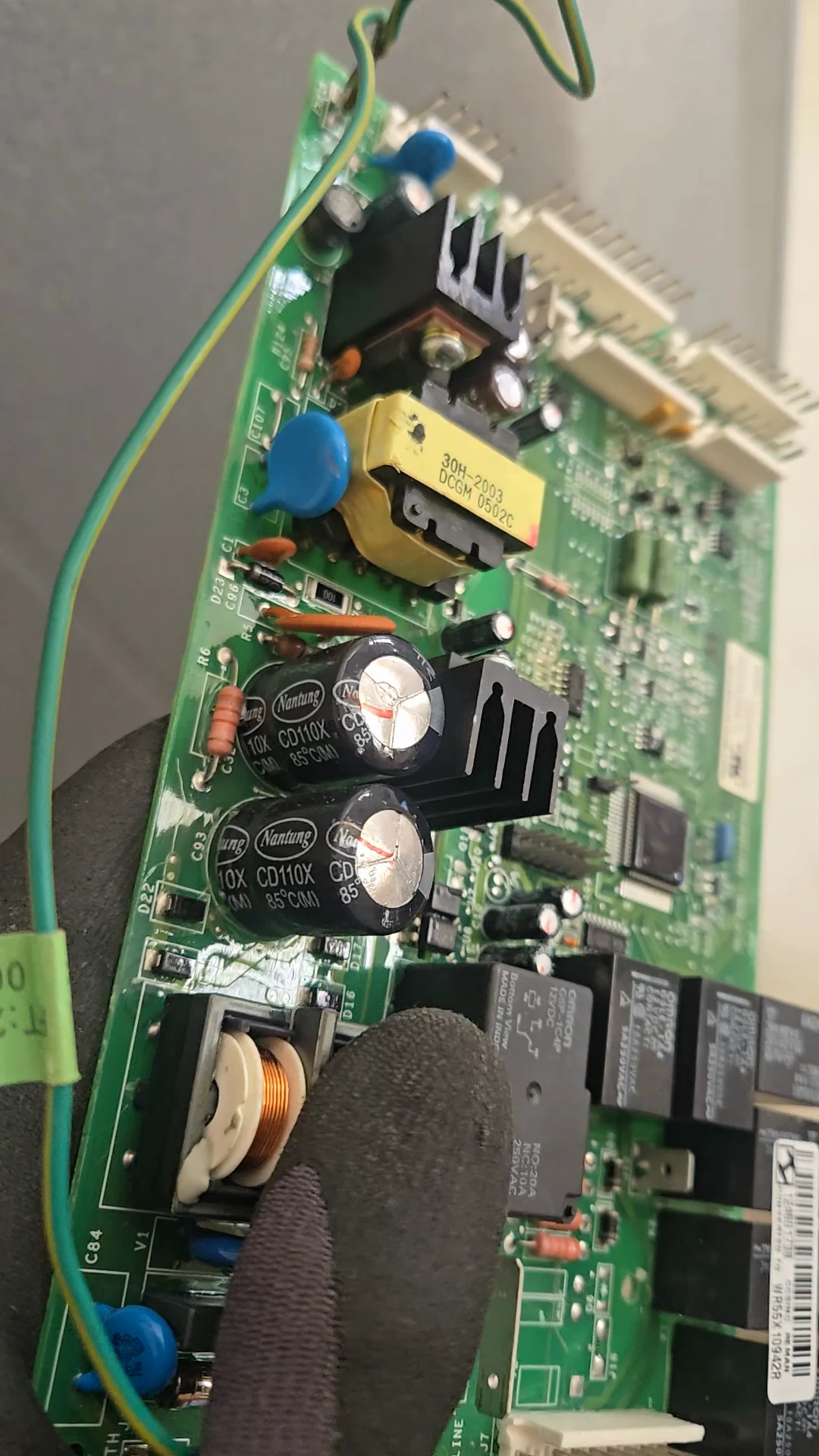
Behind the refrigerator, we removed the cover over the main control board. Several capacitors stood out because their tops were raised. A smaller capacitor near the heat sink was swollen too.
Those close-ups are useful because the damage can be easy to overlook in a wider shot. The top surfaces on the affected parts had a dome instead of the flat shape visible on the replacements. We also show a removed capacitor from underneath, where its bottom seal was damaged.
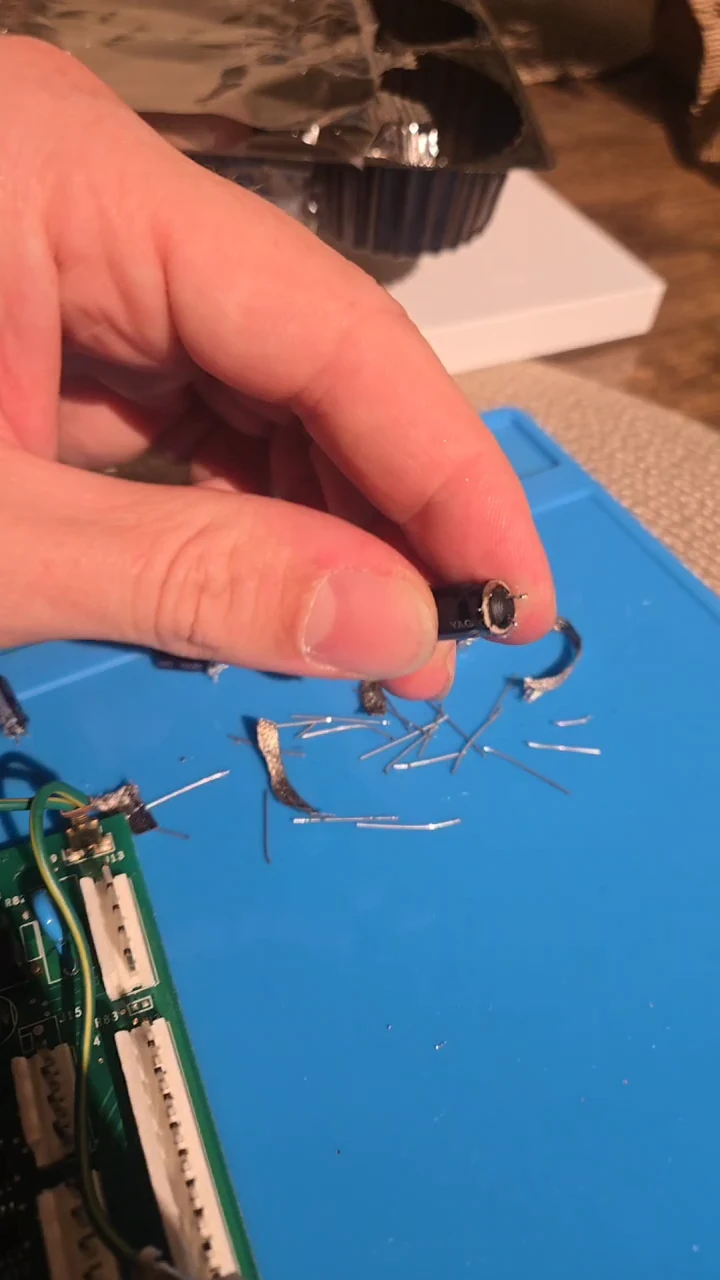 The underside of a removed capacitor provided another view of the damage.
The visible swelling drew our attention to the board. On the bench, an ESR analyzer was also used to check the capacitors. Looking at a part and testing it answer different questions; the close-ups let you see the physical damage for yourself.
Why the replacement board was ready before the visit
We had an identical control board that we’d already rebuilt on the bench. That is the board installed in this refrigerator. The work shown includes replacing failed capacitors with high-temperature, low-ESR parts.
ESR means equivalent series resistance: the resistive contribution inside a capacitor. Nichicon explains the term and how it relates to capacitor impedance. It is one of the specifications that matters when choosing a replacement for a power-supply circuit; matching the appearance of the old part isn’t enough.
The bench footage follows the work down to the individual components: the removed parts, their damaged seals, and the replacements fitted to the board. Then the view moves back to the refrigerator, where the rebuilt board goes into place.
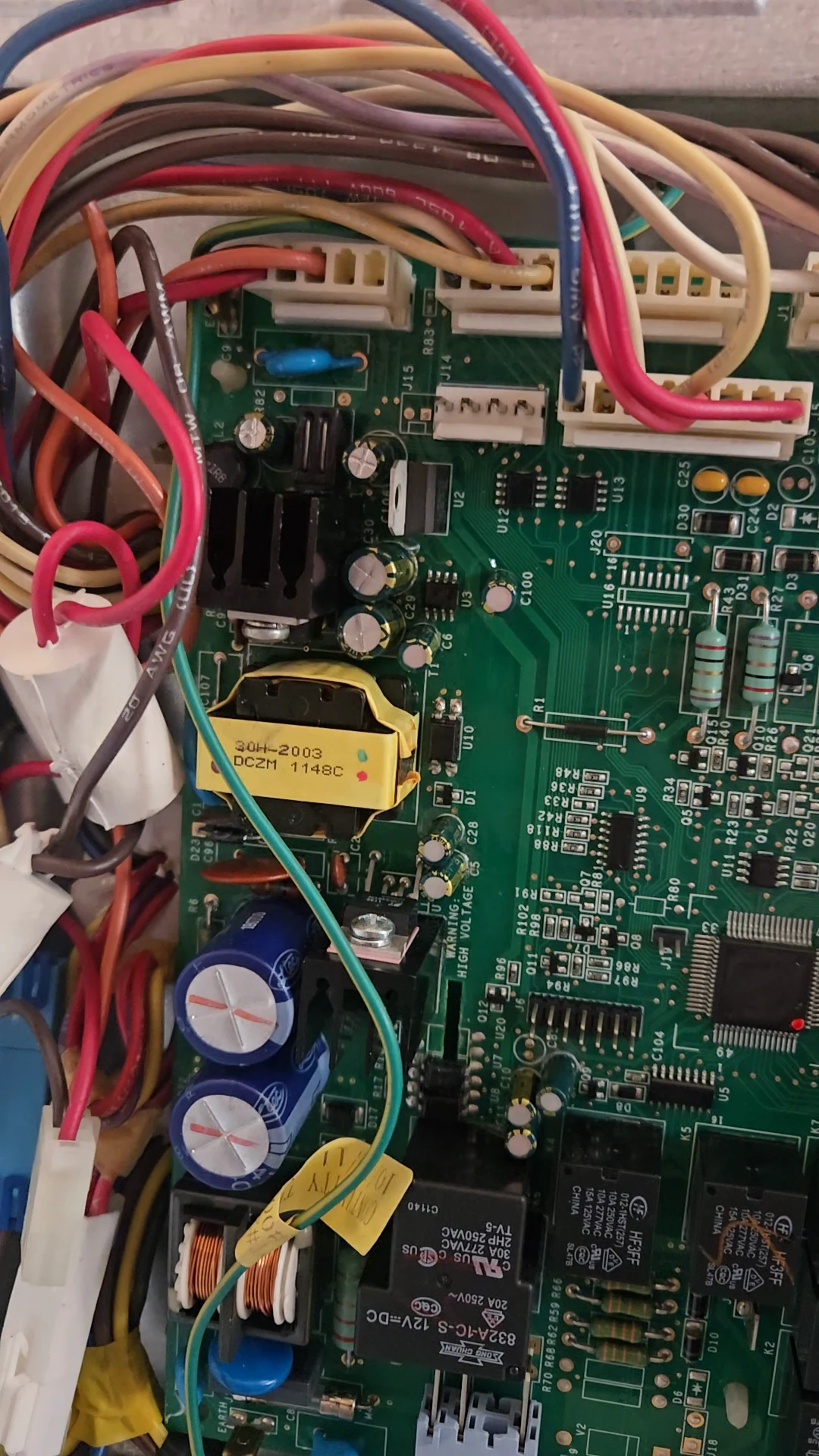 An identical board, rebuilt beforehand on the bench, was installed in the refrigerator.
What happened after the board swap
After installation, the compressor and condenser fan started. At the front of the refrigerator, the temperature display responded again.
The change at the controls was clear: the display that had been dark at the start now lit up and responded. The video records that restart, rather than a completed temperature pull-down test.
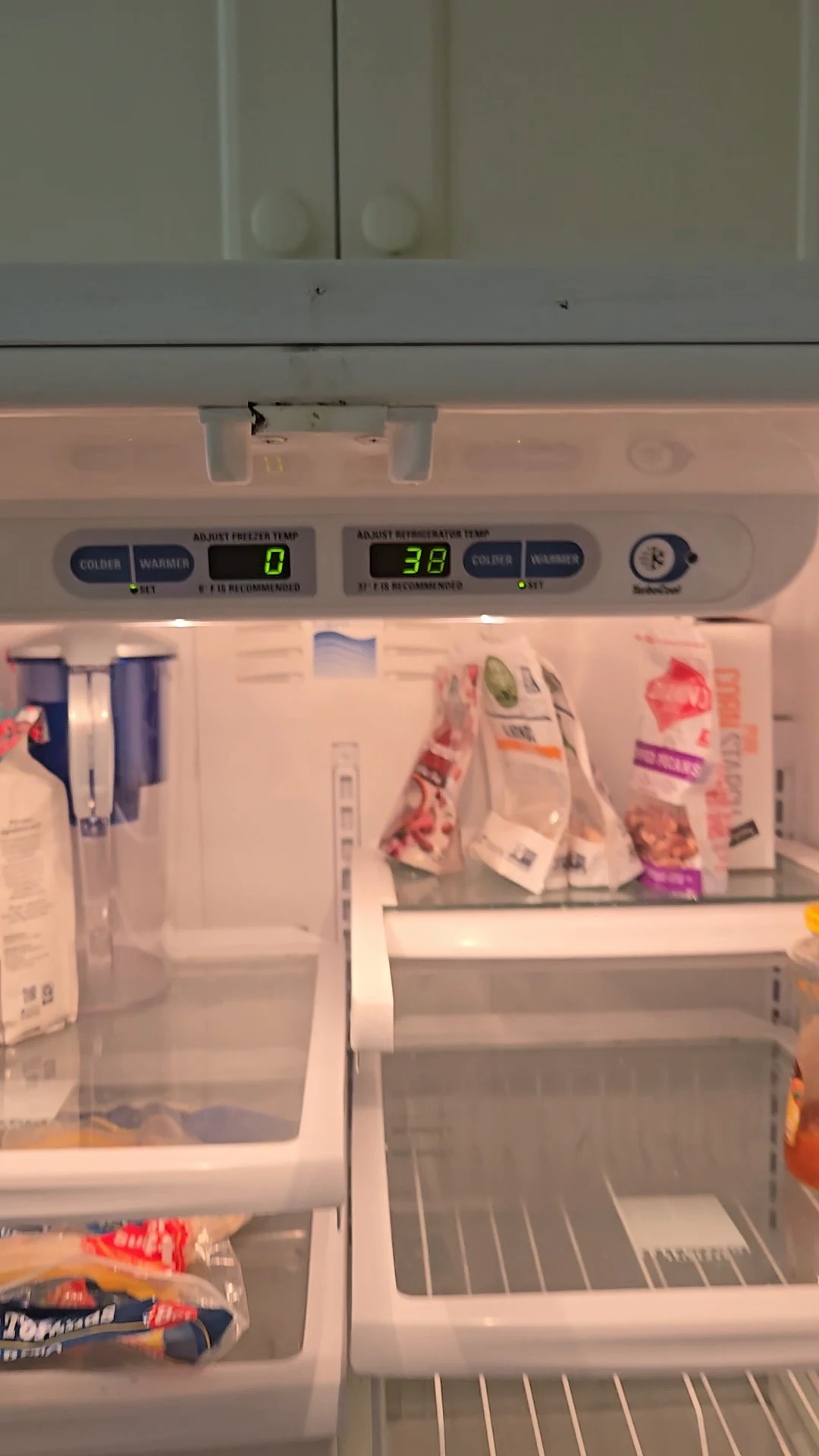 The display responded again after installation. This image documents the controls, not a measured cooling test.
We also cleaned the condenser area
The lower rear area had collected dust. Before closing the refrigerator, we cleaned the condenser area and put the back panel in place.
The repair ends with a look at the cleaned rear area and another check at the door. Those wider views connect the bench work to the appliance it came from.
A repair decision needs the actual fault
A refrigerator that stops cooling can look like an immediate replacement decision. Here, we found damaged components on the control board and used a rebuilt board to restore startup and control response.
For this job, the repair focused on the control board. The decision started with the symptom and the damaged parts we found, rather than the age of the refrigerator alone. Our repair-or-replace guide discusses that broader decision; our guide to refrigerators that stop cooling covers other possible causes.
If you’re arranging service, a photo of the display and model label is a useful place to start. Mention whether the display is blank, flashing, or still showing numbers, and describe what changed. You don’t need to remove a control-board cover to collect that information.
For refrigerator repair in Los Angeles, call or text Epic Star at (213) 205-2055. Send the symptoms you’ve noticed so we can discuss the next step.
FAQ
Can a GE refrigerator light work when the refrigerator is not cooling?
Yes. In this repair, the interior light worked while the temperature display was blank and the refrigerator had stopped cooling. A working light alone does not establish that the cooling controls are operating.
Does a blank display mean the control board needs replacement?
A blank display is a symptom, not a diagnosis by itself. On this GE Profile, we also found swollen capacitors on the board. Another refrigerator needs its own checks before a board repair is recommended.
Did you rebuild the original board during the service visit?
We installed an identical board that we'd already rebuilt on the bench. The video also shows removed capacitors and bench work; it does not show the entire original-board rebuild taking place during this visit.
What does low ESR mean?
ESR stands for equivalent series resistance. Low-ESR capacitors have a lower value for that internal resistive contribution under specified conditions. A replacement also needs suitable ratings and compatibility with the circuit.
Does the display prove the refrigerator reached its target temperature?
No. The footage records a responsive display and the compressor and fan starting. It doesn't include a recorded temperature pull-down test, so we aren't presenting displayed numbers as verified final compartment temperatures.
What should I send when requesting refrigerator service?
A photo of the model label and display, along with a description of what stopped working, helps us understand the symptom. For refrigerator repair in Los Angeles, call or text Epic Star at (213) 205-2055.
Got an appliance that needs fixing? We cover LA and the Valley.
Call (213) 205-2055 or text a photo of your appliance.