
LG refrigerator completely dead? How to test the inverter board
A 2023 LG with no light and no cooling. Three checks on the board and one on the compressor found a shorted transistor.
In this guide
An almost new LG that went completely dead
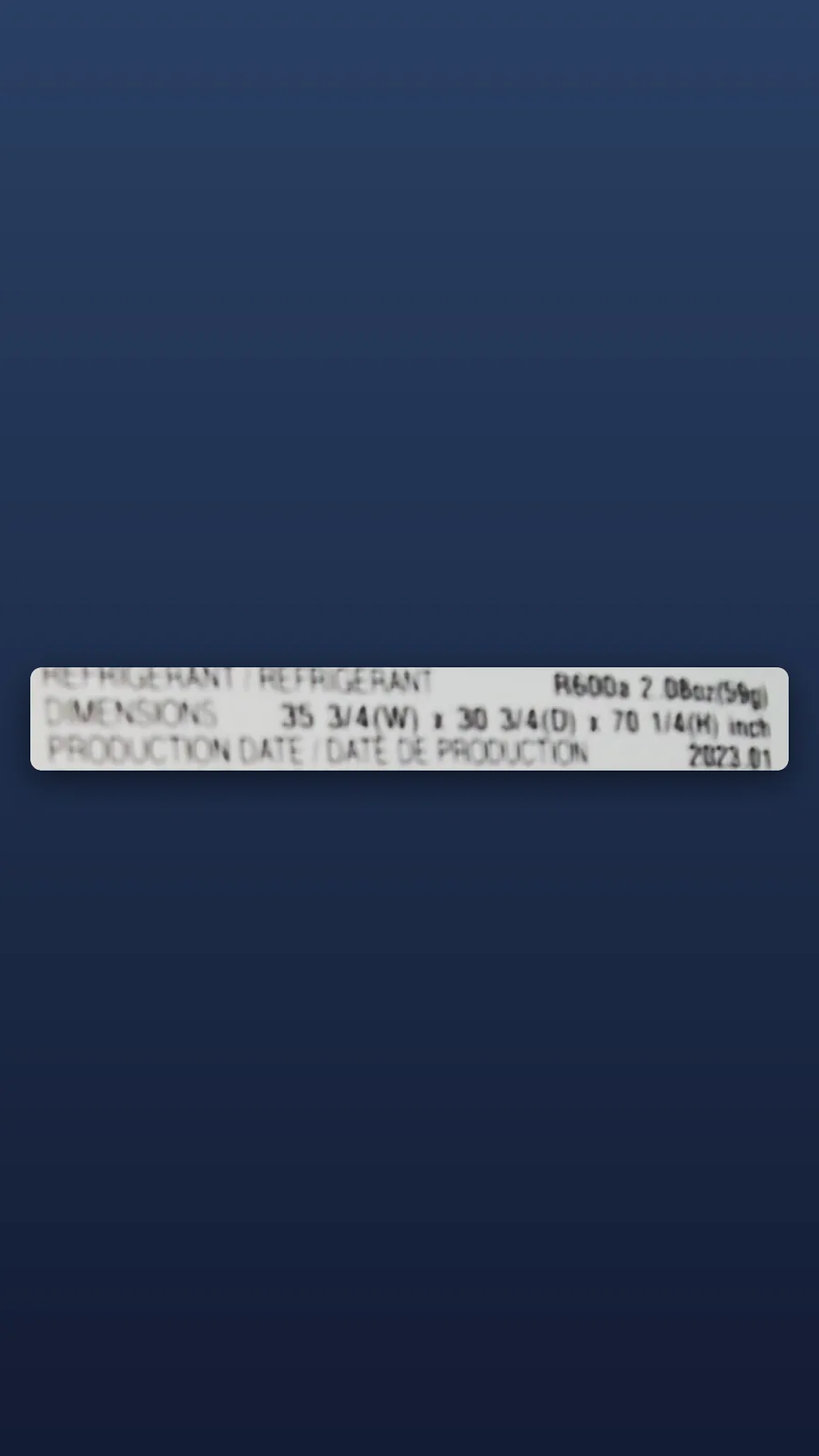
This LG refrigerator in Toluca Lake was built in January 2023. The production date is right on the label. Then it stopped working completely: no light, no cooling, nothing worked. The whole fridge had just shut off.
With a fridge that young and that dead, we start with the main control board.
On this LG, one board does both jobs
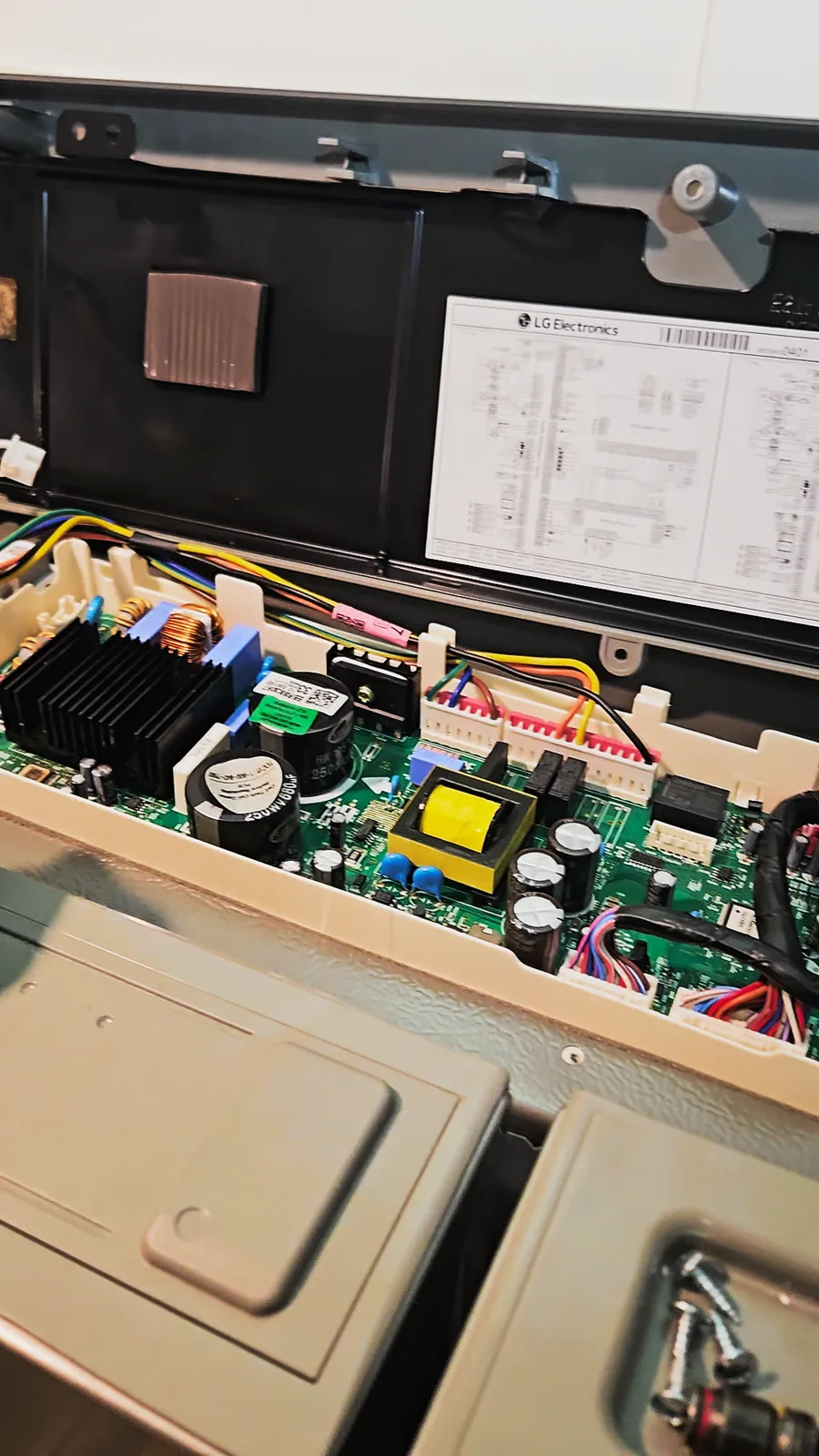
On this model the board sits behind a panel on top of the fridge. There’s only one board: the main control board with its microcontroller, and the inverter, all soldered onto the same PCB.
The inverter part drives the compressor. Its transistors sit in a single assembly, an IPM (intelligent power module), under a heatsink. They switch on and off, one after another, thousands of times a second to make three phases for the compressor. Six transistors in one package.
Before you touch it: power off and discharge
Unplug the fridge first. On an inverter board, that’s only half of it. The DC bus capacitors can hold a charge after the plug comes out, so give them time to discharge and confirm with the meter before your hands go near the board. If that step sounds unfamiliar, stop here and call a technician.
Step 1: look at the board
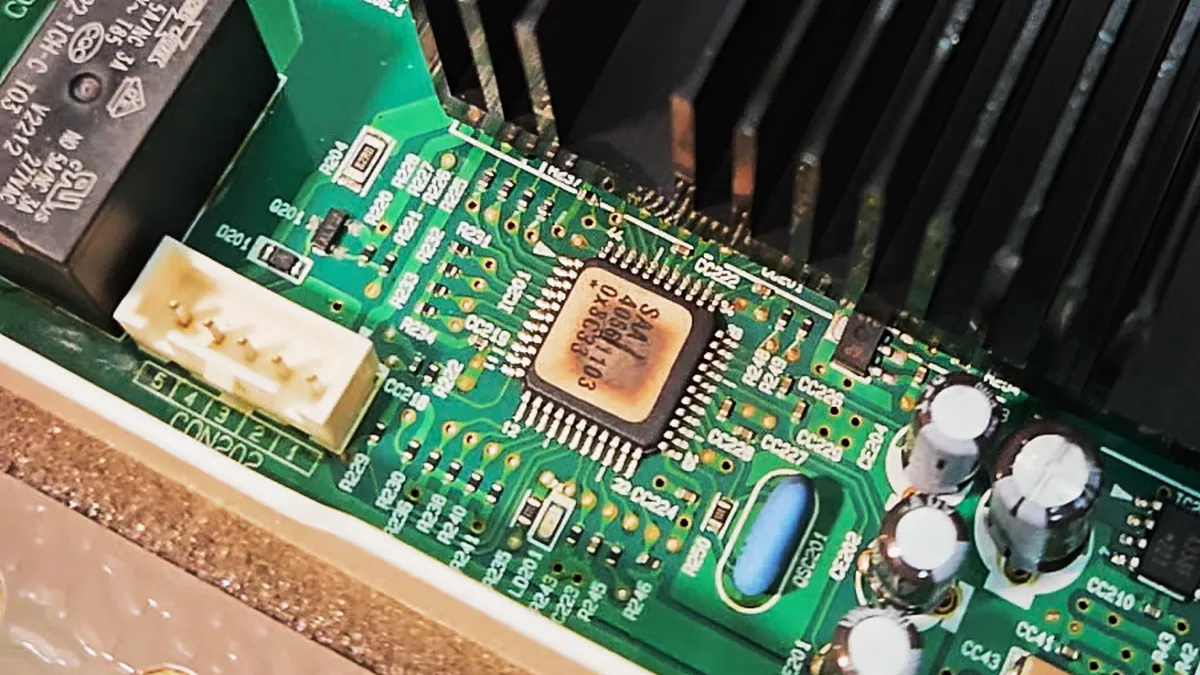
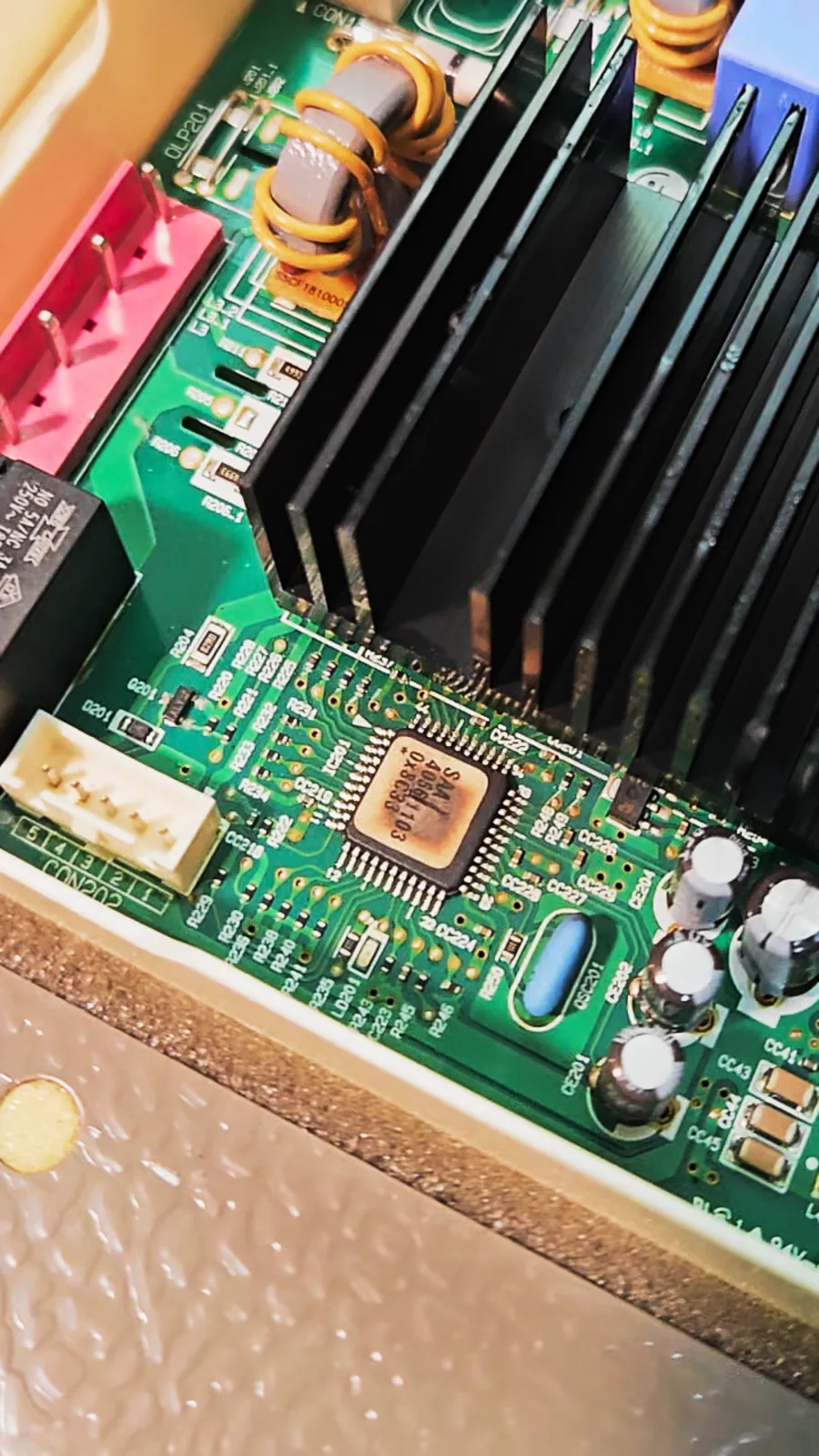
Start with your eyes. On this board the fault was visible right away. The microcontroller that runs the inverter was burnt, and you could see it on the chip itself.
While you’re looking, scan the rest of the board for scorch marks, swollen capacitors or cracked parts. A burn mark tells you where to measure next.
Step 2: check the input fuse
Next comes the input fuse, where power enters the board. Set the multimeter to continuity and put one probe on each end. A good fuse makes the meter beep.
This one stayed silent. The input fuse had burnt open.
A blown input fuse means something downstream pulled too much current. Swap in a new fuse alone and that fault stays on the board. The next test finds it.
Step 3: test the IPM in diode mode
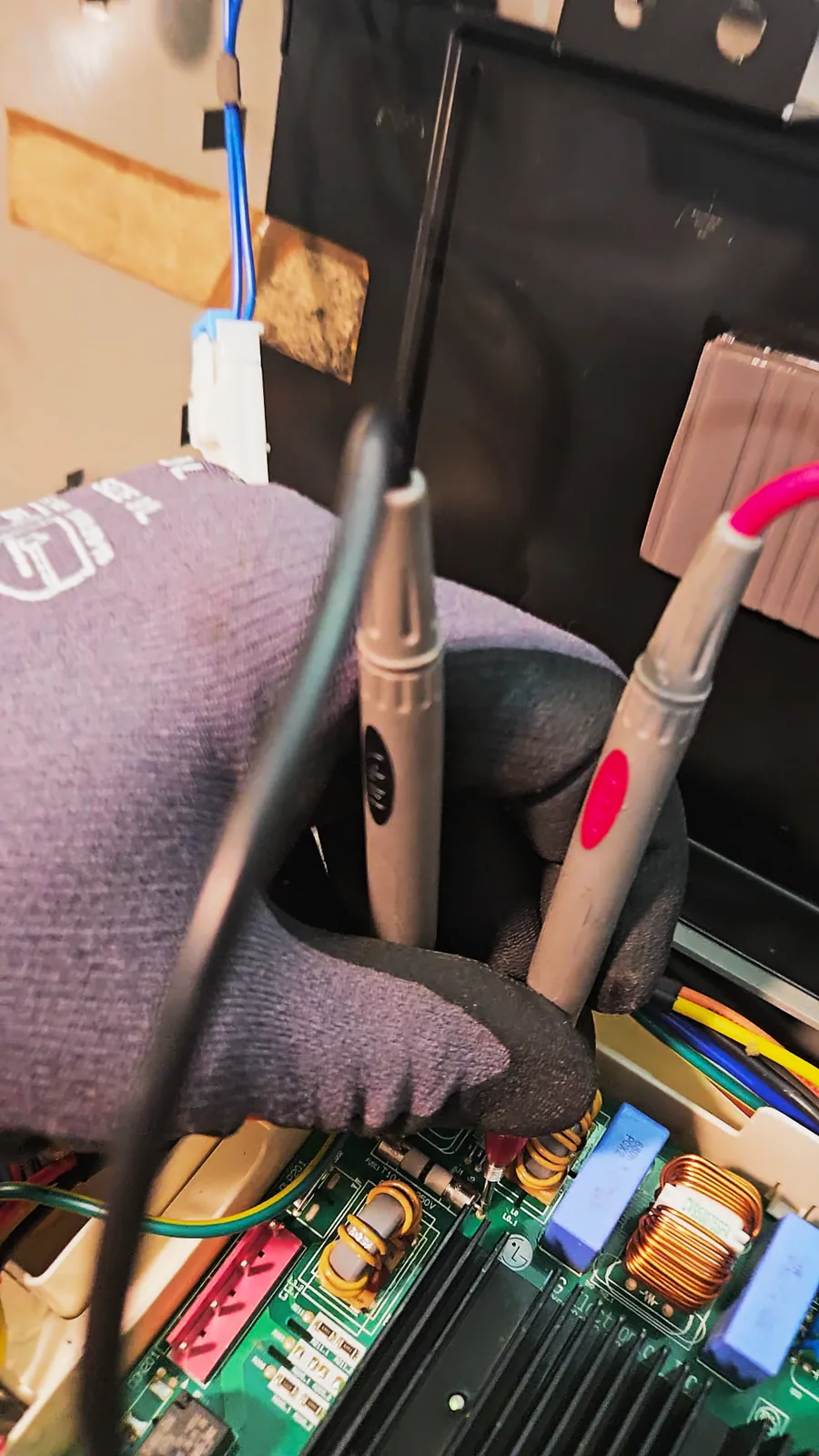
Switch the meter to diode mode. Then probe the three outputs that feed the compressor, two at a time.
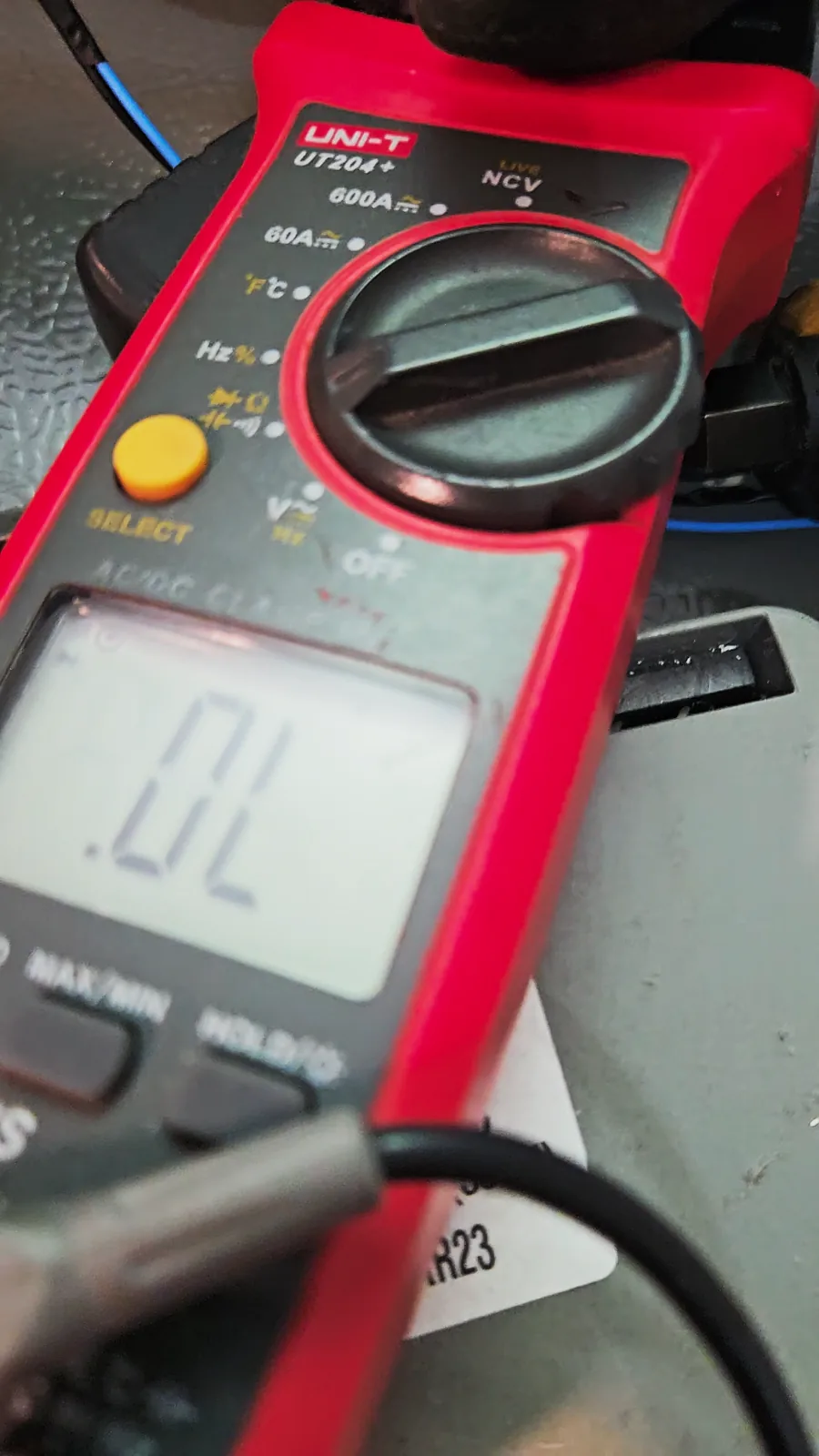
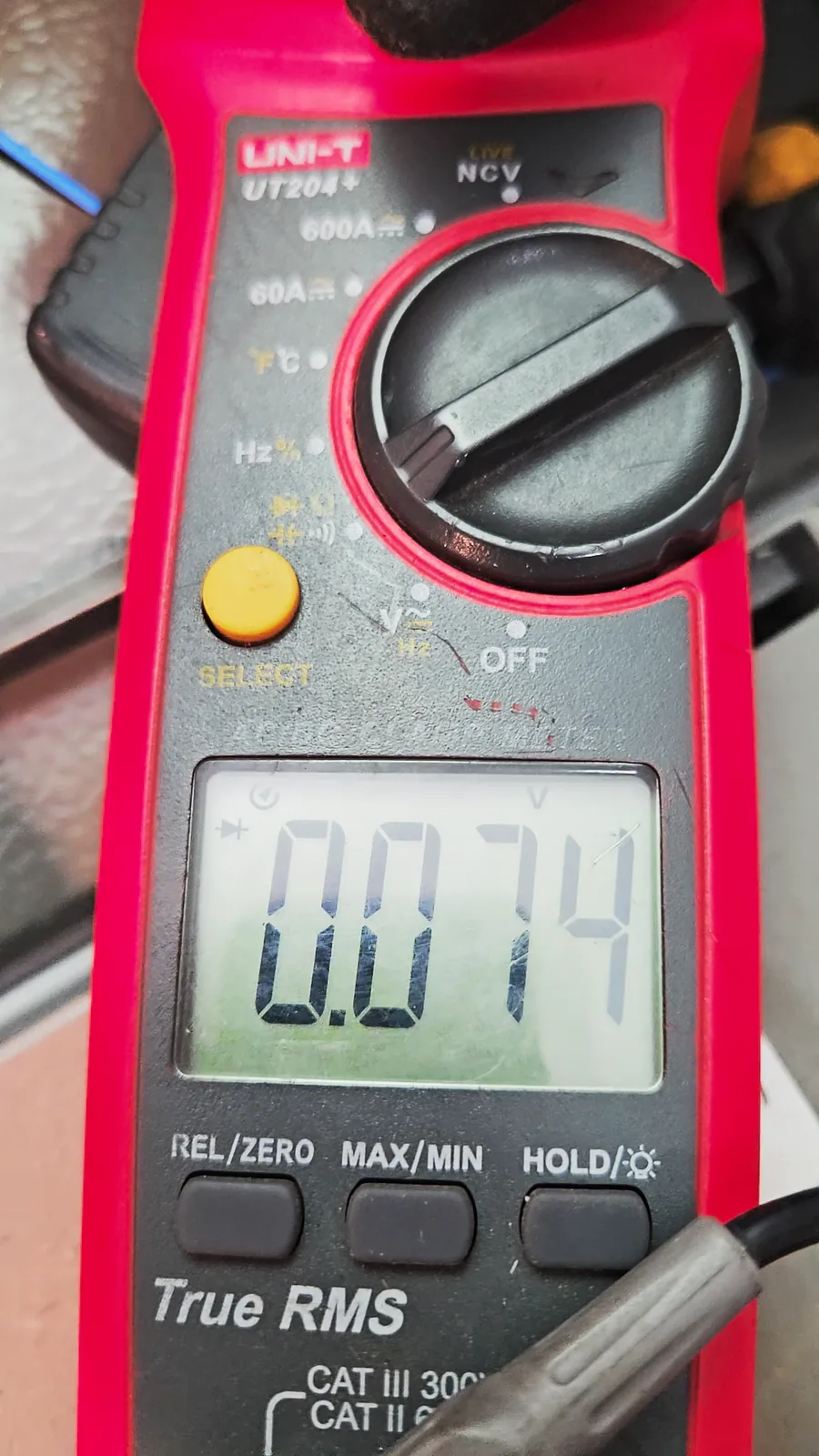
Between any two of the three phases, in either order, a healthy IPM reads OL. That means nothing conducts between them. On this board the three pairs read like this:
| Pair | Reading | What it means |
|---|---|---|
| First pair | OL | normal |
| Second pair | OL | normal |
| Third pair | 0.074 | shorted transistor |
If any two pins show a value instead of OL, a transistor inside the assembly is shorted. With a shorted transistor, the board is junk.
A fuller IPM check
The phase-to-phase test is the quick one. For a complete check, also test each output (U, V and W) against the positive (P) and negative (N) sides of the DC bus in diode mode. A healthy output shows a diode drop one way and OL the other way. A reading close to zero in both directions points to a short.
How one short shut down the whole fridge
On this board the chain went like this. The shorted assembly took out the controller, and the input fuse blew. With the fuse open the board had no power at all, and the whole fridge shut down. That’s why the light went out along with the cooling.
Check the compressor before you order a board
Before blaming the board, we rang out the compressor too. A shorted compressor winding can damage an inverter board as well, so it’s worth checking before a new board goes in.
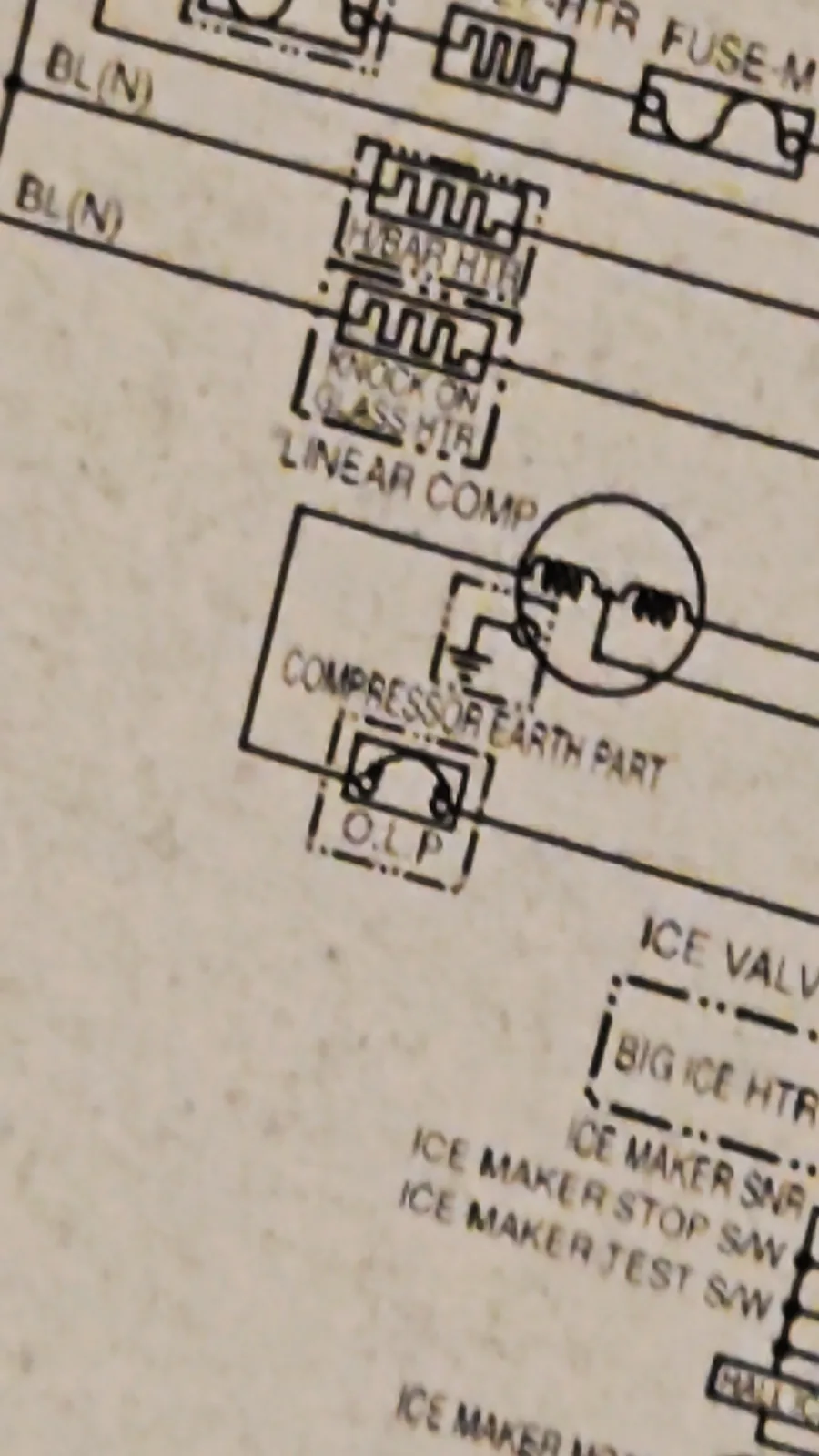
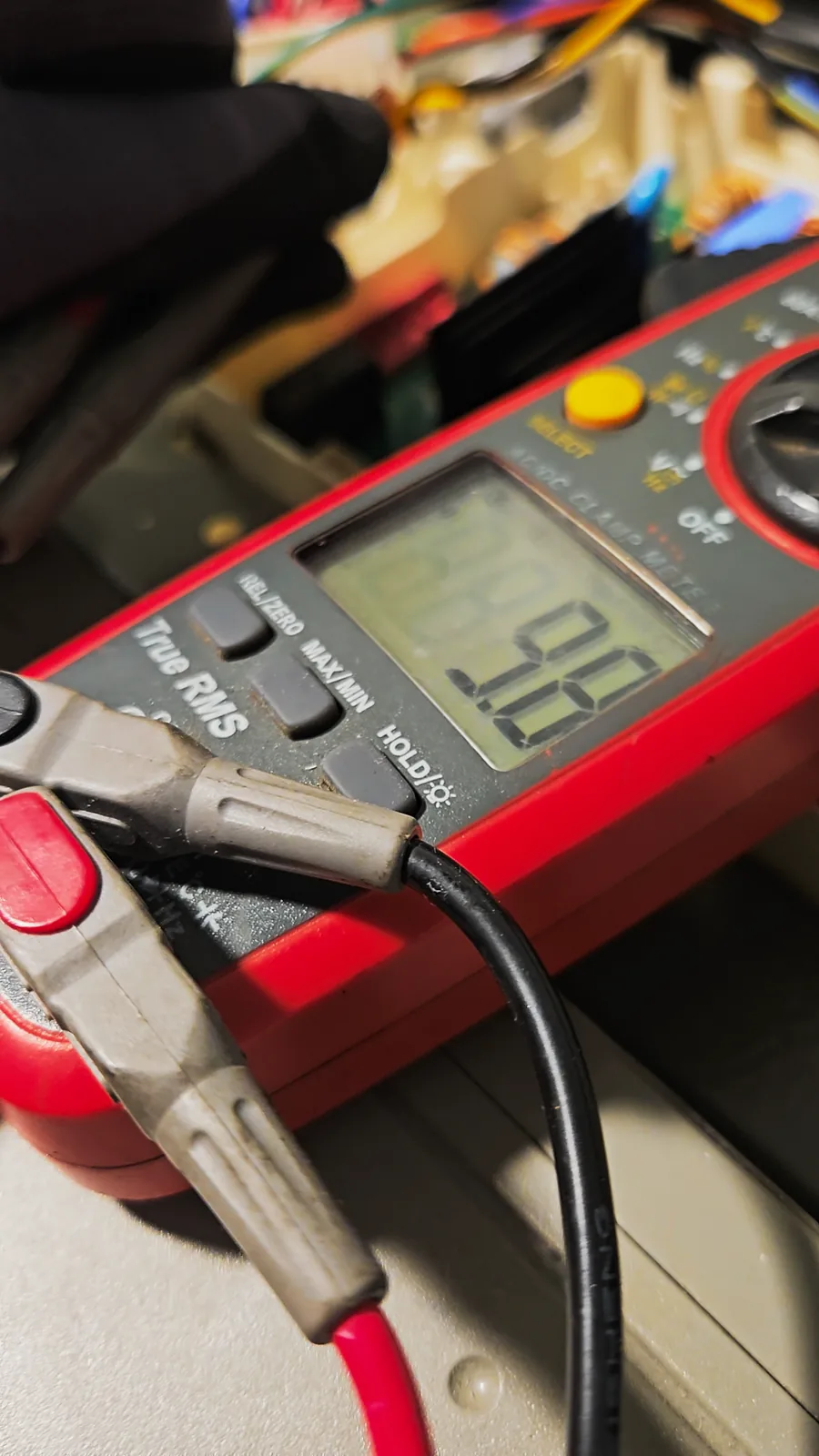
The schematic on this fridge says linear compressor. On a regular inverter compressor, the resistance reads the same between any pair of pins. A linear compressor works differently. This one has two windings, so it gave three different readings: 4 ohms, 6 ohms and 9.8 ohms.
Then we checked each terminal against the compressor case, one at a time, and found no leakage to ground. The compressor checks out. The problem is the board, so this board goes for replacement.
The same test works on other inverter boards
You can run these three checks well beyond LG fridges. Inverter boards that drive a motor are built the same way, with a controller and a transistor assembly behind an input fuse. That goes for fridge compressors, for the BLDC pumps in washers and dishwashers, and for the ECM fan motors in AC units.
When to call a technician
If the readings don’t add up, or you’d rather not work near a board that can hold a charge, that’s a job for a technician. On this LG it took three checks on the board and one on the compressor to point at a single part.
LG refrigerator repair in Toluca Lake
Our base is in Toluca Lake, and we work across Burbank, Studio City and the rest of the San Fernando Valley and Los Angeles. See our refrigerator repair service, our LG appliance repair page and the Toluca Lake service area. For a different LG failure, read how we replaced a failed linear compressor in Burbank, or see a KitchenAid inverter board that failed another way. CA BEAR registered (#A 50636), EPA Section 608 Universal certified. Call or text (213) 205-2055.
FAQ
Why would an LG refrigerator go completely dead?
On this 2023 LG, a transistor in the inverter's power module (IPM) had shorted. The short took out the controller and blew the input fuse, so the board had no power: no light and no cooling.
How do you test a refrigerator inverter board with a multimeter?
Unplug the fridge and let the capacitors discharge first. Then look for burnt parts, check the input fuse on continuity, and switch to diode mode to test between the three compressor outputs. Any two outputs should read OL in either order.
What does OL mean in diode mode?
OL means the meter sees no conduction between the probes. Between two phases of a healthy IPM, that's the reading you want.
What does a reading like 0.074 between two phases mean?
Current flows where it shouldn't. On this board, 0.074 between two phases meant a shorted transistor in the IPM, and the board went for replacement.
Can I just replace the blown fuse?
On this board, the fuse blew because of the shorted transistor. A new fuse alone leaves the short on the board.
How do you check an LG linear compressor?
Measure resistance between the pins. A linear compressor has two windings, so this one gave three different readings: 4, 6 and 9.8 ohms. Then check each terminal against the case for leakage.
Do you repair LG refrigerators in Toluca Lake?
Yes. Our base is in Toluca Lake. The $85 service call is credited toward the repair. Call or text (213) 205-2055.
Got an appliance that needs fixing? We cover LA and the Valley.
Call (213) 205-2055 or text a photo of your appliance.