
KitchenAid Built-In Refrigerator Not Cooling: Three Blinks on the Inverter Board and a Compressor That Would Not Start
The compressor was fine. The small board that runs it was not. What the blink code meant, why these boards fail, and how the fix went.
In this guide
The call: a built-in KitchenAid that stopped cooling
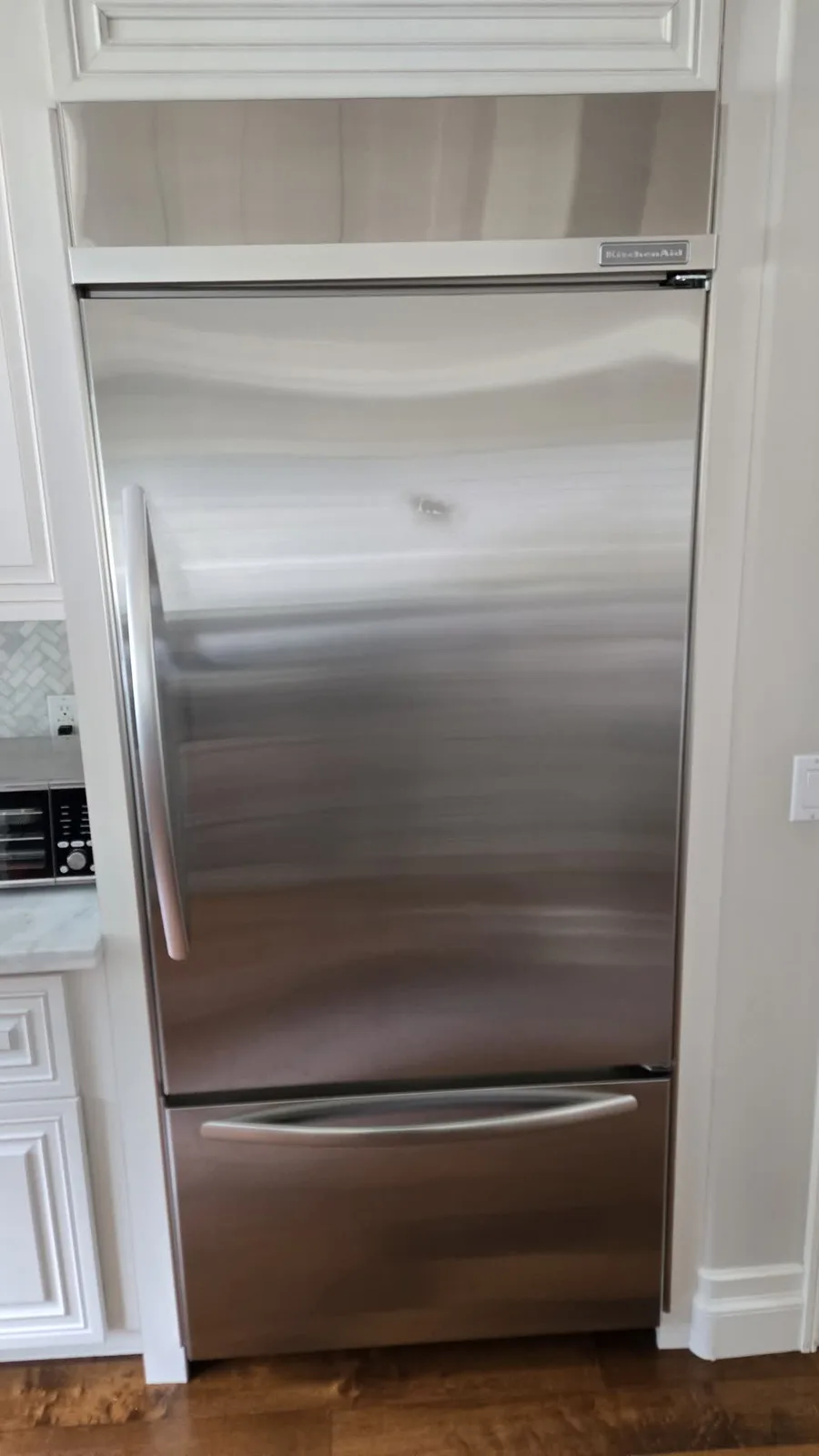
The customer has a built-in KitchenAid refrigerator, the tall stainless kind that sits flush with the cabinets. It had stopped cooling on both sides. Not “a little warm,” not “the ice cream is soft.” Nothing was cold, and the compressor was silent.
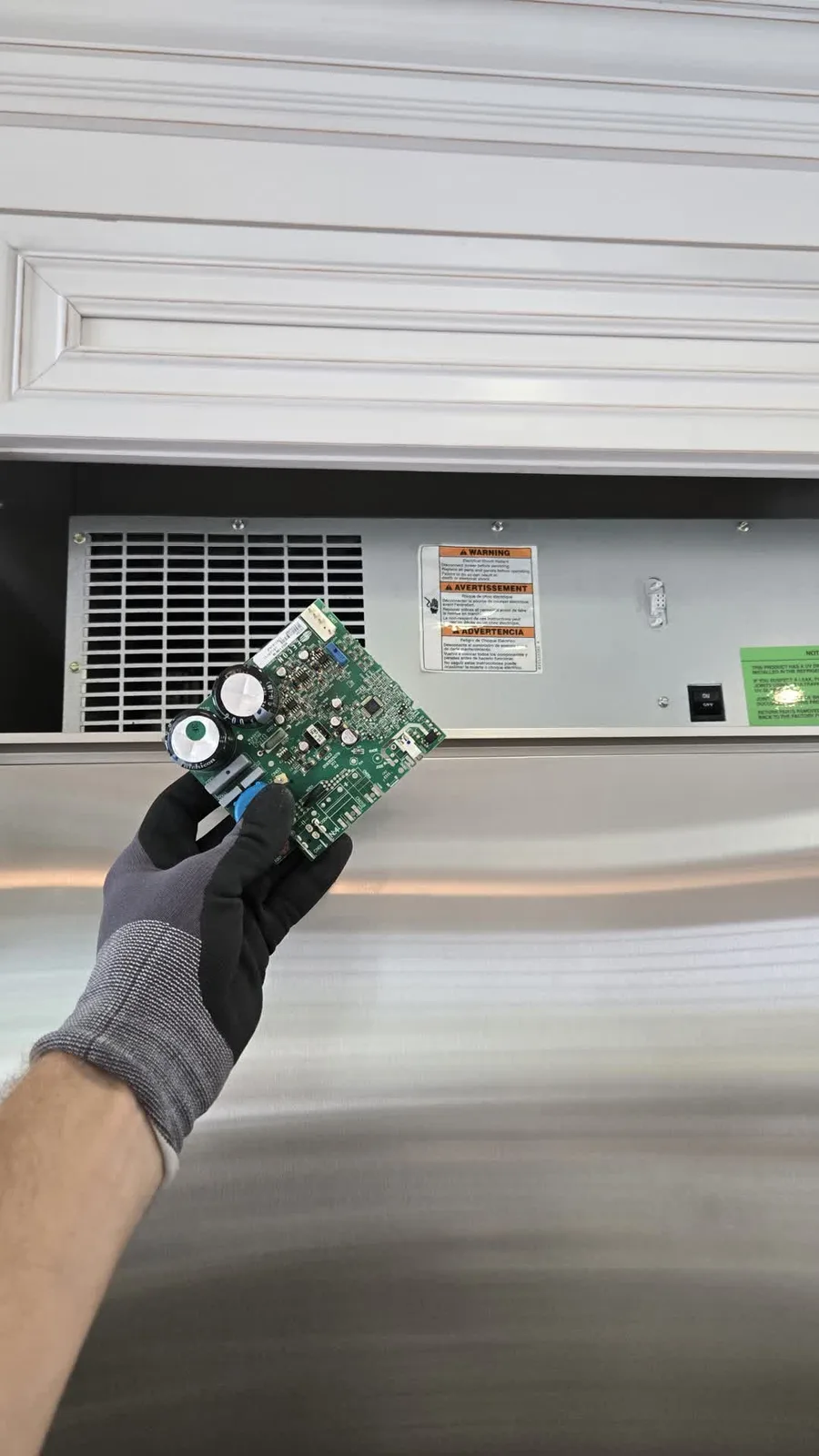
On a built-in like this the machine compartment is up top, behind the grille above the doors. That is where the compressor, the condenser fan and the inverter board live. I pulled the grille and went straight to the board, because a silent compressor on an inverter refrigerator is very often a board problem, not a compressor problem.
Three blinks on the status LED
The original inverter board has a small status LED on it. It was flashing in groups of three. On this board, three blinks means the inverter has an internal fault or has lost communication, and it will not send power to the compressor. So the compressor was never being told to run. It was not seized, not burned out, just sitting there waiting for a signal that never came.
That is a good outcome for the customer. A compressor replacement on a built-in refrigerator is sealed-system work, with refrigerant recovery, brazing and a vacuum pull. A board swap is a plug-in job.
How an inverter compressor works, and what the board does
Older refrigerators have a single-speed compressor. A relay clicks, the compressor starts at full speed, runs until the box is cold, and shuts off. On and off, all day.
An inverter refrigerator works differently. The compressor is a variable-speed motor, in this case an Embraco. It can run slowly when the box only needs a little cooling and speed up when you have just loaded warm groceries or the door has been open. Running slow and steady most of the time uses less electricity, keeps the temperature more even, and is quieter.
The inverter board is what makes that possible. It takes the regular household power and turns it into a controlled three-phase output whose frequency sets the compressor speed. The main control board decides how much cooling is needed and tells the inverter. The inverter drives the compressor. If the inverter fails, the compressor has no drive at all, no matter how healthy it is.
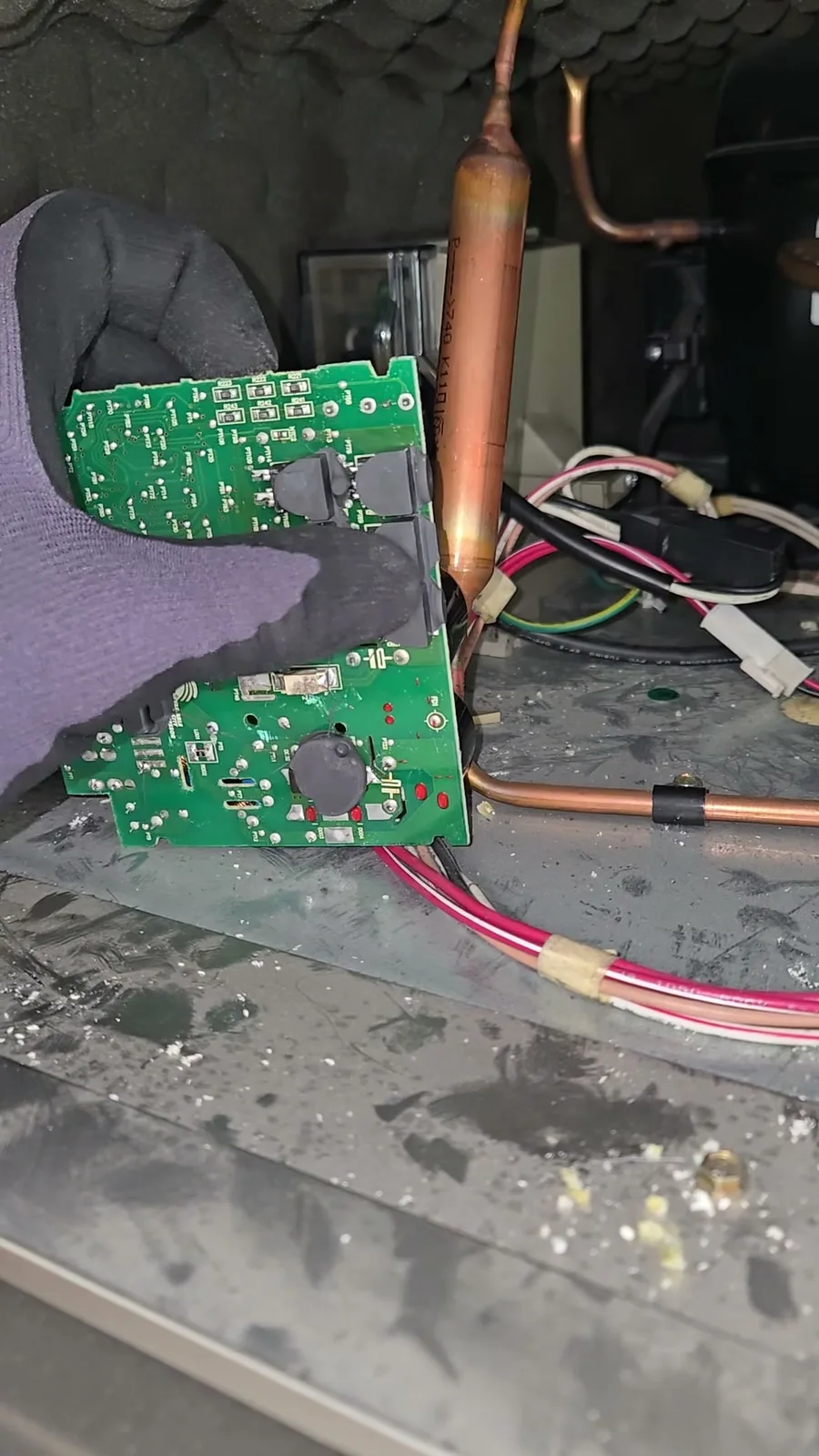
The board does that work with power transistors, and power transistors make heat. That is why the back of the board has silicone thermal pads pressed against a metal plate: they pull heat out of the transistors and into the plate. Years of heating and cooling cycles are hard on those pads and on the parts under them. That is the wear pattern I see most often on these boards, and it is what the old board here looked like.
The repair: a direct replacement board
The new part was an Embraco inverter board made as a direct replacement for this compressor. Same connectors, same mounting, so there was no wiring to adapt. I unplugged the harness from the old board, took it off its mount, snapped the new module into place and reconnected the harness to the compressor and the fan.
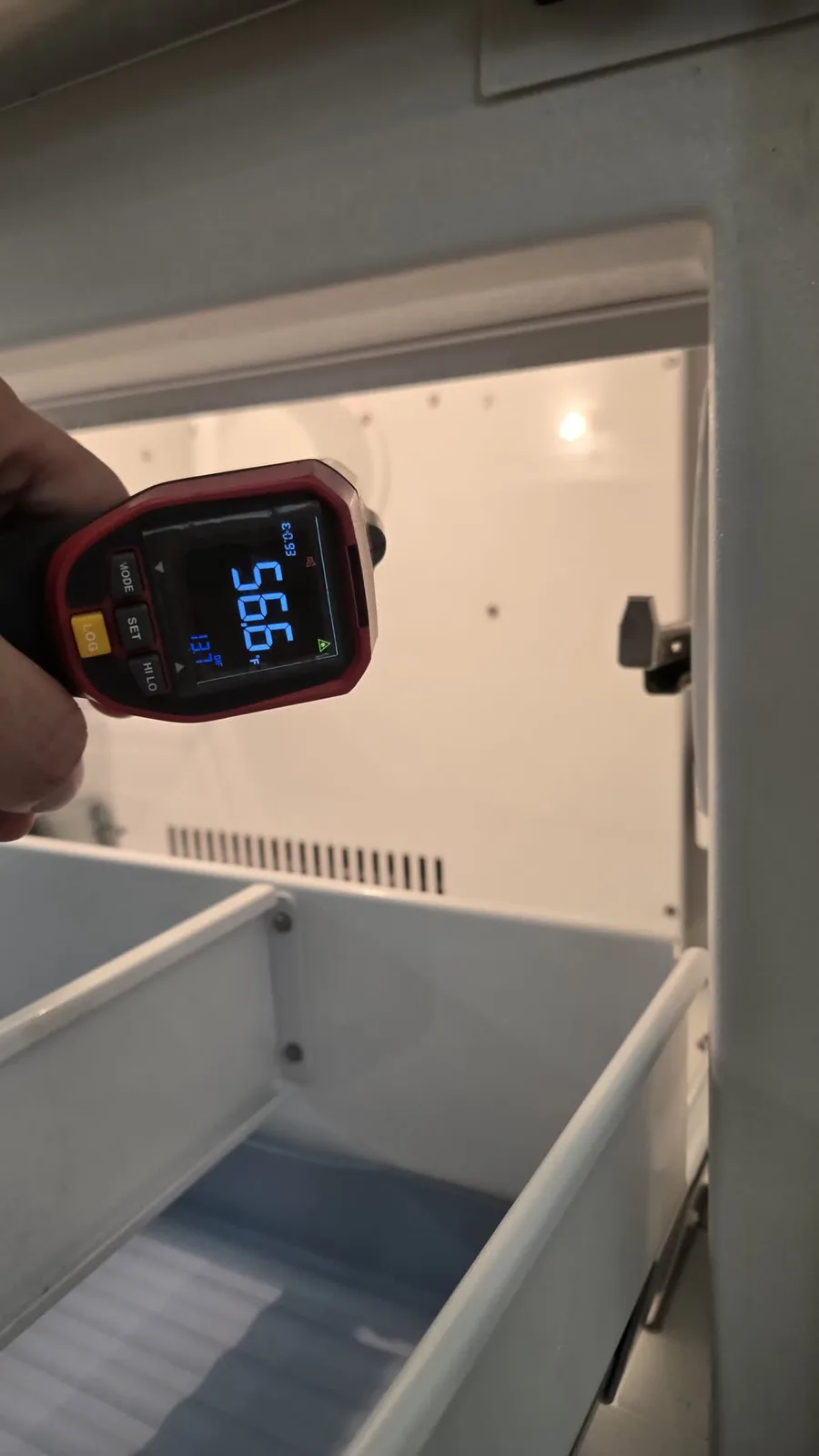
Powered the refrigerator back up. The compressor started, the condenser fan came on with it, and both were running smoothly. You can hear it in the video. A few minutes later the infrared thermometer in the freezer read 56.6°F and was still falling. Cooling was back.
What to check before anyone quotes you a compressor
If your inverter refrigerator has gone completely warm and the compressor is quiet, ask the technician two questions. Is the inverter board getting power and what is the status LED doing? And does the compressor spin up when it is driven by a known-good board? On this job the answers were “three blinks” and “yes,” and that turned a big sealed-system estimate into a board swap.
When the compressor really is the failed part, the job looks like this LG compressor replacement instead, and the difference in labor is large. Our guide to a refrigerator that stops cooling covers the other common causes worth ruling out first.
Do not run the refrigerator with the machine compartment packed with dust either. The inverter board and the compressor both shed heat through that compartment, and a clogged condenser makes the board run hotter than it was designed to.
Refrigerator repair in Los Angeles
Epic Star Repair works on built-in and standard refrigerators across the Westside, Hollywood and the San Fernando Valley, including KitchenAid, Sub-Zero, Viking, LG and Samsung. CA BEAR registered (#A 50636). We quote a flat rate upfront, and the $85 service call is credited toward the repair. If your refrigerator has gone warm and the compressor is quiet, call before the freezer thaws out.
FAQ
Why is my KitchenAid refrigerator not cooling if the light is on?
The light runs off the main control board. Cooling depends on the compressor, and on an inverter refrigerator the compressor only runs when the inverter board drives it. If the inverter board has failed, the light works, the fans may run, and the box still warms up.
What does it mean when the inverter board LED blinks three times?
On this KitchenAid board, three blinks means the inverter has an internal fault or has lost communication with the control board, so it will not power the compressor. Other brands and boards use different blink codes, so the count only means something for the specific board you are looking at.
How do you know it is the inverter board and not the compressor?
The compressor is tested with a known-good board. If it starts and runs smoothly on the new board, the compressor is fine. If it still does not start, or it hums and trips, the compressor itself needs attention.
What is an inverter compressor?
A variable-speed compressor. Instead of switching on at full speed and off again, it runs at whatever speed the refrigerator needs at that moment. The inverter board converts household power into a controlled output that sets that speed.
Why do inverter boards fail?
Heat, mostly. The board uses power transistors that run warm, and they rely on thermal pads to move heat into a metal plate. Over years of cycles the pads and the parts under them wear out. A dusty machine compartment or a blocked condenser makes it worse.
Do you repair KitchenAid built-in refrigerators in Los Angeles?
Yes. We service built-in and standard refrigerators across the Westside, Hollywood and the San Fernando Valley. The $85 service call is credited toward the repair.
Got an appliance that needs fixing? We cover LA and the Valley.
Call (213) 205-2055 or text a photo of your appliance.