
The rack wasn't turning, and the pump wasn't why
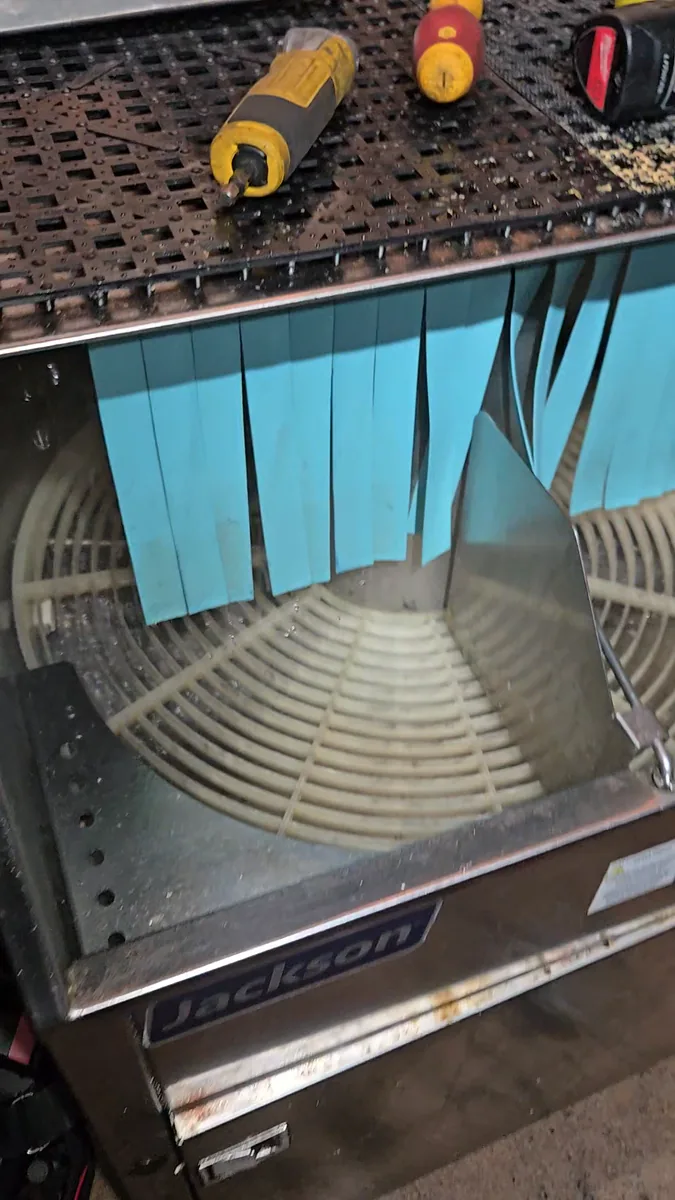
Water was spraying fine in this bar glasswasher. The carousel the glasses ride on had stopped dead, and the part behind it costs $1,100.
In this guide
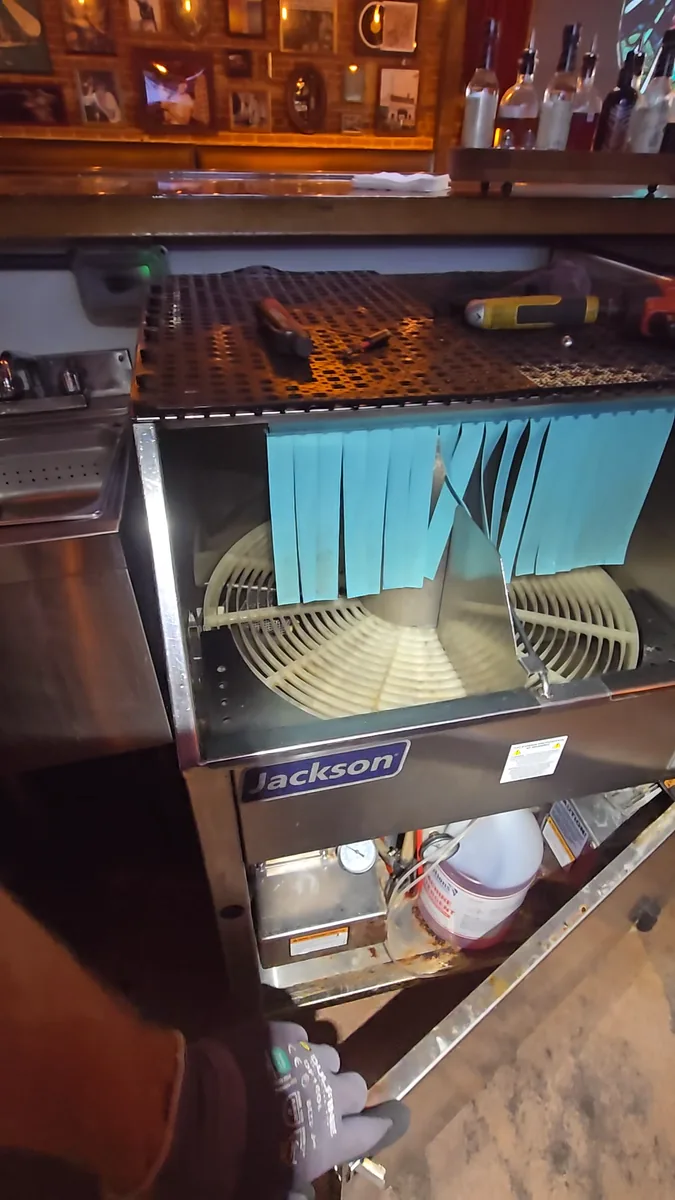
The call came from a bar. Their under-counter glasswasher was running water like normal, and the rack the glasses ride on wasn’t moving. No grinding, no burning smell, no tripped breaker. Water on, carousel off.
I knew this machine. Six months ago I was inside the same unit replacing its circulation pump, a part that runs close to two grand on its own. So the first thing I checked was my own work.
The pump was fine
The pump had nothing to do with it. Water was spraying at full strength through the wash arms, which is the pump’s whole job. A glasswasher like this one is really two machines sharing a cabinet: a pump that throws water at the glasses, and a drive that walks the glasses through the water. The carousel drive is what had quit.
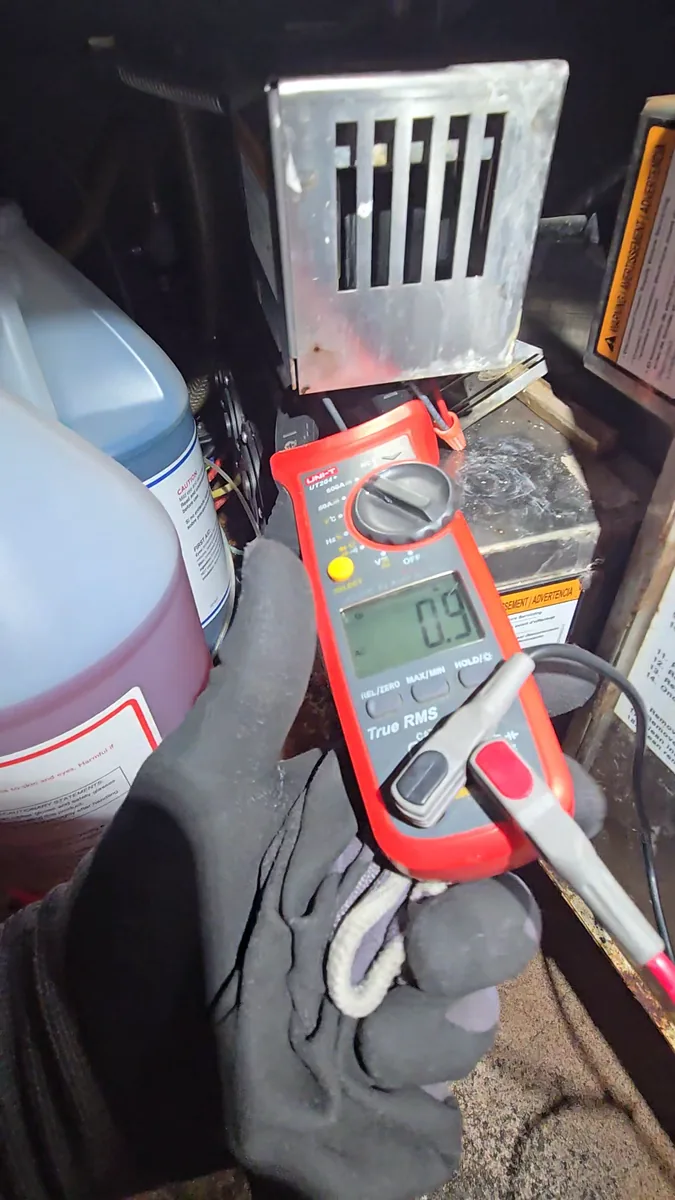
The drive lives underneath. This is a Jackson Delta 1200, a carousel machine built in under the bar top, so getting to the motor means working in the space below the tank. The motor was there, power was reaching it, and a clamp meter on the lead showed about an amp. That reading settles the diagnosis. Current flowing through a motor that isn’t turning means the electrical side is doing everything it’s supposed to and the shaft is being held. Nothing in the wiring does that. The gearbox does.
A gearmotor dies as one part
The carousel doesn’t need speed, it needs slow, steady torque, so the motor drives it through a reduction gearbox, and the two come as one sealed unit called a gearmotor. When the gears corrode or the output bearing seizes, you don’t rebuild it. You replace the unit.
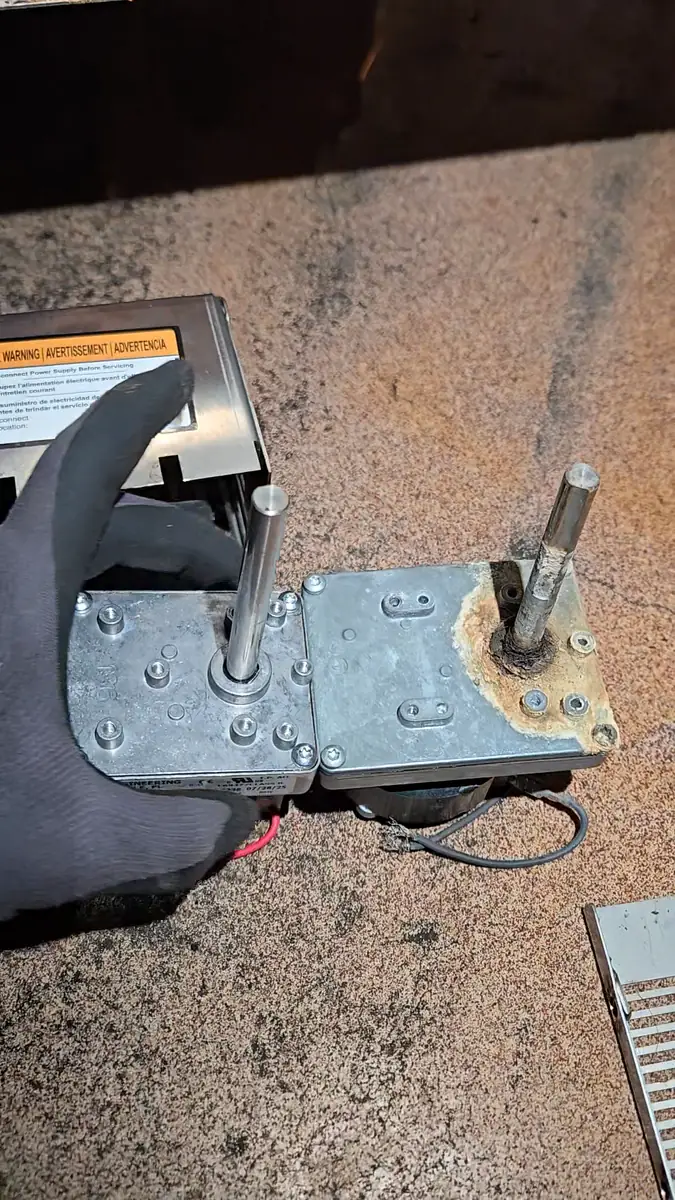
When the new part arrived I set the two side by side. The difference told the story on its own. The old unit’s output flange was limed up and corroded solid — years of hot water, steam and detergent working on it from above. A gearbox dies quietly: nothing dramatic, just a shaft that one day stops answering.
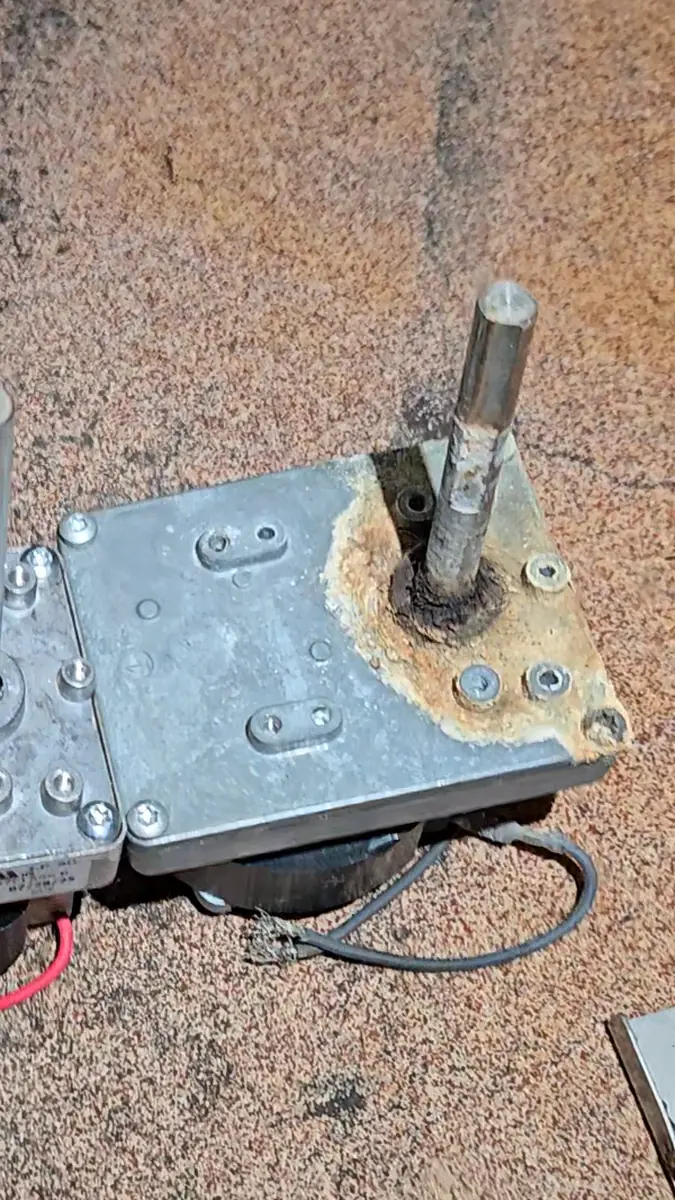
There was a surprise waiting under there, too. The old motor’s leads had been cut and joined with wire nuts, which told me somebody had been in this machine before me, and that the motor I was pulling wasn’t the original either. This unit was on at least its second drive already.
Two part numbers for one machine
Ordering the replacement has a trap in it. Jackson changed motor suppliers at some point, so there are two part numbers floating around for this same machine. They don’t interchange by catalog page: the right one depends on what’s actually bolted into your unit. Order the wrong number and you’re waiting another week while the bar washes glasses by hand. I matched the part against the machine, not the listing.
The new unit’s mounting platform is shaped a little differently than the old one, but the bolt pattern lines up, so it drops into the same spot. The back bolts are miserable to reach — that’s just this machine — and then it’s leads on, tank filled, and the carousel turning again.
The $1,100 question
The gearmotor cost $1,100, shipped and taxed. For a motor the size of a melon. I’ll say what I said on the video: the pricing on commercial dish machine parts is ridiculous. It isn’t a Jackson thing, either. Captive parts on commercial kitchen equipment are priced this way across every brand. These machines are built to be repaired for decades rather than replaced, and the parts carry that.
And the math still says fix it. This machine runs about ten grand new. Between the pump six months ago and the gearmotor now, the bar has put real money into it, and the total is still nowhere near what replacement costs once you add delivery, installation and the plumbing work. If you’re staring at a quote like this one and can’t decide, the 60% rule is the honest way to think it through.
What to check before you call
If your glasswasher runs water but the rack has stopped, you can save yourself a wrong guess. Listen: if you hear water spraying at normal strength, the pump is doing its job, which is what it was on this machine. Look: if the carousel sits dead through a full cycle, the drive underneath is the suspect. And if that machine has had a motor replaced before, mention it when you call — knowing which of the two part numbers is bolted in saves a week of waiting.
We work on commercial bar and kitchen equipment across Los Angeles alongside our residential repair work. Flat rate upfront, and the $85 service call is credited toward the repair. Call or text (213) 205-2055.
FAQ
Why does my glasswasher spray water but the rack won't turn?
Those are two separate systems. The circulation pump moves the water, and a small gearmotor underneath turns the carousel. When water sprays fine and the rack sits still, the pump is doing its job and the drive isn't. On this Jackson the pump was six months old and healthy; the gearmotor's gearbox had seized.
How do you tell a seized gearbox from an electrical problem?
Put a clamp meter on the motor lead. This one was drawing about an amp with the shaft sitting dead still. Power was reaching the motor and the motor was trying, so the fault wasn't in the wiring, the switch or the timer. Something mechanical was holding the shaft, and in a gearmotor that means the gearbox.
What is a gearmotor on a commercial glasswasher?
It's an electric motor and a reduction gearbox built as one sealed unit. The motor spins fast with little torque; the gearbox trades that speed for the slow, strong rotation the carousel needs. When the gearbox corrodes or fills with lime, the whole unit is replaced as one part. On the one I pulled, the output flange was limed up and corroded solid.
Why are there two part numbers for the same Jackson motor?
Jackson changed motor suppliers at some point, so the same machine can call for either of two gearmotors depending on what's actually bolted in. Order from the catalog without checking and you can lose a week waiting on the wrong part. I matched the replacement against the machine itself before ordering.
Is $1,100 for a glasswasher gearmotor normal?
It's what the part costs, shipped and taxed, and I'll say plainly that commercial parts pricing is hard to justify. It's also not a Jackson quirk. Every manufacturer of commercial dish machines prices captive parts this way, which is why the repair-or-replace math matters more here than on household equipment.
Is it worth repairing an older glasswasher instead of replacing it?
Run the numbers. This machine runs about ten grand new. It needed a $1,100 gearmotor now and got a circulation pump about six months back, and both repairs together still land well under half the cost of a new unit. A machine that gets parts when it needs them keeps earning its spot under the bar.
Do you repair commercial bar dishwashers in Los Angeles?
Yes. Bars, restaurants and commercial kitchens across the Westside, Hollywood and the San Fernando Valley, alongside our residential work. CA BEAR registered (#A 50636), EPA 608 Universal certified and $1M insured. Call or text (213) 205-2055.
Got an appliance that needs fixing? We cover LA and the Valley.
Call (213) 205-2055 or text a photo of your appliance.