
An old R-22 AC in Van Nuys lost its charge where two copper lines rubbed through
Oil around the rub point marked the leak. We brazed it, pressure-tested the repair, evacuated the system and recharged it by the nameplate.
In this guide
An old R-22 air conditioner in Van Nuys had lost all of its refrigerant, and inside the outdoor unit the cause was easy to spot. Two copper lines had rubbed against each other until the copper wore through, and oil covered the spot. We brazed the leak, pressure-tested the repair, evacuated the system and recharged it by the nameplate.
What we found inside the condenser
It was a fairly old condenser unit that runs on R-22, and the system was empty: all of the refrigerant had leaked out.
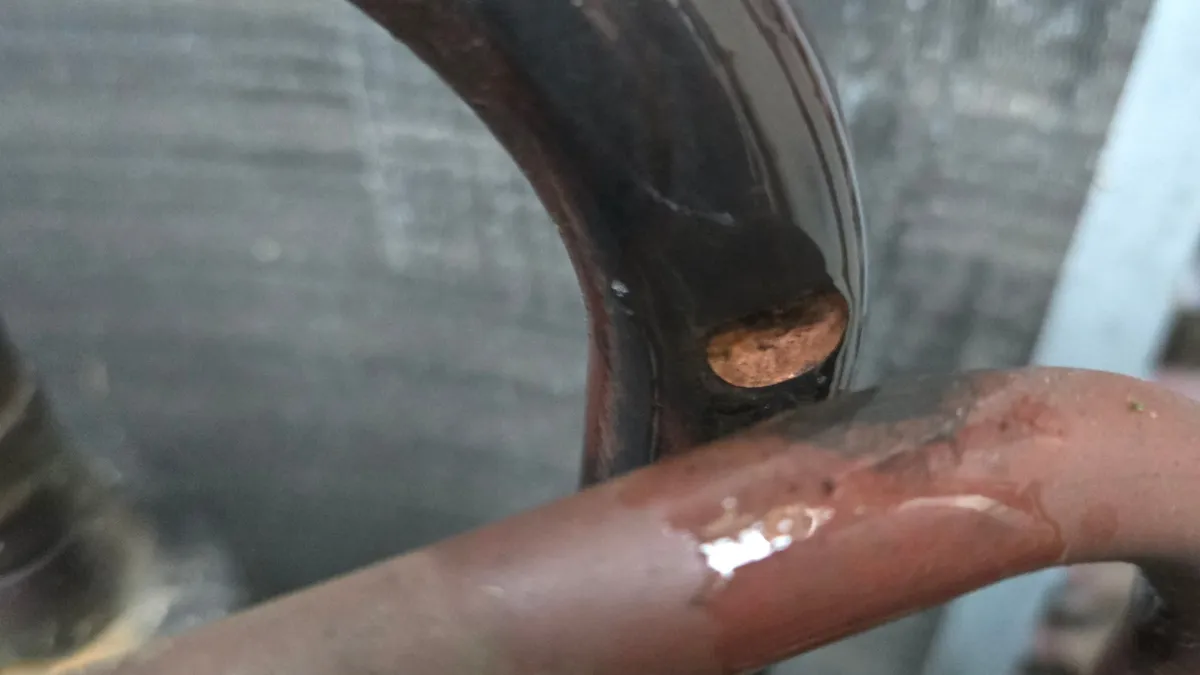
In the photo at the top of this page, you can see where it went. A larger copper line curves down through the frame, and a smaller line crosses right in front of it. Where they touch, there’s a small spot of bright, bare copper. That’s the rub point, the place where the two lines wore against each other. Around it, the copper is dark and wet with oil.
Why does oil mark a refrigerant leak?
Refrigerant doesn’t travel alone. The compressor needs oil, and some of that oil circulates through the system along with the refrigerant. When refrigerant escapes through a hole, it carries a little oil out with it. The refrigerant turns into gas and disappears into the air. Oil stays on the outside of the copper, and dust sticks to it.
That’s why technicians look for greasy, dirty patches on refrigerant lines and joints. An oily spot doesn’t prove a leak by itself. On this unit, though, the oil surrounded the rub point, and the worn spot was in plain view.
How do two copper lines wear through?
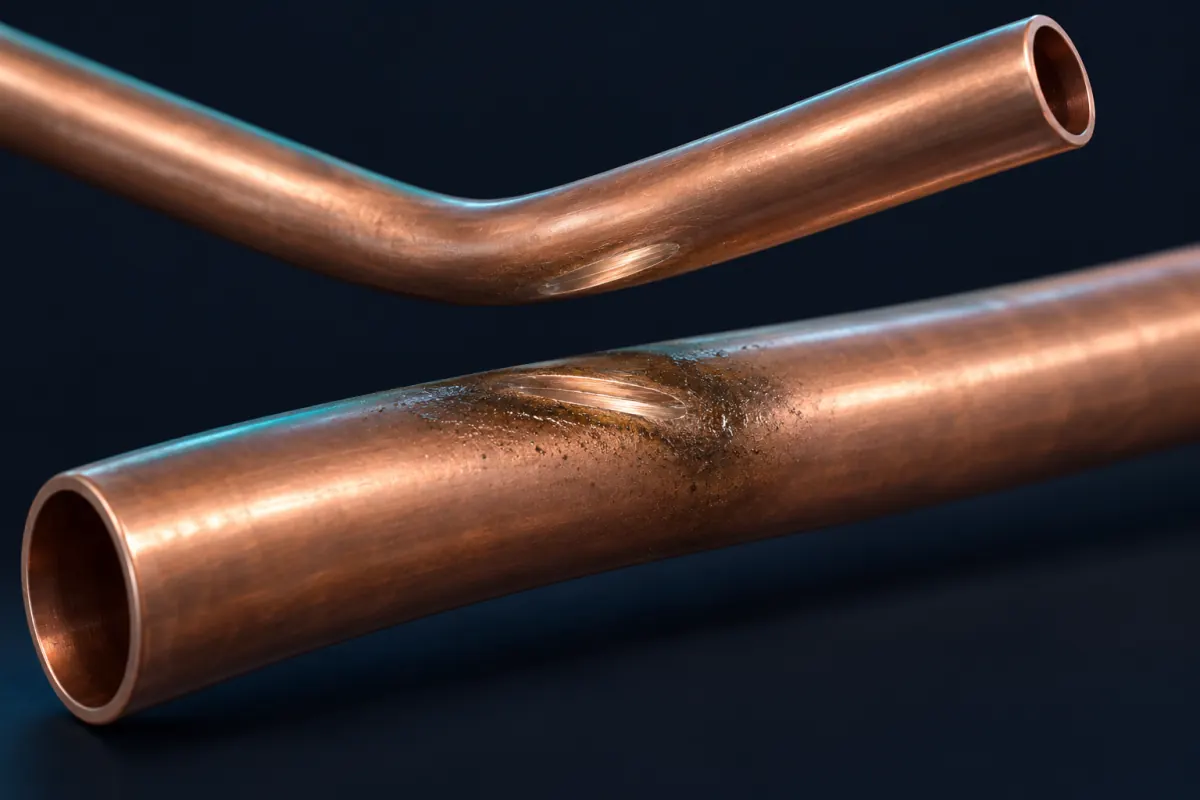
A condenser moves a little whenever it runs. When the compressor starts and stops and the fan spins, the copper lines inside the cabinet shake along with them. Many of those lines run close together, and if two of them touch, each of those movements rubs metal against metal.
Copper is a soft metal. Rubbing thins the tube wall at the contact point, slowly, and an older unit has had more time for it. Once the wall gets thin enough, it opens and refrigerant starts to escape. A small opening can leak slowly at first. Left alone, the system keeps losing charge until nothing is left, and that’s the state we found this one in.
What we did, step by step
Brazed the leak
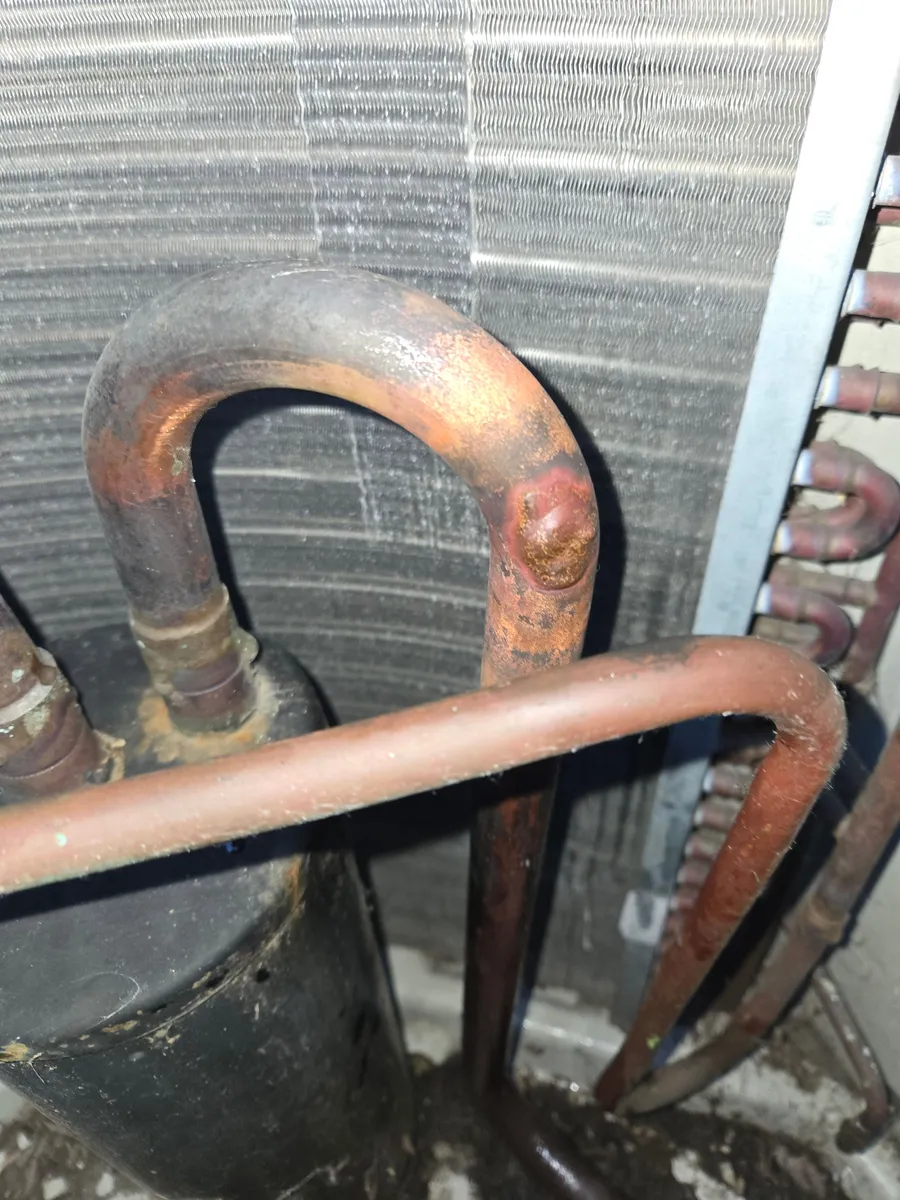
Brazing joins copper with a filler metal that a torch melts into place. Done right, it closes the opening with solid metal. We brazed the leak at the rub point.
The second photo is the same spot after the repair, with a brazed patch covering the place where the lines had worn against each other.
Pressure-tested the repair
Before refrigerant goes back in, the repair has to show that it holds. A pressure test puts the system under pressure and checks the repaired spot. Technicians do this with dry nitrogen rather than refrigerant. Nitrogen is inert and dry, and using it means no refrigerant gets wasted on a joint that might still leak. We pressure-tested the spot we’d brazed.
Evacuated the system
A system that has leaked empty has been open to the outside air, so air and moisture can be inside it. That’s what the vacuum pump is for. Moisture can react with the refrigerant and the oil and form acids, and air takes up room that belongs to the refrigerant. Evacuation pulls both out before the charge goes back in.
Recharged it by the nameplate
On a condenser, the nameplate lists the refrigerant the unit uses and its factory charge. Charging by the nameplate means weighing in the amount the plate lists, adjusted for the length of the line set as the manufacturer’s instructions call for, instead of adding refrigerant until the gauges look about right. That’s how we recharged this system.
Can an old R-22 system still be repaired?
Often, yes, depending on what failed. R-22 production and imports ended in the U.S. in 2020. Technicians can still service systems that run on it, using R-22 that already exists, including recovered and reclaimed refrigerant. That’s why finding the leak comes first: a repair that holds keeps the charge inside the system instead of letting it escape again.
On this Van Nuys unit, the leak was a rub point on a copper line, the kind of leak a brazed repair can close. A leak in the condenser coil is a different story. We wrote about an older R-22 system in Sherman Oaks where the coil itself was leaking and a matched new system was the honest answer.
What you can safely check
If your AC runs but doesn’t cool, go out to the outdoor unit and look at the copper lines where they enter it, without touching anything. A leak like this one often shows itself there first: an oily, dusty patch on the copper, or ice on the lines. Either one is a reason to call. Don’t open the unit’s panels: there’s line voltage inside, and the capacitor can hold a charge even after the power is off.
If the copper looks clean, a quick look at the thermostat setting and the breaker rules out the simplest causes before you call.
One more thing. If a system keeps needing refrigerant, it’s leaking, and adding more without finding the leak just sends it out the same hole.
When to call
Call if the AC runs but the air from the vents isn’t cold, or if you see oil or ice on the copper lines. A system that was topped off before and stopped cooling again needs a leak search, too. Until then, turn the system off at the thermostat. Running a system that’s short on refrigerant can be hard on the compressor.
AC repair in Van Nuys
We repair central AC systems in Van Nuys and across the San Fernando Valley, older R-22 units included. The $85 service call is credited toward the repair if you go ahead, and the price comes after we diagnose the system on site. Repairs carry a 30-day labor and 90-day parts warranty. CA BEAR registered (#A 50636), EPA Section 608 Universal certified and $1M insured. See our HVAC services, read more about our work in Van Nuys, or call (213) 205-2055.
FAQ
What makes copper lines inside an AC condenser rub through?
Vibration. The compressor and the fan move the copper lines a little whenever the unit runs, and two lines that touch rub against each other. Copper is soft, so the tube wall slowly wears thin at that spot until it opens. On this Van Nuys condenser, a smaller line crossed a larger one, and the leak was where they rubbed.
Why is there oil on the copper lines of my AC?
Oil circulates through the system along with the refrigerant. When refrigerant leaks out, it carries a little oil with it, and the oil stays on the copper and collects dust. An oily spot on a line or a joint is worth having checked. On this unit, oil covered the area around the leak.
Can an old R-22 air conditioner still be repaired?
Often, yes, depending on what failed. R-22 production and imports ended in the U.S. in 2020, but technicians can still service existing systems with R-22 that already exists, including recovered and reclaimed refrigerant. On this unit, the leak was a rub point on a copper line, so we brazed it, pressure-tested the repair, evacuated the system and recharged it by the nameplate. A leaking condenser coil is a different conversation.
Why does an AC system need a vacuum before it's recharged?
A system that leaked empty has been open to the outside air, so air and moisture can be inside it. A vacuum pump pulls them out before refrigerant goes back in. Moisture can react with the refrigerant and the oil, and air takes up room the refrigerant needs.
Do you repair AC refrigerant leaks in Van Nuys?
Yes. We find and repair refrigerant leaks on central AC systems in Van Nuys and across the San Fernando Valley, older R-22 units included. The $85 service call is credited toward the repair if you go ahead, and the price comes after the on-site diagnosis.
AC, heater or mini-split acting up? We cover LA and the Valley.
Call (213) 205-2055 or text a photo of the unit and its model sticker.