
An overheating AC in Granada Hills: before and after a condenser coil cleaning
A maintenance job in Granada Hills, July 2025. The system was overheating and barely cooling in unbearable heat, so we chemically cleaned the condenser unit.
In this guide
An AC that couldn’t keep up in the heat
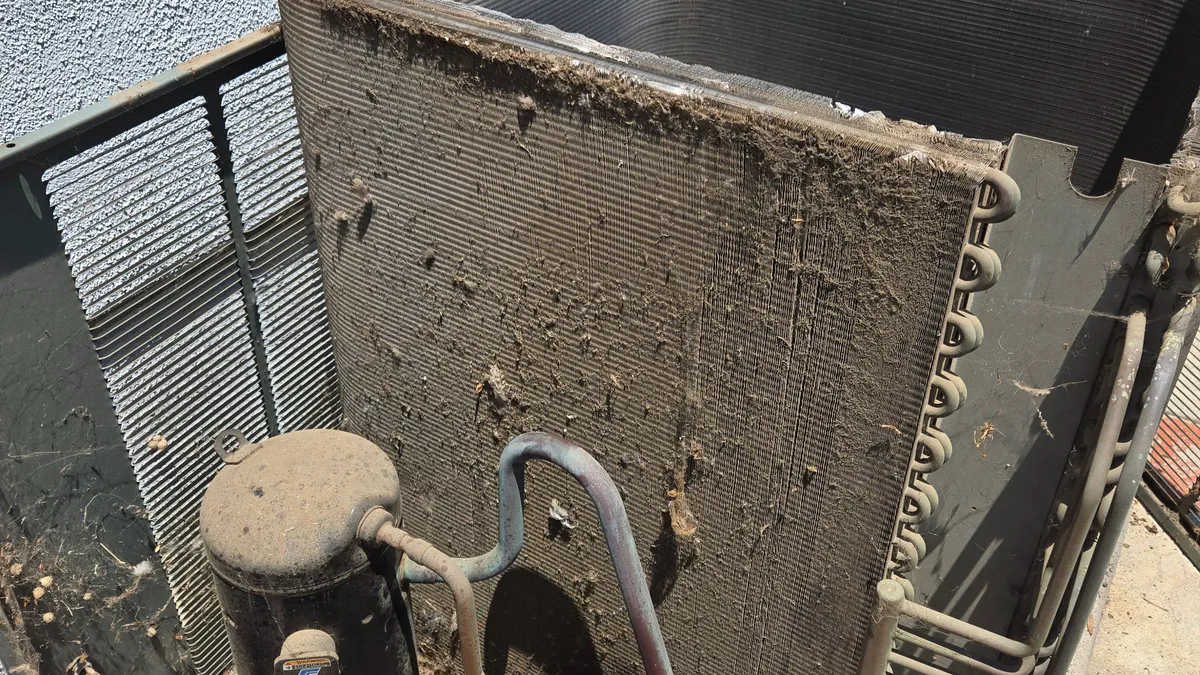
In July 2025 we had a maintenance job in Granada Hills. The system was overheating and cooling very poorly, and outside, the heat was unbearable. Our work there was a chemical cleaning of the condenser unit, and these two photos are a good before and after of what that does.
What the before and after photos show
The photo at the top of this page is the before. With the condenser’s top panel off (that’s the panel that carries the fan), you’re looking straight at the coil: the wall of thin metal fins that wraps around the unit. It’s coated in a gray layer of dust and debris, with clumps stuck to its face. Down at the bottom, dirt and bits of dry leaves have piled up around the compressor.
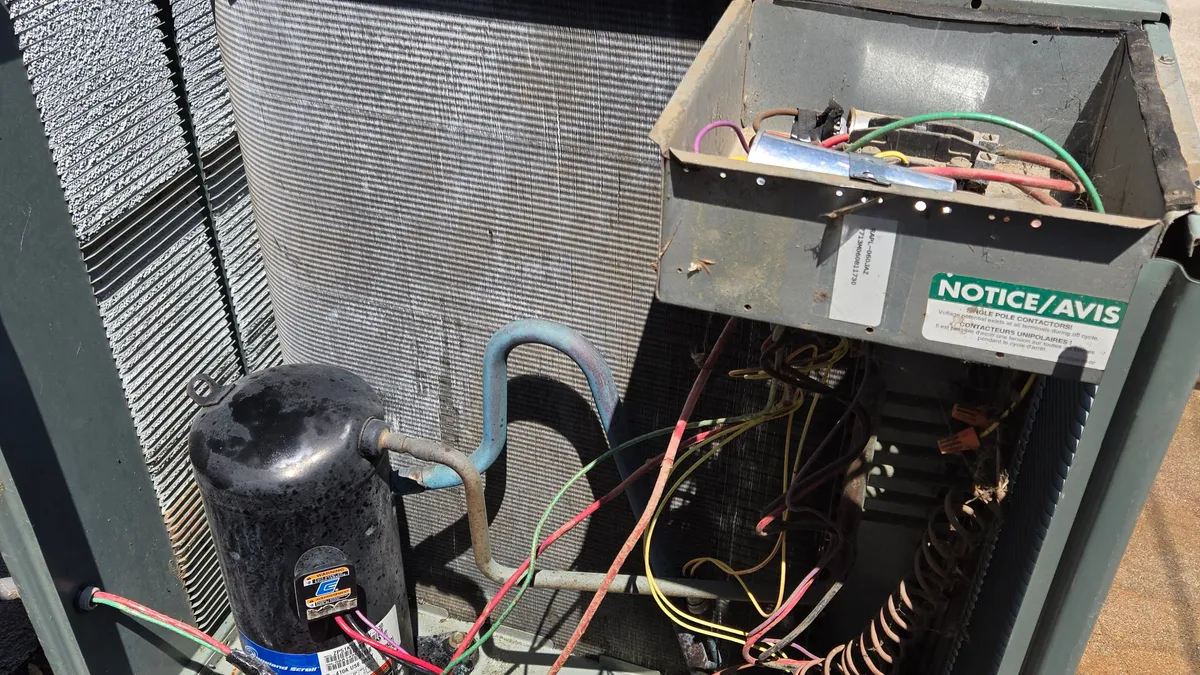
In the second photo, taken after the chemical cleaning, the fins show light where they were gray. The compressor at the lower left is glossy black now, and the control box at the top right is tilted open.
Why does a dirty condenser coil make an AC overheat?
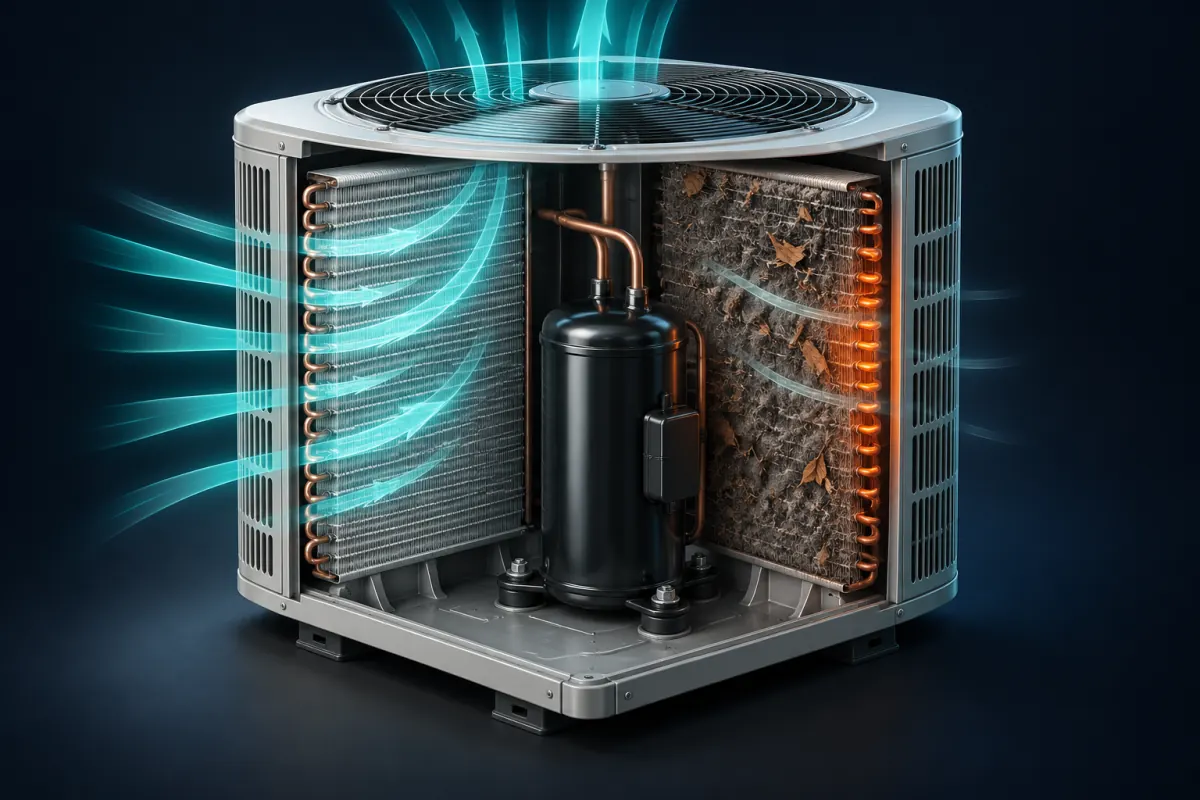
An air conditioner moves heat out of your house. Indoors, the refrigerant picks up heat from the air at the evaporator coil. Outdoors, the compressor pumps that refrigerant, hot and under pressure, through the condenser coil, and the fan pulls outdoor air across the coil to carry the heat away.
A layer of dirt on the coil works like a blanket. Less air gets through, and the dust slows the heat on its way from the fins into the air that does. The heat stays in the refrigerant, so the pressure and temperature on the hot side of the system climb. That leaves the compressor working harder against higher pressure, while the system delivers less cooling.
Hot weather makes all of it worse. A condenser can only shed heat into air that’s cooler than the refrigerant inside it, and on a scorching afternoon that margin is at its thinnest. Dirt that a coil gets away with on a mild day can make it fall behind when it’s hottest outside. On this Granada Hills system, that showed up as overheating and very poor cooling in heat that was hard to bear.
How we cleaned the condenser
We chemically cleaned the condenser unit, washing the coil. In a chemical cleaning, a coil cleaner goes onto the fins and works into the dirt to loosen it, and then water washes it out from between them. It’s done with the power off at the outdoor disconnect.
On its own, a garden hose rinses off loose dust. A coil caked like this one needs the cleaner to break the dirt loose first, so the water can carry it out from deep between the fins.
This wasn’t the mini-split cleaning
We’ve written up another cleaning in Granada Hills, and the two are easy to mix up. That one was a musty-smelling Daikin mini-split, where we washed the indoor wall units and found mold in the drain pan. This one was the outdoor condenser of a central air conditioner, and the reason for the cleaning was a system overheating in the summer heat.
What you can do between visits
Keep the outdoor unit clear. Trim plants back from its sides, and don’t stack things against it or cover the top, where the hot air comes out.
Look at the coil through the grille now and then. A gray fuzz or a matted layer on the fins means it’s due for a cleaning.
You can rinse the outside of the coil yourself if you do it gently. Turn the system off at the thermostat, then switch the power off at the outdoor disconnect. Rinse the coil from the outside with a garden hose at low pressure. Skip the pressure washer, because it flattens fins, and don’t take the top off: the fan and its wiring are attached to it.
When to call
Call if your AC runs and runs on hot afternoons without bringing the house down to the setting, or if the outdoor unit shuts off and starts again on its own in the heat. The same goes for a coil that still looks caked after a rinse. A professional cleaning reaches the dirt a hose can’t, and a tune-up also checks the capacitor and the electrical parts while the unit is open.
AC maintenance in Granada Hills
We do AC tune-ups and repairs in Granada Hills and across the San Fernando Valley. Condenser coil cleaning is part of our AC tune-up. The $85 service call is credited toward the repair or the cleaning if you go ahead, and repairs carry a 30-day labor and 90-day parts warranty. CA BEAR registered (#A 50636), EPA Section 608 Universal certified, $1M insured. See our HVAC services or call (213) 205-2055.
FAQ
Can a dirty condenser coil make an AC overheat?
Yes. The condenser coil is where the system gets rid of the heat it takes out of your house. Dirt on the coil blocks the air and holds the heat in, so pressure and temperature climb and cooling drops, and it's worst on the hottest days. This Granada Hills system was overheating and cooling very poorly in unbearable heat.
What is a chemical condenser coil cleaning?
A coil cleaner goes onto the fins and loosens the dirt, and then water washes it out from between them, with the power off at the outdoor disconnect. On this job we chemically cleaned the condenser unit, washing the coil, and the before and after photos show the difference.
Can I clean my AC condenser coil with a garden hose?
You can rinse the outside of the coil gently. Turn the system off at the thermostat and the power off at the outdoor disconnect, then rinse from the outside at low pressure. Don't use a pressure washer, and don't take the top off. Dirt that's caked on needs a professional cleaning.
Is a condenser coil cleaning the same as a mini-split cleaning?
No. A condenser coil cleaning is done on the outdoor unit of a central air conditioner. A mini-split cleaning is mostly about the indoor heads, where the coil, the blower wheel and the drain pan get washed. Granada Hills has an example of each on this site.
Do you service AC condensers in Granada Hills?
Yes. We do AC tune-ups and repairs in Granada Hills and across the San Fernando Valley. The $85 service call is credited toward the repair or the cleaning if you go ahead. Call (213) 205-2055.
AC, heater or mini-split acting up? We cover LA and the Valley.
Call (213) 205-2055 or text a photo of the unit and its model sticker.