
A Samsung freezer that stopped freezing in Chatsworth: the condenser coil was buried in dust
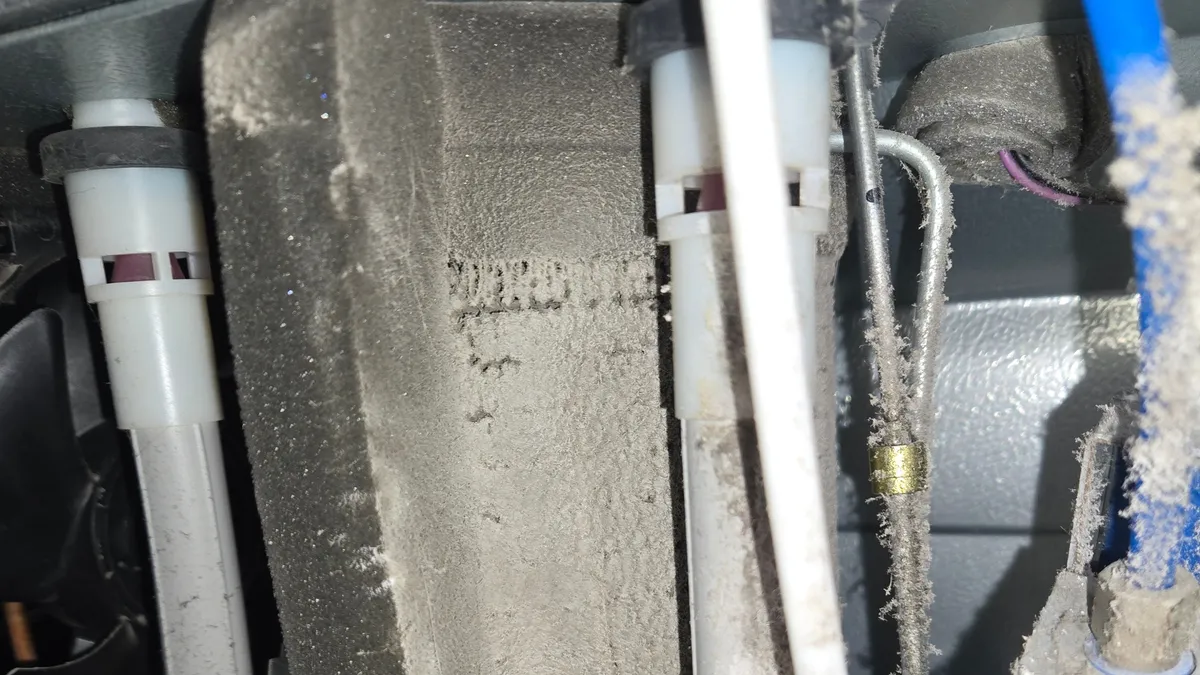
A refrigerator job in Chatsworth, early October 2026. The freezer quit while it was very hot out, then seemed to come back. The before and after photos show the condenser area we cleaned.
In this guide
A condenser coil packed with dust can keep a freezer from freezing, and hot weather makes it worse. In early October 2026, that’s what we found on a Samsung refrigerator in Chatsworth: the coil was very dirty, the rear grille was clogged, and after the cleaning, the refrigerator froze well.
The complaint: a freezer that quit, then seemed to recover
The customer told us the freezer had stopped freezing at some point. Then it seemed to start working again. It was very hot outside, and indoors as well.
A freezer that comes and goes like that is easy to second-guess. Once it seems fine again, you’re tempted to wait and see.
What we found behind the rear grille
The condenser coil was very dirty. So was the slotted grille that covers it at the back of the refrigerator: its slots were clogged with dust. Those slots are part of the coil’s air path, so dust there chokes the airflow too.
Our before photo is the one at the top of this page. Low in the back of the refrigerator, the condenser compartment is under a gray layer of dust so thick that the foam shroud and the tubing look furred. Strands of lint hang off a water line.
The cleaning
We cleaned the condenser coil. The second photo shows the condenser coil afterward, its rows of thin metal fins clean.
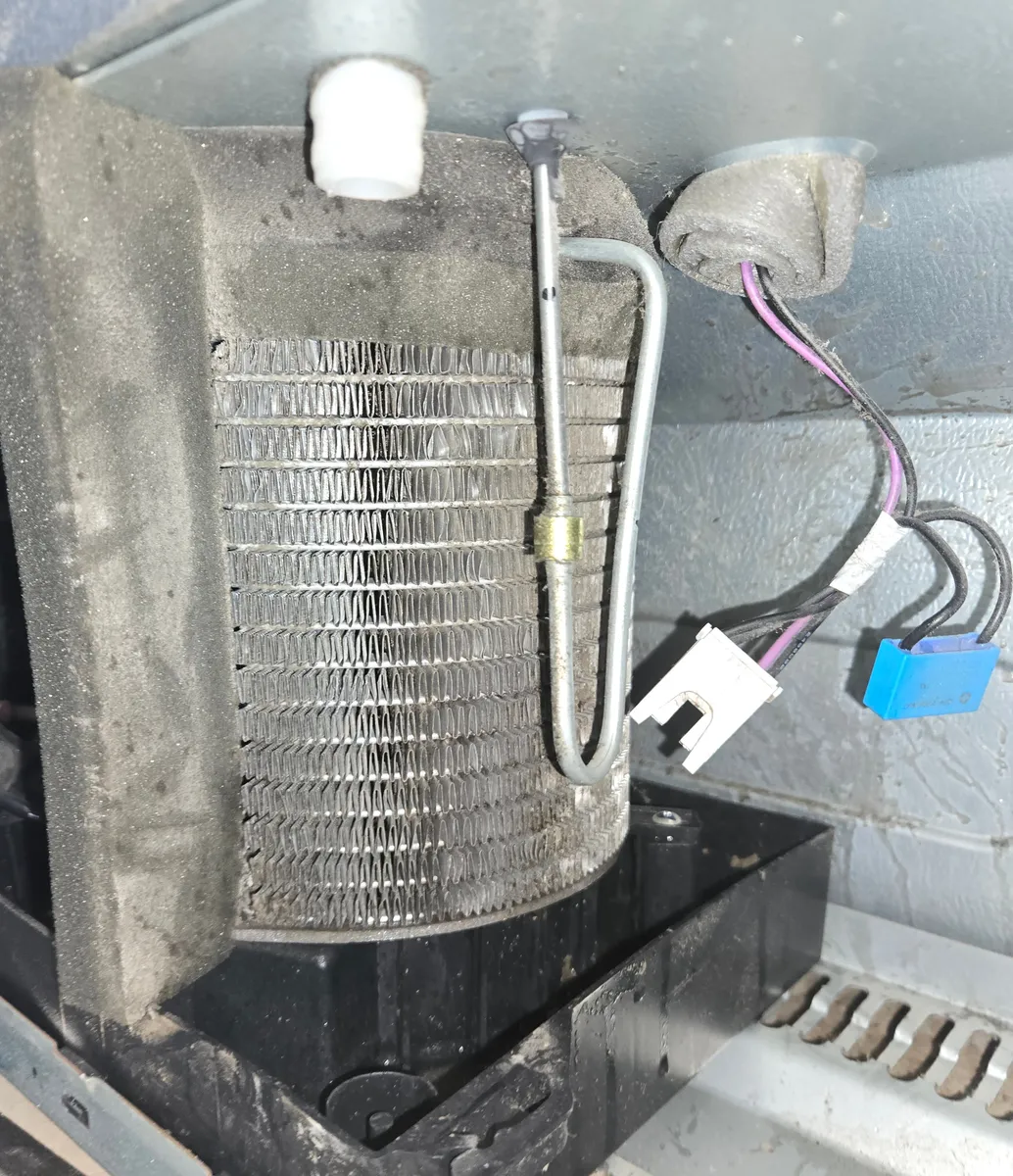
After the cleaning, the refrigerator froze well.
Why does a dusty condenser coil stop a freezer from freezing?
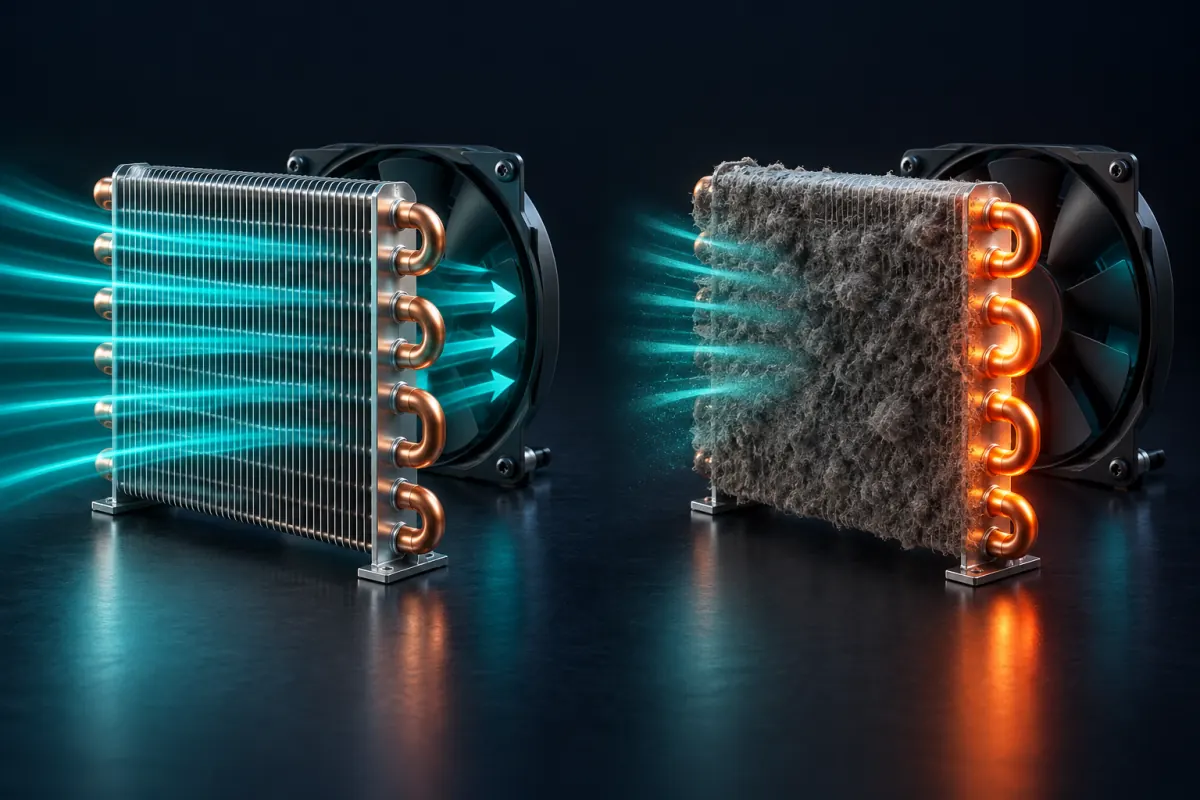
A refrigerator doesn’t make cold. It moves heat. Inside the cabinet, the refrigerant picks up heat from the freezer and the fresh-food side. The compressor then pumps that refrigerant, hot and under pressure, through the condenser coil, where the heat passes into the room. On refrigerators with a compact coil tucked into the back like this one, a small fan moves the room air through it.
Dust on the coil works like a blanket. Less air gets through, and heat that should leave stays in the refrigerant. The compressor runs longer and hotter to do the same work, and the cooling falls behind.
One of Samsung’s support pages says where that can end. With dust and debris built up around the coils, a refrigerator may not cool properly, may run nonstop, or may stop completely because the compressor overheats. A compressor that shuts down to protect itself can start again once it cools. We weren’t there on the hottest afternoons, so we can’t tell you exactly what this one did. A freezer that quits and then seems to recover does fit that picture.
Why the heat made it worse
A condenser can only shed heat into air that’s cooler than the refrigerant inside it. On a mild day, that leaves plenty of margin, and a dusty coil gets by. Not in a hot room. There the margin shrinks and the dust takes what’s left. A coil that coped in spring can fall behind once the house heats up.
Where the refrigerator stands matters too. Samsung’s cooling troubleshooting page asks for 2 inches of clearance at the back, top and sides, because the refrigerator has to push its heat out into the room. Requirements vary by model, so check the installation section of your manual.
What you can safely do yourself
Unplug the refrigerator first. The same Samsung page that explains the coils says to unplug before cleaning them, to avoid a shock hazard. If your refrigerator has a water line, pull it out slowly and only as far as the line allows.
Vacuum the slots in the rear grille with a brush attachment. If your manual shows how to reach the coil, a soft brush and the vacuum will take off most of the dust. Go gently around the thin tubing and the wiring, because a kinked line or a loose connector turns a quick cleaning into a repair.
Then give the refrigerator its breathing room back. Keep the clearance your manual asks for, and don’t let boxes or bags pile up against the back. Our guide to cleaning refrigerator condenser coils walks through the job on the common coil layouts.
How can you tell the coil needs cleaning?
You don’t have to wait for the freezer to quit. If you can see a gray layer on the coil, or dust packed into the grille slots, it’s due. A refrigerator that seems to run all the time is another hint, since nonstop running is one of the effects Samsung lists for dusty coils. So is a freezer that struggles on hot days and recovers when the weather cools.
When to call
Put an appliance thermometer in the freezer. The FDA recommends keeping the freezer at 0°F (-18°C) and the refrigerator at or below 40°F (4°C), and calls an appliance thermometer the best way to know those temperatures.
Call if the freezer can’t get back to 0°F once it has had time to cool down after the cleaning, or if the refrigerator keeps stopping and starting. Dust isn’t the only thing that does this. A condenser fan that has quit, a defrost problem or a refrigerant leak can look much the same from the outside, and each one needs a diagnosis.
Our list of reasons a refrigerator stops cooling goes through them. On another Samsung, the trouble was an evaporator that kept icing up.
Refrigerator repair in Chatsworth
We repair Samsung and other refrigerators in Chatsworth and across the San Fernando Valley. See refrigerator repair and freezer repair, and find more Samsung jobs on our Samsung page. The $85 service call is credited toward the repair or the cleaning if you go ahead, and the price comes after we diagnose the refrigerator on site. Repairs carry a 30-day labor and 90-day parts warranty. CA BEAR registered (#A 50636), EPA Section 608 Universal certified, $1M insured. Call (213) 205-2055.
FAQ
Can a dirty condenser coil stop a freezer from freezing?
Yes. The condenser coil is where a refrigerator gets rid of the heat it pulls out of the freezer and the fresh-food side. Dust holds that heat in, so the compressor runs longer and hotter while the cooling falls behind, and a hot room makes it worse. On this Samsung in Chatsworth the coil was very dirty and the rear grille was clogged with dust. After the cleaning, it froze well.
Why did the freezer stop freezing and then seem to start again?
We can't say for certain what the compressor did on the hottest days. Samsung notes that with dust built up around the coils, a refrigerator may stop completely because the compressor overheats. A compressor that shuts down to protect itself can start again once it cools, so a freezer that comes and goes in hot weather fits that pattern.
Where is the condenser coil on a Samsung refrigerator?
It depends on the model, so check your manual. On this one it sat in a compartment low on the back of the refrigerator, behind a slotted grille.
How often should I clean my refrigerator's condenser coil?
Follow your owner's manual. Pets and dust load a coil faster. If you can see a gray layer on the coil or in the slots of the grille, it's due.
Do you repair Samsung refrigerators in Chatsworth?
Yes, in Chatsworth and across the San Fernando Valley. The $85 service call is credited toward the repair if you go ahead, and repairs carry a 30-day labor and 90-day parts warranty.
Got an appliance that needs fixing? We cover LA and the Valley.
Call (213) 205-2055 or text a photo of your appliance.